Saturday, August 19, 2006

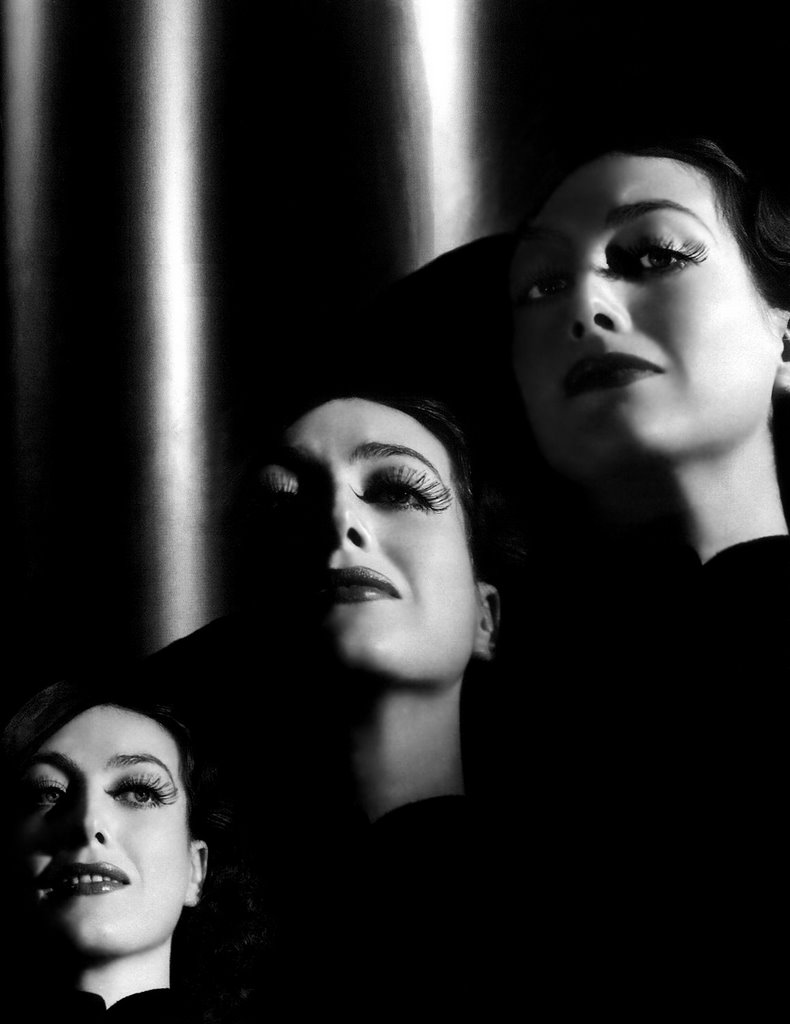
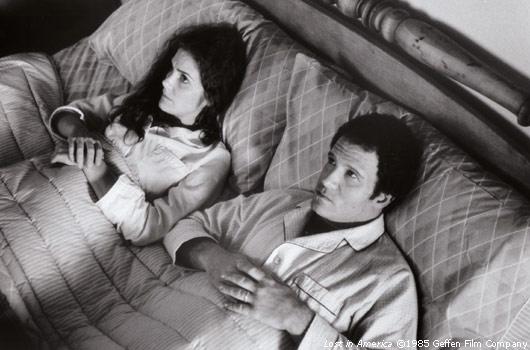
Lost in America (1985)

Peter's Nite
Tossed Salad with Roast Chicken, Carrot Cake.
Via AlbertBrooks.com:

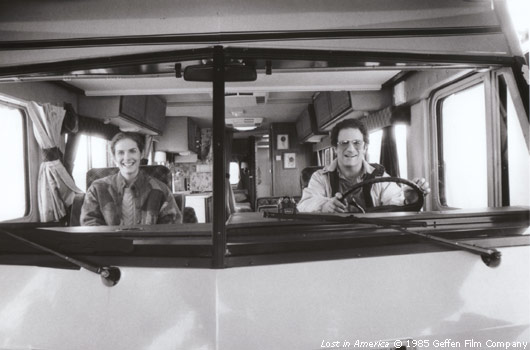
Albert Brooks’ style of comedy is based on the realities of everyday life. On this film, Brooks and his crew spent only three of the film’s 45-day schedule on a sound stage. The rest of the time, they were on location all across the United States.

To provide a vivid, highly American setting for David and Linda’s coast-to-coast odyssey, the filmmakers worked in actual, functioning, facilities, eschewing extras and props in favor of real people and things that were on the scene.

While the filmmakers could have used sound stages to substitute actual locales, producer Marty Katz points out that this compromise “would have cheated the audience of a rich movie experience and wouldn’t have fully expressed the theme of the film.”

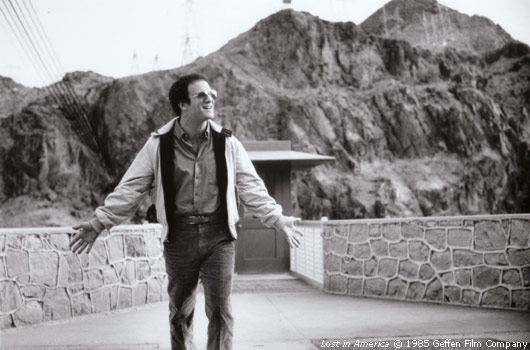
The story ranges from the work-a-day world of Los Angeles to the razzle-dazzle of Las Vegas to the high energy of New York City; from the stunning beauty of Hoover Dam to the quaint life of roadside trailer camps.

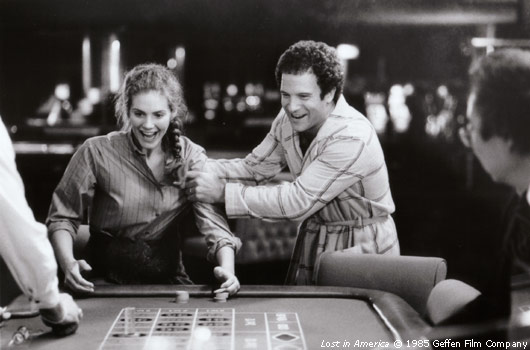
In Las Vegas, the picture company worked and lodged at the Desert Inn Hotel, filming in the casino, lobby, and coffee shop. In the casino, usually seen in films as a distant backdrop, special arrangements were made to enable filming at the gaming tables amid customers and employees.

Armed with the latest lighting advancements of the time and high-speed film, director of photography Eric Saarinen and his crew avoided using the powerful movie lights that would have detracted from the authentic atmosphere of an operational casino.

In striking contrast to Vegas’ neon shimmer was the majesty of the Hoover Dam, where the “Lost in America” company traveled to shoot on both the Arizona and Nevada sides of this landmark.

In New York, David and Linda’s motor home was filmed heading south on Fifth Avenue and pulling to the curb at 57th Street, where David pursues an astonished advertising executive into his office building.

Departing from their New York location, the filmmakers recorded the Howards’ journey from an Arizona trailer camp to wintery Gotham “in reverse” (or opposite direction from their actual travel), necessitating numerous tricky turnarounds.

The trip, depicted in a montage of a few minutes’ screen time, required ten days of grueling roadwork to film. To capture the trek from various points of view, cameras were placed in the motor home’s passenger seat, mounted in a camera car attached to the bizarre convoy, and set up at roadside.

The challenging journey features the deserts of Arizona, the ultra-modern Houston skyline, the Native American atmosphere of El Paso, the Mexican ambiance of Las Cruces, N.M., New Orleans, the Gulf Coast, Atlanta’s Peachtree Plaza, Pennsylvania countryside, and Washington, D.C.’s Capitol.
For the filmmakers, as well as for David and Linda, the journey proved to be an exercise in rediscovering America.
Playboy interview via Unofficial Albert Brooks Page:

PLAYBOY: Do you have muses? Off whom do you bounce ideas?

BROOKS: One of the reasons I married my wife is that she's just got this wonderful brain and a great sense of humor. I talk to her about everything. Also I used to be really close, like talking daily, to Jim Brooks, who gave me those roles in Broadcast News and I'll Do Anything. When I wasn't in As Good As It Gets, I stopped talking to him. Better put me in the movies, Jim, if you want to be my friend.

But, over the years, I've actually written all but one of my movies with Monica Johnson, who's the sister of the comedy writer Jerry Belson. She sort of found me through Penny Marshall and I thought she had great comedic sensibilities. She innately understands the Albert Brooks "character" in these films. And she's a woman which is always a good thing when you write. She makes me laugh. And she's a great laugher, too. I could never write with someone who didn't laugh well.

PLAYBOY: Is laughter better than sex?

BROOKS: Gee, I always thought it was the same thing.

PLAYBOY: Describe the upside of becoming a father in your fifties.

BROOKS: Having a child when you're a little bit older—I'm not talking Tony Randall older—is the coolest thing in the world. The concerns you have when you're thirty about your own career and stuff are huge. But there's just something great about getting past that period so you can really devote your attention to someone and mean it. I don't know what else there is to do on earth. I guess the downside, however, is we're already looking at high schools with wheelchair ramps.

PLAYBOY: So, anyway, how well did you perform in the delivery room?

BROOKS: I cried. When the head popped out, I just wept.

PLAYBOY: You gave up singlehood during maybe the randiest presidency in the history. Did you have any favorite passages from the Starr report?

BROOKS: I have to say this: My child is not old enough where I'm getting a lot of questions. But I think it might be uncomfortable if you have a kid around 5 years old. The president should not be responsible for the word head coming up at dinner. That should come from the father. When I'm ready to tell my kid what head is, I'll tell him. I don't want the president telling him. "Daddy, what is being on your knees in the Oval Office?" "Well, that's a kind of Moslem prayer. . ."

PLAYBOY: Did your parents know you were funny?

BROOKS: I don't recall that my mother ever thought I was funny. That's why I wrote Mother, which is what the whole movie was about. I know she's very proud of me and I can make her laugh today. But, for most of my life, it didn't matter how funny I was or how funny anybody told her I was—she was very serious about me having another business to fall back on. But I still wanted her approval. I would call her after every Carson appearance—"What did you think?" And she would always, always have the same answer: "Oh, it was wonderful! What did Johnny think?"
And I'd say, "Well, you saw the show--did you hear the audience laughing?"
"No, no, I just wondered . . ."
"What—did Johnny secretly hate me even though they were laughing? No, he likes me!"
So, one day, I actually planned this whole strategy. I'd been waiting for this moment—I did the show, the audience was laughing its head off, and, as ever, she said, "What did Johnny think?" And I sounded very depressed: "I don't want to talk about it. Things are not good."
"What happened?"
"Well, Johnny came into the dressing room and he said 'You'll be the last Jew to ever appear on my show!'"
"What?!?"
Now, of course, my mother was immediately furious: "Don't ever do that show again! If he's anti-Semitic--"
I said, "I'm just kidding."

PLAYBOY: Real Life was released in 1979 and now, twenty years later, your sixth film is finished. What takes you so long?

BROOKS: Well, there would have been more if I could have gotten the financing money easier. Out of those twenty years, there was a good eight spent raising the money! I knew that as soon as I put the words The End on a script, I was going to have to go through these mine fields that I just hate more than the world. Even for this movie. The Muse was written right after Mother—which means it could have been finished and released over a year ago. Paramount passed, so it took longer. It's just very hard to go through the humiliating experience of 20 people saying no till one person says yes.

PLAYBOY: How humiliating has it gotten?

BROOKS: Lost in America was maybe the worst—I went for two years trying to raise money. I wouldn't wish it on anybody, because 99% of these potential investors just want to meet people in show business. You go out to dinner with them and you still pick up the check. You meet these big fat guys from Texas and they're listening to the idea—"So then they go to Vegas and she loses the money—" And the Texas guy interrupts: "Yeeeahh, um, Allll-buht, do you know any hookers?" I learned, by the way, to start out every meeting by saying, "Hello, I don't know any hookers. Now let me pitch you this story."

PLAYBOY: Your films have had completely original comic premises. Can we inventory the inspirations for each? Already, for instance, Real Life has been echoed by The Truman Show and EdTV. You got there first.

BROOKS: Echoed!? Jon Bon Jovi's endtitle song for EdTV was called "Real Life." I mean, come on! When Monica Johnson heard that, she called me in tears. But I suppose it's actually a good thing—maybe it reminded people. Real Life didn't make any money, but at least The Truman Show got some Oscar nominations out of the subject. The important thing is that Real Life still holds up.

PLAYBOY: How about Lost in America?

BROOKS: I always loved the idea of making a life-long decision and finding out four days later that it was wrong. You know, burning your bridges and then having to eat shit. Here was this successful married couple who sell their house, buy a Winnebago, hit the road, lose everything in a week, and realize they've made a mistake. So the concept was all about backing up and eating shit. We all do it in little ways. I wanted to see it big.

Glenn Erikson via DVDSavant:

Lost in America's lesson is that modern urban society makes us status-conscious, artificial, and shallow, but that there are lots of worse things to be and worse situations to find oneself in. When David's back in his element again, slugging away with his cheerfully obnoxious business persona, it's obvious that's where he belongs, and at least now he knows it. Albert Brooks doesn't insist that you see his comedies as 'meaningful,' and they're certainly just as hilarious without any of this thinking ... but it puts him far ahead of the game, up there with the classic comedies.

Most of the setpieces in the film are inspired, and a couple are simply transcendant. Probably the best is David's pitiful attempt to talk a casino executive (Garry Marshall) into giving back the money they've lost at his roulette wheel. David's sorry belief that his ad-man patter can coax money from this man is funny, almost painfully so.

Julie Hagerty makes an excellent foil for Brooks, as undemonstrative and thoughtful as he is brash and exaggerated. She makes Linda Howard the kind of person who's genuinely surprised by her own susceptability to the gambling bug, and yet we know she isn't damaged by her husband's tirade of sarcasm when her 'little mistake' turns into disaster. In most of Brooks' stories he doesn't link up well with females, the ending of Defending Your Life being the only slightly strained part of that film. David and Linda are a good couple. Woody Allen basically believes relationships are impossible, and even his sweetest movies reflect this cynicism. Neil Simon conceives of characters as collections of kooky quirks, and all any Simon relationship needs to succeed is for people to to get past one another's idiosyncrasies. All three write funny movies, but I like Brooks' philosophy the best. It actually takes into account the idea that we can be smart enough to understand at least part of our own contradictory natures. Even if we can't change everything about our lives, we can be happier by improving our attitudes.
Sunday, August 13, 2006

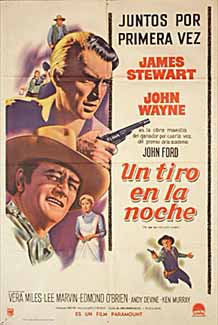
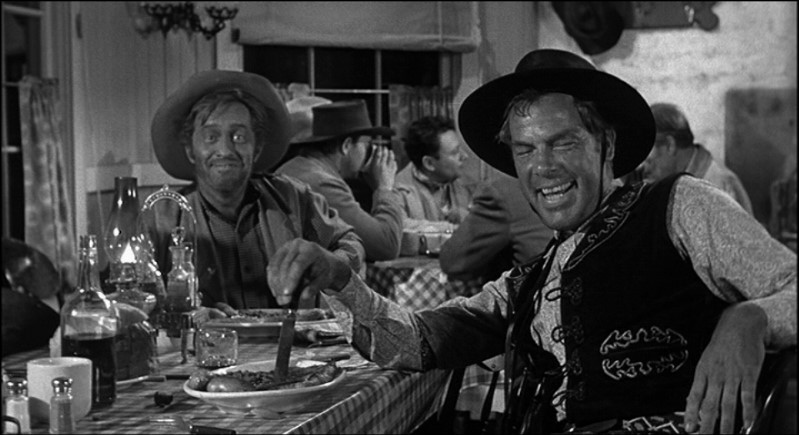
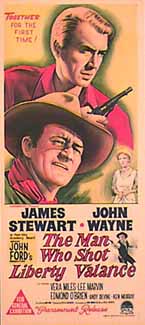
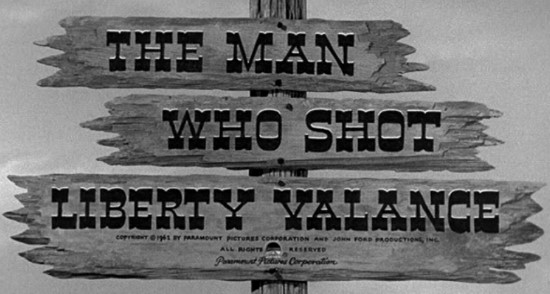
The Man Who Shot Liberty Valance (1962)

Pamela's Nite
Chicken in a wild mushroom and port cream sauce; braised red cabbage; baby Yukon gold potatoes and blue river green beans in a lemon butter sauce. Dessert was blueberry pie and ice cream.
Special Guests: Joey and Baine

Grant Tracey Via Images Journal:

But did Doniphon, alone, kill Valance? This question has haunted me for years. If we read the film traditionally and contend that Wayne sacrificed himself and the woman he loves for the good of civilization, making Stewart the somewhat false hero, then the film resonates an elegy for the dead, and the image of Hally’s cactus flower on Tom’s coffin and her own admission to her husband that she put it there sings a kind of sad tribute of lost love. However, what if Stoddard killed Valance? A close return look at the second shooting scene shows smoke wisping from the barrels of both weapons simultaneously. No doubt Doniphon, a tough-guy hero, hit his target, but maybe Stoddard did too. The slim possibility exists that Stoddard could have done the killing without Doniphon’s help. And if that’s the case, then the film deconstructs a traditional garden/wilderness reading and the resounding words of the editor, "This is the West, sir. When the legend becomes fact, print the legend," resonate as ironic fallacy. What if Stewart didn’t need Wayne’s gun, and Wayne didn’t need his self-consuming guilt? Wayne’s decline and debasement were for nothing and that’s a lot darker notion to ponder than the darkness this film already radiates.
Jabberwock observes:

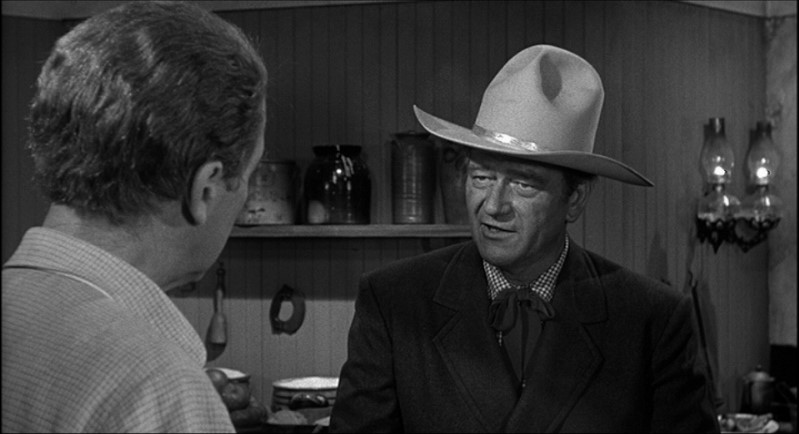
John Wayne and James Stewart were 54 and 53 respectively when this film was made, and one of the standing criticisms of The Man Who Shot Liberty Valance is that they were far too old for their characters in the “flashback sequence” (which is, after all, 90 per cent of the film). Makeup helps to an extent, and one of the most notable things about Stewart’s performance as the young Ransom is how he quickens his reactions and physical movements without making it very obvious. He’s a lot more alert and sprightly than he presumably was in real life (in fact, even as a young man, Stewart’s stock in trade was a shuffling, slow walk and a Midwestern drawl – so this performance, given in his 50s, is probably among his most energetic ever!).
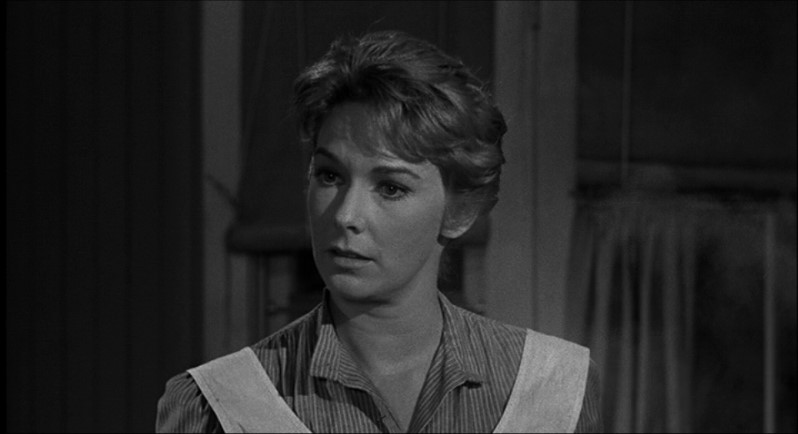
The criticism about age is of course justified from the point of view of verisimilitude, but it’s impossible to imagine this film without these men in the leading roles, for their screen personalities are crucial to its effect. Stewart, a more nuanced actor, was the modern man – vulnerable, complex, unafraid to show a feminine side (in fact, he spends some of the key scenes in this film in an apron, which has led to much critical analysis of gender roles!). This was reflected in the roles he played in middle age, especially in films by Hitchcock and Anthony Mann. Wayne, in contrast, was repeatedly used by Ford in their many films together as an emblem of the Old West – the macho cowboy who survived by his shooting skills. By all accounts, the screen image was not very far from the man’s real-life persona, for Wayne was known to be jingoistic, brow-beating, politically on the far right, pro-Vietnam War, full of notions about what “real men” must be like.
Richard Franklin on Ford vis Senses of Cinema:

Ford's style was one of measured simplicity. His pace is slow, his shots simple and unpretentious. Though it is possible to trace the much vaunted lighting style and deep focus of Orson Welles to Ford's earlier films (cf The Long Voyage Home [1940]), his later Technicolor works are the essence of simplicity - eye level camera with hardly a dolly in sight. Director Andrew McLaglan (son of Ford stock company veteran Victor, who cut his teeth as a Ford assistant) tells an amusing story of how he suggested that there was a good angle from an overhead bridge, for John Wayne's introductory shot in The Quiet Man. Ford simply asked "do you stand on a step ladder when you meet someone?"

Director John Milius describes John Ford's style in terms of the Japanese idea of "conservation of line", saying Ford can do with a couple of "brush strokes" what it takes others six or eight to do. Early in his career, Ford talked about what he called "invisible technique", to make an audience forget they were watching a movie. But later he refused to dissect his work, saying things had to be dead before dissection, and telling young directors like myself only to "make sure you can see their eyes". The impact of an astonishing scene like Tom's farewell to his mother at the end of The Grapes of Wrath is achieved with virtually television coverage. Yet only in Ford would the characters' eyelines intersect at a point somewhere in the middle distance, as if they both see something spiritual.

It is for me in the spiritual that Ford expresses the greatest we can hope our art to be. It is his capacity to mythologise; to ennoble that which might otherwise go unnoticed (like the image of the Philippino extra listening to the announcement of Pearl Harbour, or the "expendable" limping away down a beach, "glorious in defeat", because the artist tells us they were and are).

Orson Welles called John Ford the greatest "poet" the cinema has given us. He is at the very least the US's greatest historian (his films having examined virtually every era from the Revolutionary War to Vietnam) and his landscape surpasses that of say a Remington. His images of the individual dwarfed by this landscape, of family and community huddled against the brutality (and primal beauty) of Monument Valley in The Searchers is unsurpassable. It is not necessarily a true history, but as Ford says in The Man Who Shot Liberty Valance, "when the legend becomes truth, print the legend".

John Ford was more than a filmmaker. He was a legend.

Ken Bowser on Ford & Wayne via PBS American Masters:

Ford had been a successful director for over a decade when he met Marion Morrison, at the time a young USC student working a summer job on the Fox lot as an assistant property man. He saw something in Morrison and gave the "kid" a few walk-ons in his films. Within two years Morrison had changed his name to John Wayne and Ford, very pleased with the young man's work, recommended him to Raoul Walsh, another director on the lot.

Walsh was about to start one of the biggest films Fox had produced to date, THE BIG TRAIL, and the director gave Wayne the lead. The film ultimately flopped and Wayne's career was quickly relegated to grade C westerns on poverty row. This was a situation many felt Ford could have stepped in to remedy, but over the next decade all the struggling young actor heard was that "Pappy was keeping an eye out for a script that would best suit the Duke," his affectionate nickname for Wayne.

As Wayne's career stalled Ford's roared ahead; he was now one of the biggest directors in Hollywood. But the two men stayed friends -- as long as it was clear who was boss.

During these years, Ford (contrary to popular myth, which portrays him as a simple-minded, flag-waving conservative,) gained a reputation inside Hollywood political circles as a staunch Roosevelt Democrat. Wayne on the other hand had virtually no political opinions -- his focus was on his career and family. The bond between the two men was largely the result of long cruises to Mexico and the Pacific Island chains on Ford's yacht "Araner." These jaunts, where Ford was accompanied by Wayne, Henry Fonda, Ward Bond, and others looked like nothing more than drunken pleasure trips, and for Wayne and the others that's what they were. Unbeknownst to his passengers however, director Ford was spying. Since the mid-thirties Ford had been covertly photographing shorelines and shipping lanes for the American military in preparation for a war many in the War Department felt was inevitable.

It was after one of these voyages in 1938 that Ford teasingly asked Wayne to read the script of his next picture. Could Duke give him "some advice on what young actor might play the role of the Ringo Kid?"
...
Being a symbol of America was a responsibility that ate away at Wayne. It was that sense of responsibility combined with his continuing guilt over not serving during the war that drove Wayne deeply into politics.

As the Cold War heated up and the Iron Curtain fell, Wayne began to merge his personal commitment to defending America with his screen persona. And from behind the camera, Ford's vision of his country and his part in how it saw itself was shifting. With THE SEARCHERS, THE HORSE SOLDIERS, and THE MAN WHO SHOT LIBERTY VALANCE, Ford would use the iconic image he'd helped Wayne create to cast light into the shadows of the country he loved. While Ford's perspective may have grown darker, his love of America, its people and its landscape, never dimmed.

Sunday, August 06, 2006

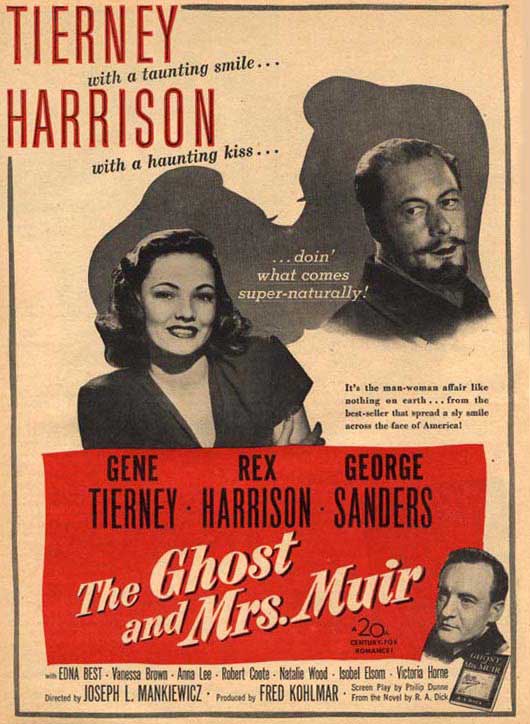
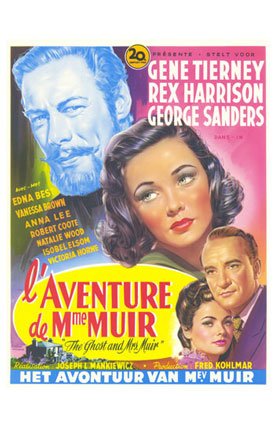
The Ghost and Mrs. Muir (1947)


Nora's Nite
Special Guest: Lisa!
Indian Food, Lemon meringue Pie
For the first time in MovieNite history, Nora forgets about dessert and actually needs a "hint."
Glenn Erickson via DVDSavant:
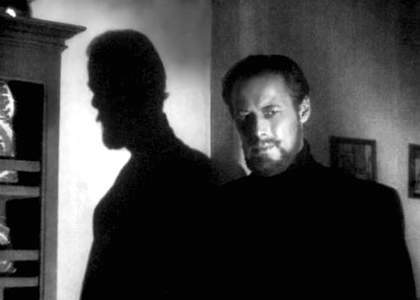
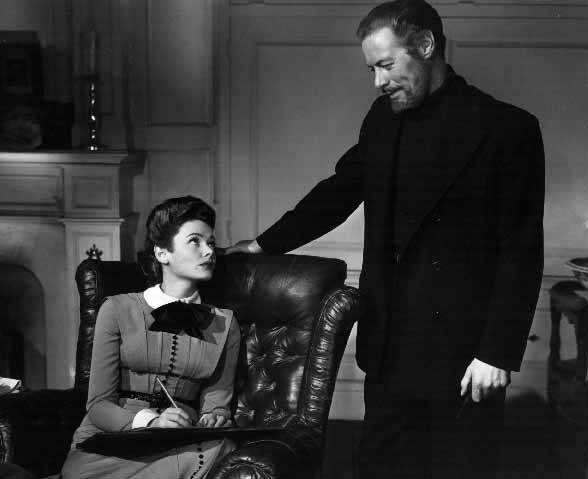
Most escapism of the time would instantly prescribe a man for what ails Lucy, or better, lots of men. That's where The Ghost and Mrs. Muir deviates from the norm. Captain Gregg is good company at the odd times when he's there, but he's not flesh and blood and both of them know that's what Lucy (or Lucia, as Gregg calls her) needs. There's a sadness about Lucy's life that stays hidden beneath the surface of the film. In less glamorous surroundings, this could be a tale of isolation and estrangement.

It almost is. Lucy's romance with the ghost clearly has no sex angle, just the thrill of being worshipped by a handsome lover. So the audience gets the soulful romance without the sex. It's just the kind of masochistic thrill that became popular in soapy 50s pictures.

But there are some interesting twists. In a terrific scene with the wonderful Anna Lee, Lucy finds herself the "other woman" in a faithless triangle. The sobering novelty of the moment places no satisfaction in adultery, the foundation of many a Hollywood potboiler. Muir's yearning for her married beau dissolves as soon as she finds out the truth. Refreshingly, the story places the blame with the wayward and deceitful man, and notes a sad but unspoken bond between the wronged women.

All of Lucy's real relationships are with other women, with her maid as the only lasting one. Her daughter Anna (initially a cute Natalie Wood) has her own life to lead and as such becomes as remote as the rest of the world that Lucy has turned her back against. Both the maid and Anna have vague memories of hearing and seeing Captain Gregg too, a nice touch.

The Ghost and Mrs. Muir is in some ways a female Vincent Price movie, an "Ellen Allan Poe" picture. Like a Poe character, Muir lives in isolation, indulges in delirious fantasies, has disastrous relationships in the outside world and obsesses over lost loves real and imagined. It's all from a distinctively female perspective, however. Time has a different meaning - Muir is less rushed and less desperate in her actions than a Poe protagonist. When the years make her gray and rot the wood down on the beach, there's a crushing dread involved, a feeling of loss and perhaps waste. But it's a natural feeling derived from life and not some supernatural curse of guilt or honor. The mature philosophy here is contrary to Poe's fated morbidity. People get old and lonely and they die, and life moves on. It's supposed to be that way.
Philip Dunne vis Wikipedia:
Philip Ives Dunne was born in New York City, the son of Chicago syndicated columnist Finley Peter Dunne and Margaret Ives (Abbott) Dunne, the daughter of the Chicago Tribune's book reviewer and novelist, Mary Ives Abbott.

Although a Roman Catholic, he attended the Middlesex School (1920-1925) and Harvard University (1925-29). Immediately after graduation, he boarded a train for Hollywood. His first screenplay (uncredited) was Me and My Gal, released in 1932. His first credited screenplay was The Count of Monte Cristo, released in 1934. After working for various studios, he moved to 20th Century Fox in 1937, where he would remain for 25 years (excepting 4 years civilian war service during World War II), scripting 36 films in total and directing 10. He also produced several of his later films.

Dunne was a co-founder of the Screen Writers Guild and served as vice-president of its successor, the Writers Guild of America from 1938 to 1940 . He later served on the Board of Governors of the Academy of Motion Picture Arts and Sciences (AMPAS), from 1946 to 1948.

Before World War II, he was a member of the Committee to Defend America by Aiding the Allies, a group founded in May, 1940, that advocated military materiel aid to Britain as the best way to keep the United States out of the war.

From 1942 to 1945, Dunne was the Chief of Production for the Motion Picture Bureau, U.S. Office of War Information, Overseas Branch; notably, he produced the non-fiction short The Town (1944), directed by Josef von Sternberg, which has received some critical acclaim.

In 1947 he co-founded the Committee for the First Amendment to protest the House Un-American Activities Committee's (HUAC) investigation of Communist influence in Hollywood. He appeared before HUAC with other Hollywood figures in a well publicized meeting in October 1947.

Dunne received two Academy Award nominations for screenwriting: How Green Was My Valley (1941) and David and Bathsheba (1951). He also received a Golden Globe nomination for his screen adaptation of Irving Stone's novel The Agony and the Ecstasy (1965), as well as several peer awards from the Writer's Guild of America (WGA).

Dunne married the former Amanda Duff on July 13, 1939; they had three children, Miranda, Philippa, and Jessica.

In 1980 he published his memoirs, Take Two: A Life in Movies and Politics.

Dunne died of cancer on June 2, 1992 in Malibu, California

The 1992 film The Last of the Mohicans, directed by Michael Mann and starring Daniel Day-Lewis, was based on Dunne's 1936 screenplay of the Fenimore Cooper novel.

Sunday, July 30, 2006

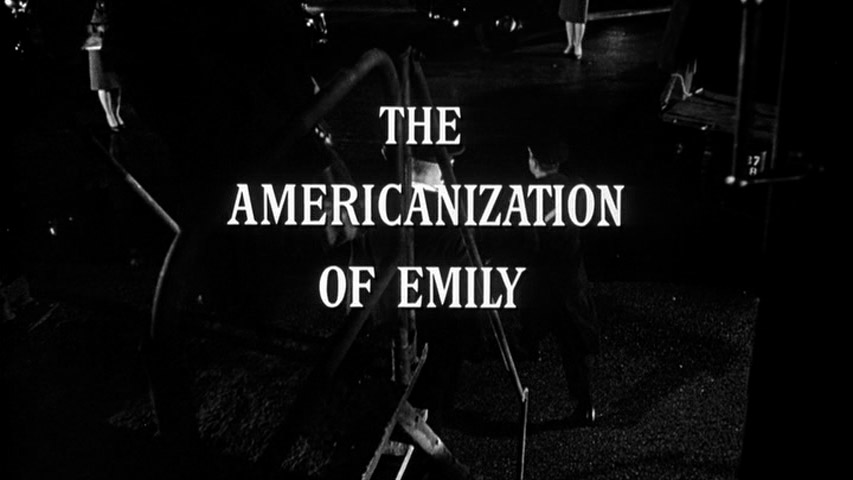
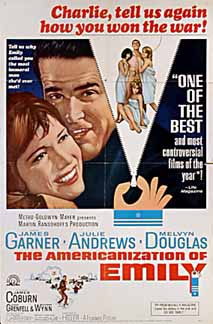
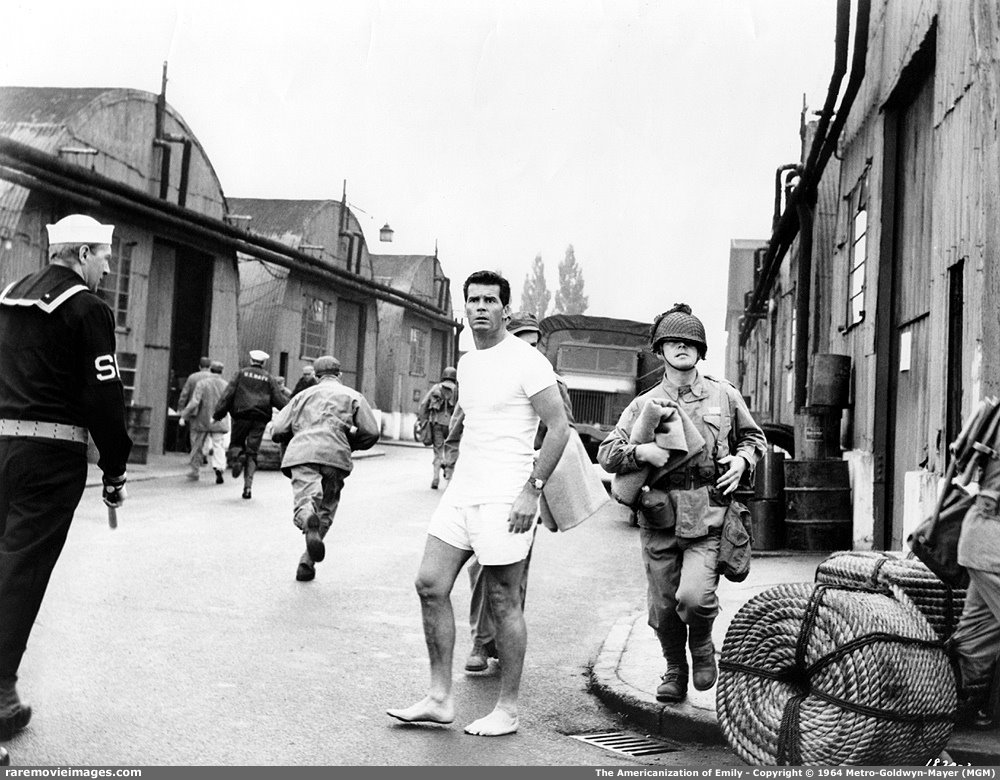
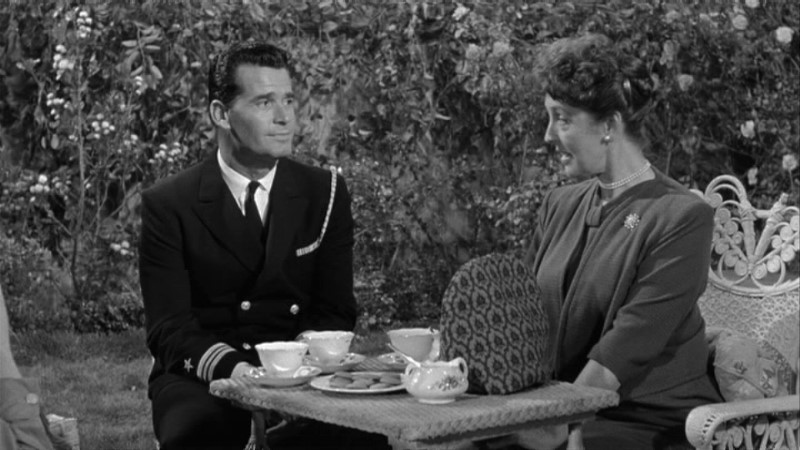
The Americanization of Emily (1964)

Peter's Nite
Salad, Pizza, Brownie Bites (all CostCo meal)
Peter brittle and freaking out.
JB Bird on Paddy Chayefsky (via Museum of Broadcasting)

Sydney "Paddy" Chayefsky was one of the most renown dramatists to emerge from the "golden age" of American television. His intimate, realistic scripts helped shape the naturalistic style of television drama in the 1950s. After leaving television, Chayefsky succeeded as a playwright and novelist. He won greatest acclaim as a Hollywood screenwriter, receiving Academy Awards for three scripts, including Marty (1955), based on his own television drama, and Network (1976), his scathing satire of the television industry.

Chayefsky began his television career writing episodes for Danger and Manhunt in the early 1950s. His scripts caught the attention of Fred Coe, the dynamic producer of NBC's live anthology drama, the Philco-Goodyear Playhouse. Chayefsky's first script for Coe, Holiday Song, won immediate critical acclaim when it aired in 1952. Subsequently, Chayefsky bucked the trend of the anthology writers by insisting that he would write only original dramas, not adaptations. The result was a banner year in 1953. Coe produced six Chayefsky scripts, including Printer's Measure and The Reluctant Citizen. Chayefsky became one of television's best-known writers, along with such dramatists as Tad Mosel, Reginald Rose, and Rod Serling.

Chayefsky's stories were notable for their dialogue, their depiction of second-generation Americans, and their infusions of sentiment and humor. They frequently drew on the author's upbringing in the Bronx. The protagonists were generally middle-class tradesmen struggling with personal problems: loneliness, pressures to conform, blindness to their own emotions. The technical limitations of live broadcast suited these dramas. The stories took place in cramped interior settings and were advanced by dialogue, not action. Chayefsky said that he focused on "the people I understand; the $75 to $125 a week kind"; this subject matter struck a sympathetic chord with the mainly urban, middle-class audiences of the time.

Marty, a typical Chayefsky teleplay and one of the most acclaimed of all the live anthology dramas, aired in 1953. Rod Steiger played the lonely butcher who felt that whatever women wanted in a man, "I ain't got it." When Marty finally met a woman, his friends cruelly labeled her "a dog." Marty finally decided that he was a dog himself and had to seize his chance for love. The play ended happily, with Marty arranging a date. Critics compared Marty and other Chayefsky teleplays to the realistic dramas of Arthur Miller and Clifford Odets. In Chayefsky's plays, however, positive endings and celebrations of love tended to emerge from the naturalistic framework. The Chayefsky plays also steered clear of social issues, like most of the anthology dramas.

After Marty enjoyed phenomenal success as a Hollywood film, Chayefsky left television in 1956. His exit narrowly preceded the demise of the live dramas, as sponsors began to prefer pre-recorded shows. Even while the live dramas were declining, however, Chayefsky's teleplays found new life. Simon and Schuster published a volume of Chayefsky's television plays. And three of them, in addition to Marty, became Hollywood films: The Bachelor Party (1957) and Middle of the Night (1959), adapted by Chayefsky, and The Catered Affair (1957), adapted by Gore Vidal.

In the 1960s, Chayefsky abandoned the intimate, personal dramas on which he had built his reputation. His subsequent work was often dark and satiric, like the Academy-Award winning film, The Hospital (1971). Network, Chayefsky's send-up of television, marked the apex of his satiric mode. He depicted an institution that had sold its soul for ratings and become "a goddamned amusement park," in the words of news anchor Howard Beale, the movie's main character. Before Chayefsky's death in 1981, he wrote one more screenplay, Altered States (1980), based on his own novel. He refused a script credit, however, due to disagreements with the film's director, Ken Russell.

Chayefsky wrote only one television script after 1956, an adaptation of his 1961 play Gideon. His reputation as a television dramatist rests on the eleven scripts he completed for the Philco-Goodyear Playhouse. His influence on the live anthologies was considerable, but he is just as notable for the career he forged after television.
Glenn Erickson on Emily (via DVD Savant):
It's easy enough to just turn one's brain off and enjoy the great acting and funny lines - Chayefsky invents several clever euphemisms to substitute for rough language and at one point even has Charlie call Emily a bitch. She doesn't want to become Americanized, i.e., seduced by Yankee consumer riches and arrogance. He gets to rub her indignation back in her face, by telling her as they break up their relationship, "I want you to remember that when you last saw me, I was unregenerately eating a Hershey bar!" Emily uses these arguments in sophisticated context - Charlie is being ironic and just playing at arrogance - but the signals get mixed anyway.

Chayefsky is a brilliant writer and his stylized dialogues are great to listen to. Interestingly enough, this movie, Hospital and Network all resort to the same plot trick - a major character goes nuts and starts seeing visions that warp reality for the other characters.

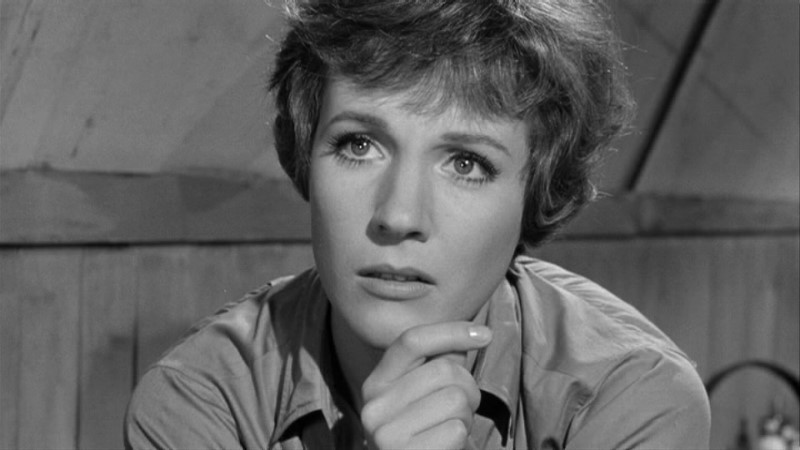
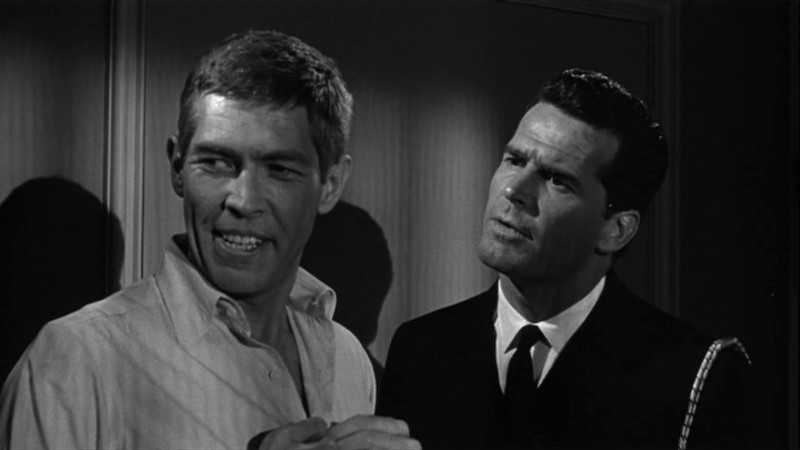
The film is a career highpoint for most of its actors. Garner is all over Charlie Madison, the apex of his winning, smart-ass Maverick persona. James Coburn shapes up as star material with a snappy major supporting role, and Melvyn Douglas is spot-on as the Admiral fighting not for victory but for the betterment of his branch of the service. There's also good playing both farcical and straight from Edward Binns, William Windom, Liz Fraser and Keenan Wynn, who does a great drunk act with Dobie Gillis alumnus Steve Franken. Alan Sues and Judy Carne ( both of Rowan & Martin's Laugh-In) are a camera specialist and "Nameless Broad" respectively; the film may be progressive in some regards, but its females are mostly bimboes. Sharon Tate is said to be visible somewhere. She was or was soon to be Martin Ransohoff's girlfriend.

Ransohoff's production is splendid, with excellent B&W photography and clever short-cuts to make us think we're seeing a lot more production value than we are. This and Mary Poppins are Julie Andrews' first films, and she's so good in a mature role that we immediately understand why she felt stifled by her kiddie-nanny career. Emily admits to sleeping around and has no shame ... it's a challenging role and she carries it off with dignity.

The only gripe about the physical production are the women's hairstyles: Andrews, Fraser and all of Garner's good-time motor pool girls have poofy 1964 big-hair hairdos ... there's little or no period feeling.

The Americanization of Emily certainly has a different take on D-Day than Saving Private Ryan, even though they share the same attitude about survival on Normandy Beach. Its precocious but suspicious thesis is brilliantly written, and the movie is highly enjoyable. You know Marty, that Paddy Chayefsky can really write.

Director Arthur Hiller provides an interesting commentary with plenty of personal reminiscences. His take on the movie is that the script isn't anti-war, it's just against its glorification, which is fair enough. He does let us know that the U.S. military did not approve of the script and offered zero cooperation. It's interesting that the military will spend taxpayer money to promote itself through movies it feels are good PR for the services, while denying aid to others. I suppose it's no more twisted than spending defense money on recruiting propaganda - I've collected pamphlets sent to my college-age sons which portray the Army as a beer party on the beach with a lot of swimsuit models. That's just the attitude The Americanization of Emily deplores.

Sunday, July 23, 2006

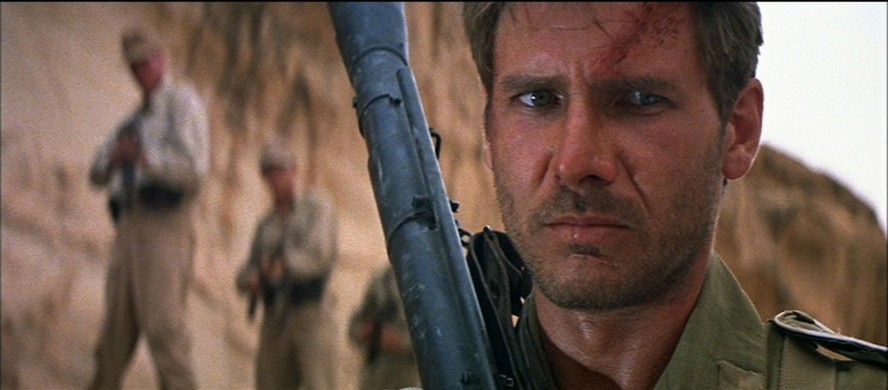
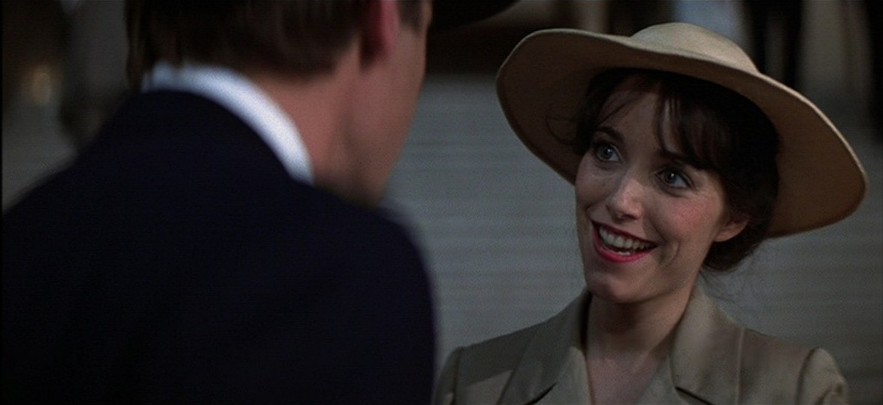
Raiders of the Lost Ark (1981)

Stuart's Nite
Special guests: Tess & Fiona!
Via IndianaJones.com:
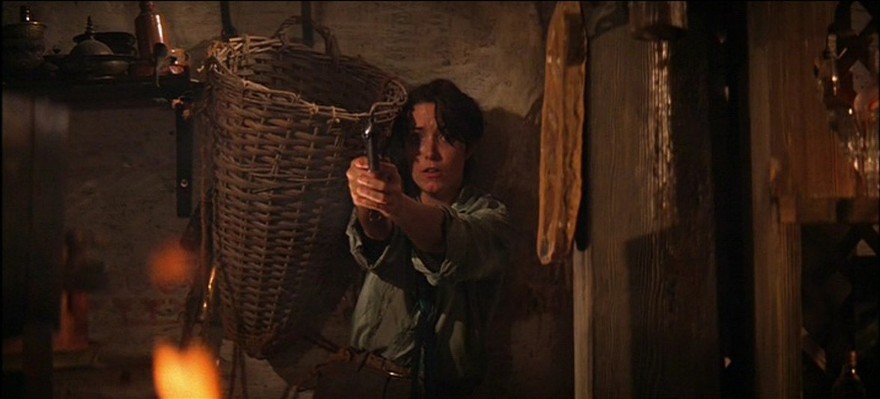
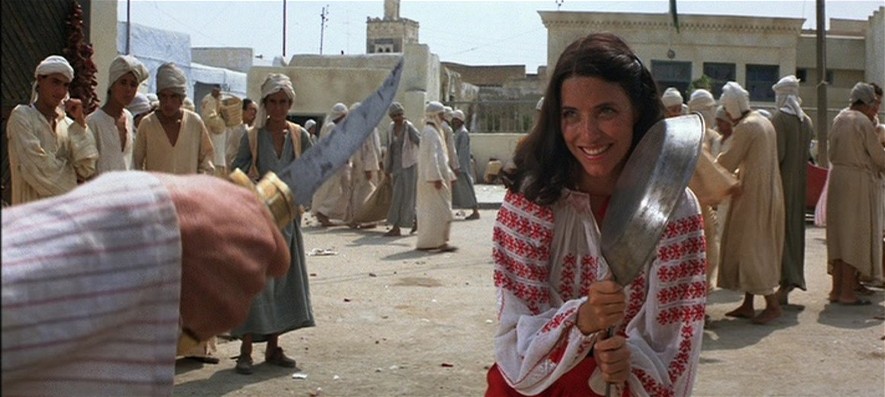
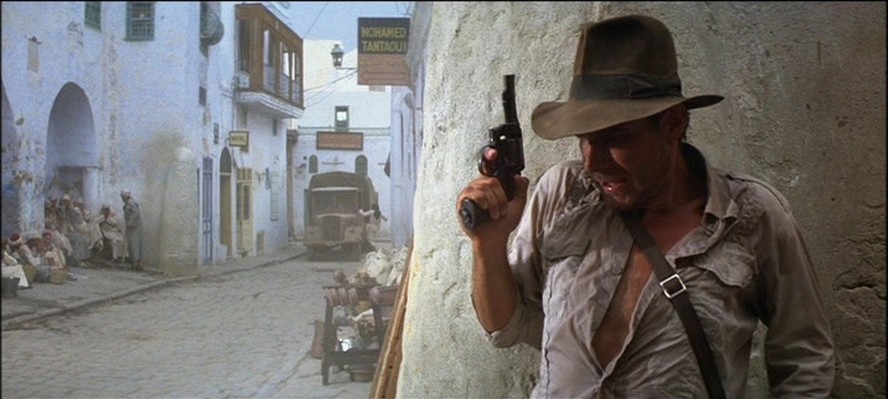
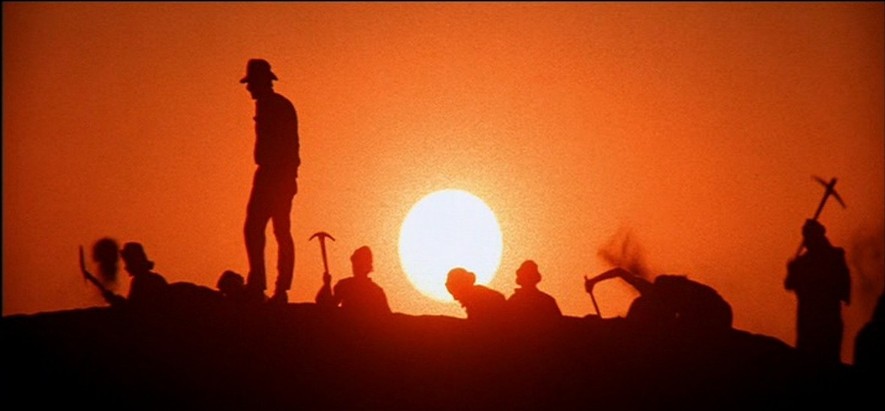
In May 1977, just after the premiere of George Lucas' Star Wars on a handful of screens around the country, the writer-director felt the need to take a break from Los Angeles and his intense work on the film. He journeyed to Hawaii for a vacation and met up with his longtime friend, director Steven Spielberg, who recalled: "George thought Star Wars would be a monumental disaster."
A week later, as Lucas learned more about the phenomenal success of his film, "George was suddenly laughing again," Spielberg said. And he was ready to begin thinking about new film projects.

As they sat on the beach one day, "Steven was telling me how he really wanted to do a James Bond film, and that he actually went to the people who owned James Bond and asked them if he could direct one ... and they turned him down," Lucas recalled.
"So I said, 'Well, look, Steven, I've got a James Bond film. It's great – it's just like James Bond but even better,'" Lucas said. "I told him the story about this archaeologist and said it was like a Saturday-matinee serial, that he just got into one mess after another. And Steven said, 'Fantastic, let's do this!'"
There was only one hitch: Lucas had named his character after his dog, Indiana. Indiana Smith. Spielberg hated the name, thinking it sounded too hokey. So, Lucas said, "Name him Indiana Jones or whatever you want – it's your movie now."
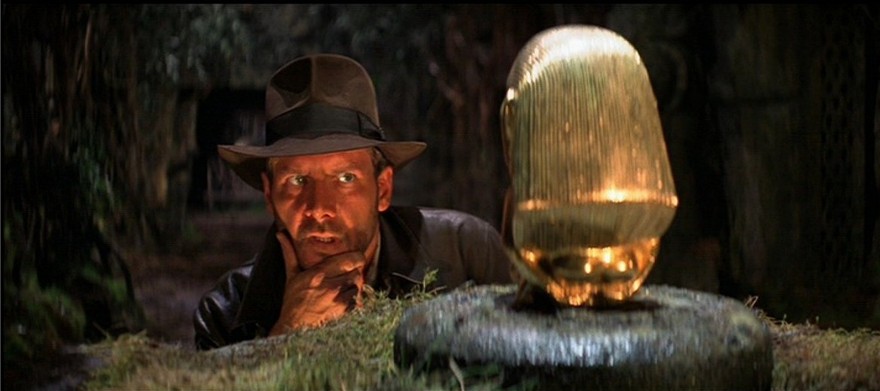
Just six months after their trip to Hawaii, Lucas and Spielberg officially agreed to collaborate on Raiders of the Lost Ark. Lucas drafted the story of a rogue archaeologist who finds himself up against no less a force than Nazi soldiers in a quest for a sacred artifact. Filmmaker Philip Kaufman, who received a story credit along with Lucas, suggested that the goal of Indy's quest be the legendary lost Ark of the Covenant. Lucas signed on as executive producer, while Spielberg committed to direct the throwback to movie serials of the '30s and '40s. The reason behind their enthusiasm for the film was simple, Lucas said. "We're making it because Steven and I love movies, and this is exactly the kind of movie we'd like to see."

Sunday, July 16, 2006

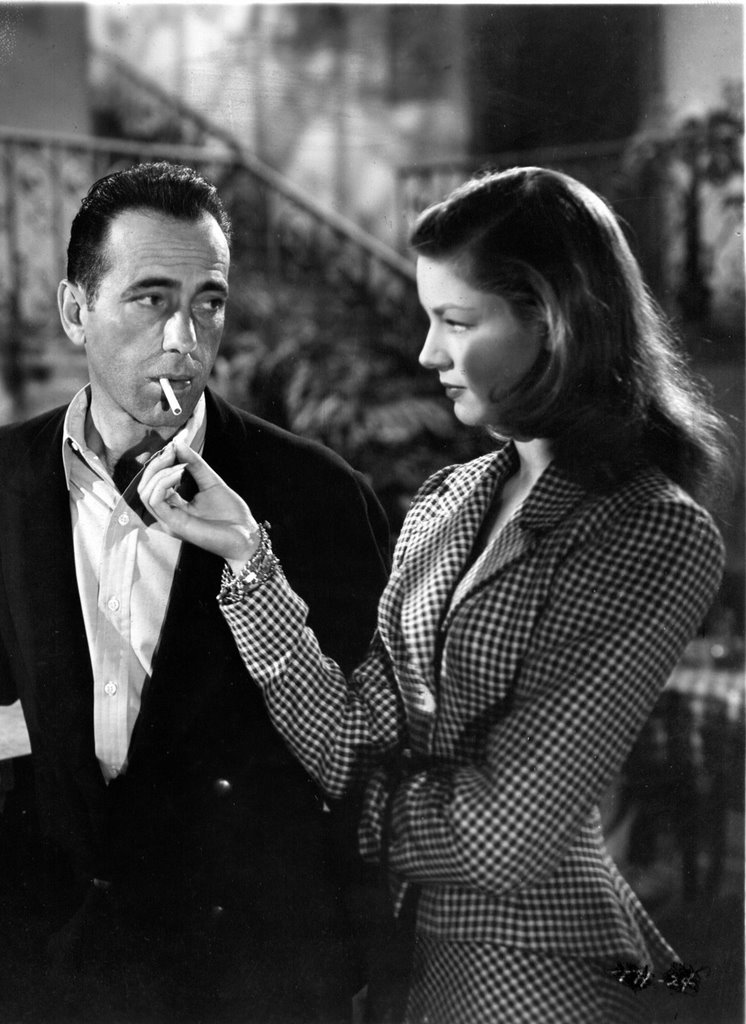
To Have and Have Not (1944)

Pamela's Nite
Delicious Salad, Strip Steak cooked to perfection, Apple Pie & Ice Cream!
Stuart AWOL.

Sunday, July 02, 2006

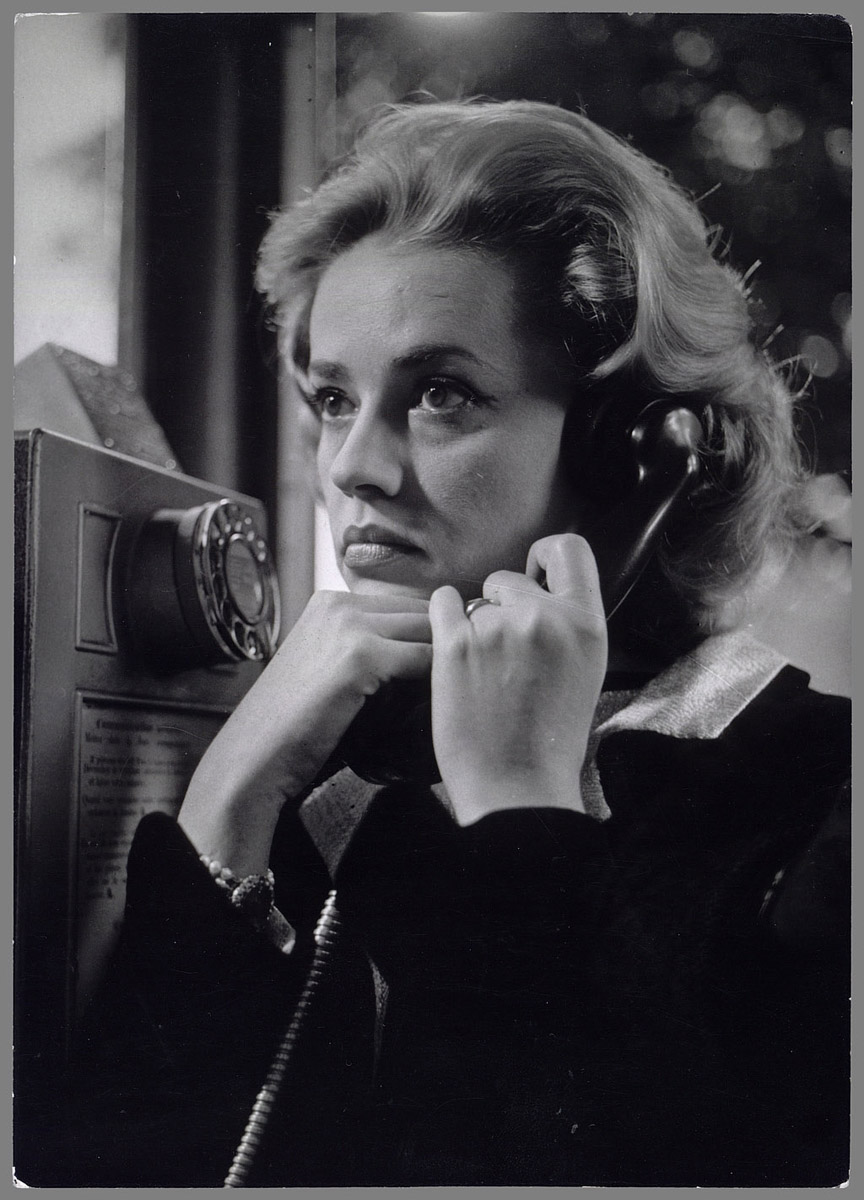
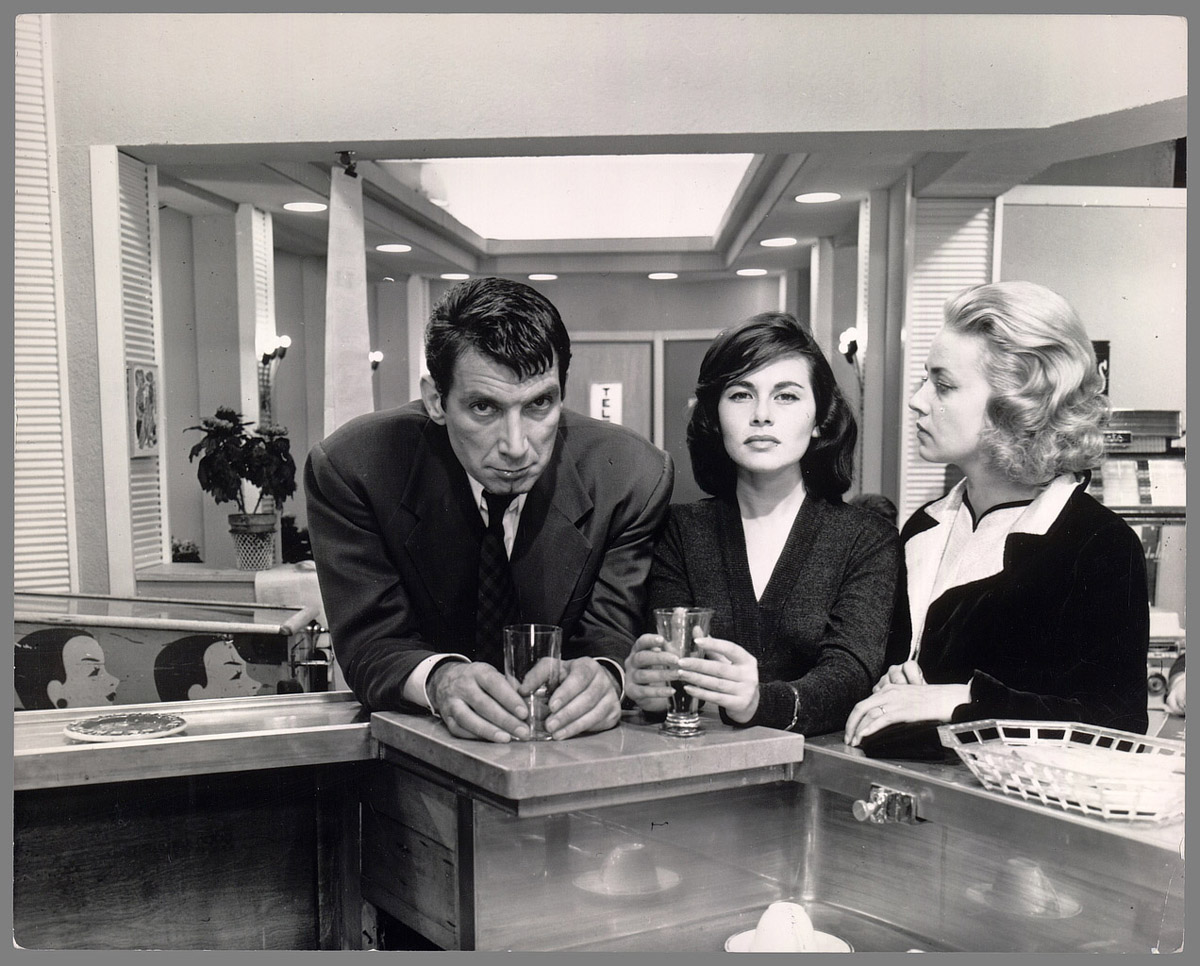
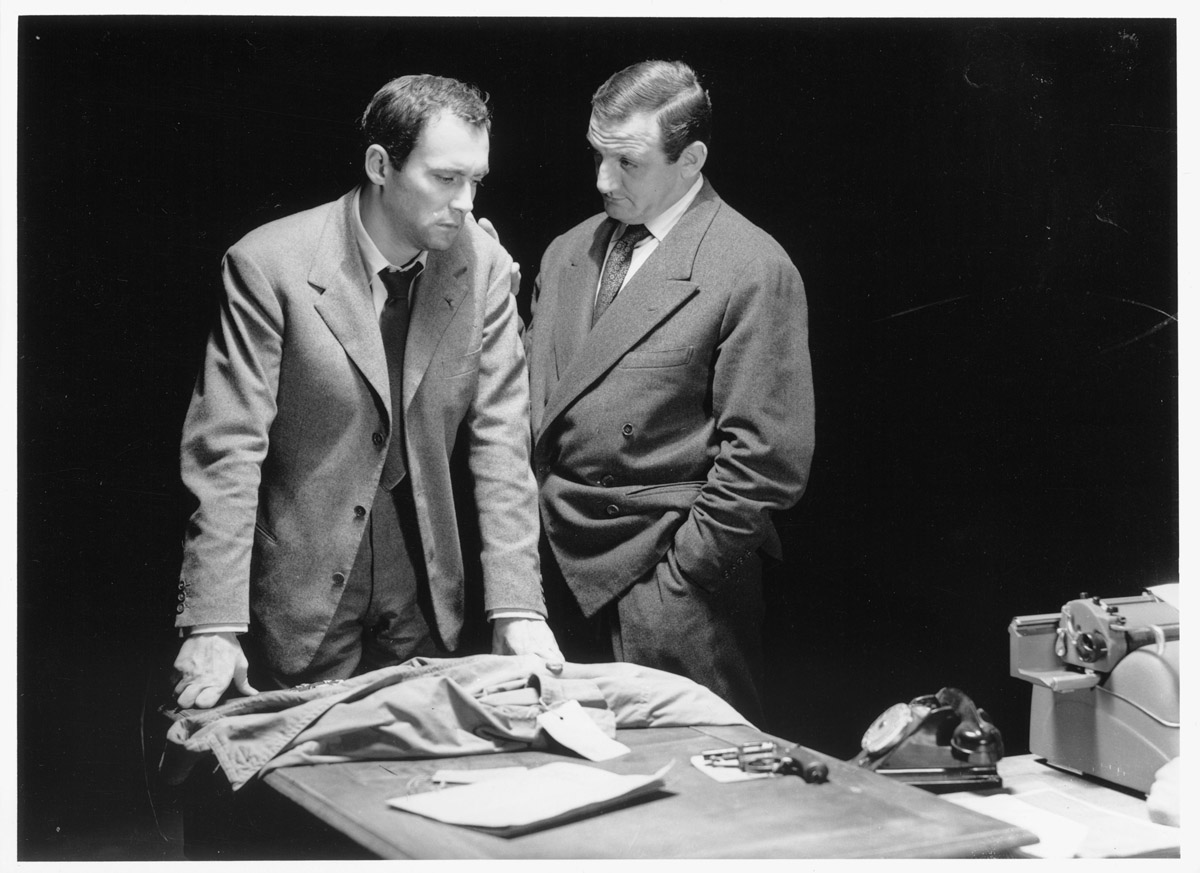
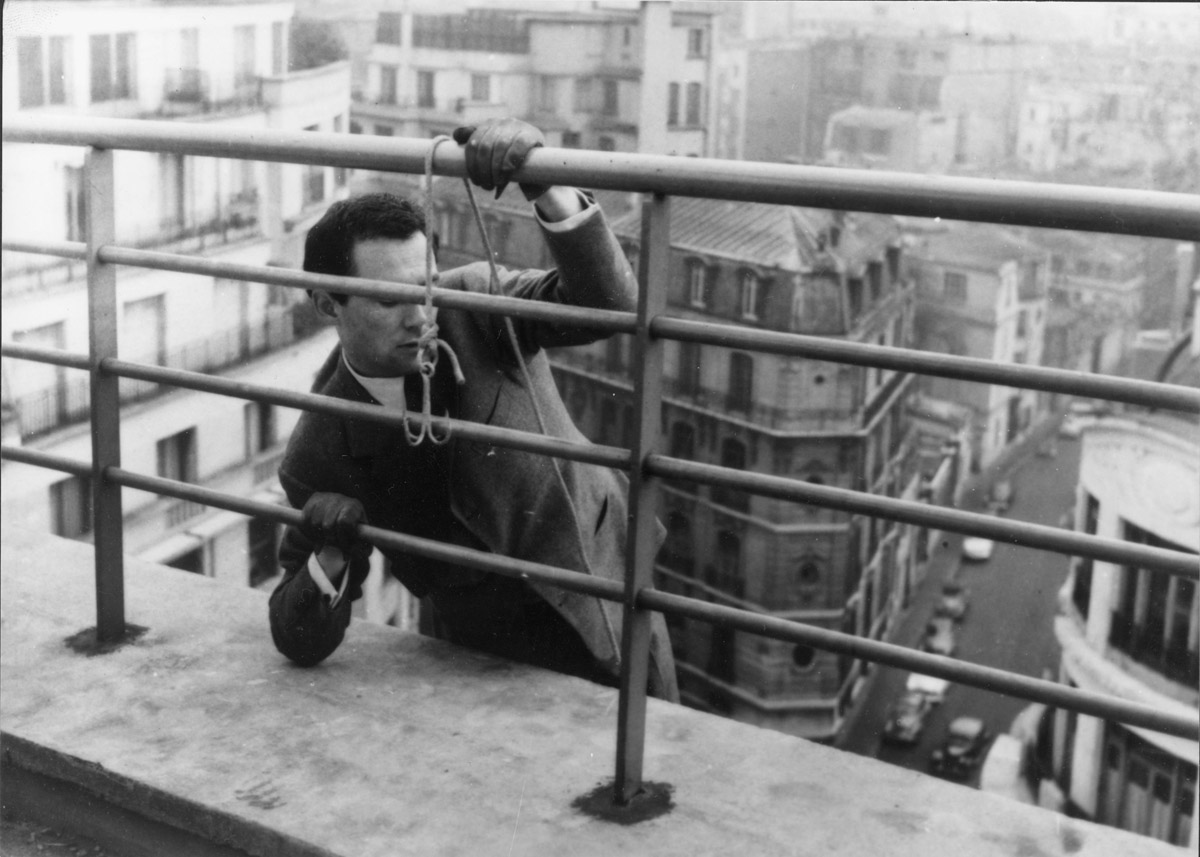
Elevator to the Gallows (1958)

Peter's Nite
Vincent Malle (Louis's little brother) via movienet:

I was still in elementary shool when my brother Louis made Elevator to the Gallows. After all he was barely 24 years old himself. But I remember the buzz in the family and my new status at school when the first reviews came out. Suddenly everybody—including the parents of schoolmates—were my best friends and wanted cinema passes and autographed photos. That was my first brush with fame and it confirmed an already well established love for the cinema.

Over the years, many things have been written about the film, lots of anecdotes about the shoot, about Louis. For example the famous night when Miles Davis recorded the music with a quintet of French musicians in a few hours, improvising each number and sipping champagne with Jeanne Moreau and their jazz-crazy director. By the way, the particular sound he made on the freeway scene was not premeditated. It turns out he lost a bit of his lower lip into the mouthpiece and therefore “blew” differently.

Also the much talked-about scene of Jeanne walking down the Champs Elysées at night, with Henri Decae (the Director of Photography) in a wheelchair and electricians holding battery-activated lamps. Since it was Louis’s first film, the laboratory called the producer the next day saying it was completely black and had to be entirely reshot. Thank God they didn’t, and it remains one of the more significant minimalist night scenes ever. And other directors took notice: So you can shoot at night almost without lights!

This brings me to a question a lot of people ask me, especially in America: Was Louis part of the “nouvelle vague” or not? Well, yes and no.

No, because he never belonged to (and was very against) any “movement” or “school” and he certainly was not part of the Cahiers du Cinéma crowd like Truffaut, Godard, Rivette or Chabrol.

But yes, because he shared the same admiration for American cinema that he saw with them at the French Cinématheque of Henri Langlois (John Ford, Nicholas Ray, Douglas Sirk) and also because he was out of the gate before any of them (Truffaut made his first feature nine months after Louis).

So to try to settle it, I would say he was the closest and the most obvious precursor of the New Wave.

Elevator was an enormous success both critically and commercially, won the Prix Louis Delluc (one of France’s most prestigious awards) and definitely launched Jeanne Moreau’s career as a star.

And the music…!
Terrence Rafferty via Criterion:

Malle later said of Elevator to the Gallows, “I showed a Paris not of the future but at least a modern city, a world already dehumanized,” a statement that, I think, serves as a useful description of the film itself: not of the future but at least modern. Some of that modernity is on the surface—in the “automated” paraphernalia of the office and the motel, in the glass-and-concrete boxiness of the Carala building, in the sleekness of Julien’s sports car and suit. What’s most deeply modern about the film, though, is an undertone of war weariness and general cynicism, which is most evident in the character of Julien, a veteran of France’s recent wars in Indochina and Algeria. Ronet, who doesn’t have much dialogue, is the very picture of postcolonial tristesse: all haunted eyes and uselessly correct bearing. (He would employ these same resources, and several more, in his indelible portrayal of a suicide in The Fire Within.) And it’s probably not an accident that Malle gave the role of the anomic punk Louis to Poujouly, a young actor best known for playing one of the death-obsessed children in René Clément’s great 1952 antiwar film Forbidden Games.

These characters are not, however, the sort of complex, rounded, infinitely surprising people that Malle would explore with such exhilarating curiosity in films like Murmur of the Heart (1971), Lacombe, Lucien (1974), Atlantic City (1980), and Vanya on 42nd Street (1994). Florence and Julien and the rest are all essentially working parts of a thriller machine, and whatever nuance Malle gives them is just a little oil to keep them from clanking too loudly. The film’s beauty lies in its economy, in its formal rigor (Malle once said that he was torn between Robert Bresson and Alfred Hitchcock, and both influences are apparent here), and in the sly, nearly absurdist humor of the cascading coincidences that doom the homicidal protagonists.

And although nowhere close to all of Louis Malle is present in Elevator to the Gallows, the movie does supply a nice ironic metaphor for his unique, bravely eclectic career. This terrific thriller is about the horror of being stuck, trapped, unable to move: that is, about the stasis this filmmaker devoted the rest of his life, and the best of his art, to avoiding.

Sunday, June 11, 2006

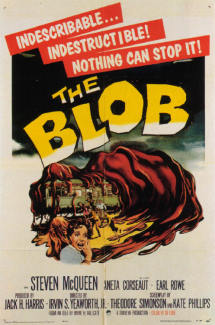
The Blob (1958)


Stuart's Nite

Bruce Kawin via the awesome The Criterion Collection:

The horror and science fiction films of the 1950s were always in search of new monsters. A teenage werewolf was a compromise, targeting the new audience with a variation on an old idea. The original creations made their pictures unforgettable: Invaders from Mars (1953), Creature from the Black Lagoon (1954), This Island Earth (1955), The Fly (1958).

Unlike most monsters of the period, the Blob has no humanoid element. It has a will—to consume flesh—and it moves in search of victims; that is what passes for the Blob’s character, and the simplicity of the concept makes the Blob an especially formidable and memorable Thing. It came from the stars. It dissolves flesh on contact. As it absorbs people, it gets bigger and turns red with their blood. It can flow under or around any obstacle. It can’t be killed. It is a monster of appetite: an absolute consumer, voracious, growing. And it hates cold.
Irvin Yeaworth(1926–2004). American director and producer. Via Gary Westfahl:

The son of an ordained minister (but never a minister himself, despite some accounts), he was reportedly a radio performer as a child, and a radio and television producer as an adult. He first achieved a modicum of prominence in the 1950s as the head of a small Pennsylvania company, Valley Forge Films, producing noncommercial short subjects on religious themes; he had also by this time been credited as the producer and director of The Flaming Teen-Age (1956), an obscure teen exploitation movie with a devotional spin. One of his works must have been pretty impressive, for it inspired New York producer Jack H. HARRIS to invite Yeaworth to direct a cheap science fiction film for general release. In response to this odd opportunity, the devout Yeaworth surely prayed earnestly for divine guidance, and the Lord, once again displaying His infinite wisdom, advised him to accept the assignment.

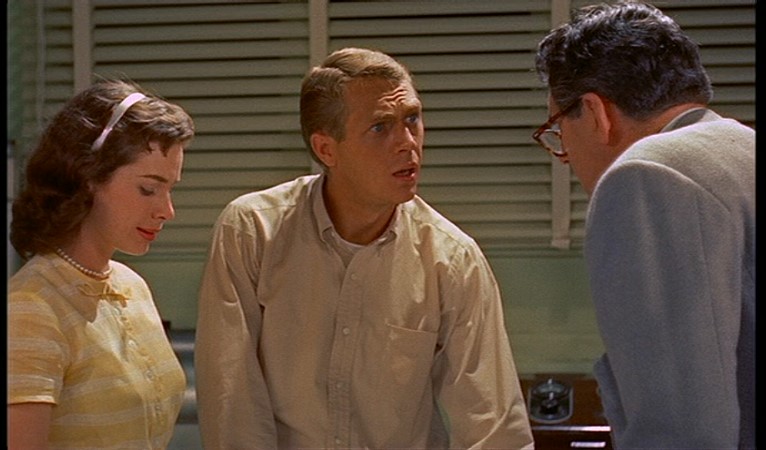
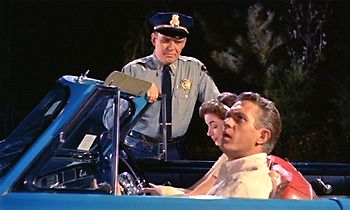
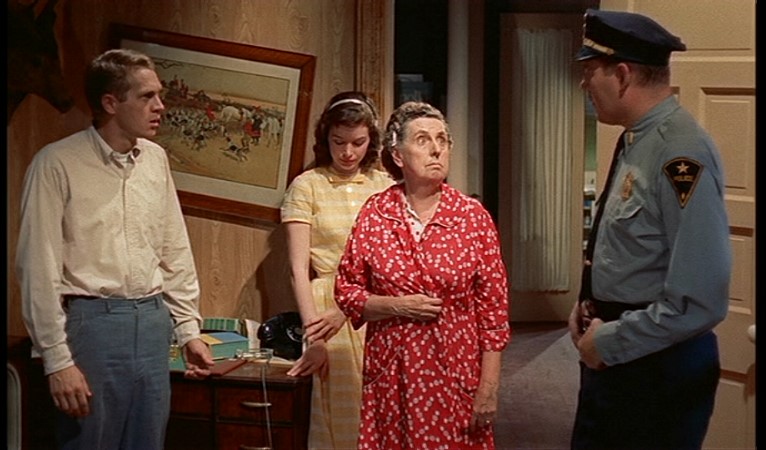
For what emerged from the unlikely collaboration of Yeaworth and Harris was The Blob—perhaps not one of the best, but surely one of the most distinctive and memorable science fiction films of the 1950s. Its amorphous, pulsating silicone represented an original variation on the monster-from-space theme, and filming on location in Pennsylvania allowed Yeaworth to effectively employ unusual settings like the railroad-car diner and the small-town movie theatre where the Blob oozes menacingly towards the audience. Yeaworth also had a flair for innovative camera work, as in the scene in a store where stars Steve McQueen and Aneta Corseaut are strangely filmed from a disconcerting low angle; then, relating this to the image of the Blob slithering across the floor, we suddenly realize that we are being given a Blob's-eye view of the proceedings.

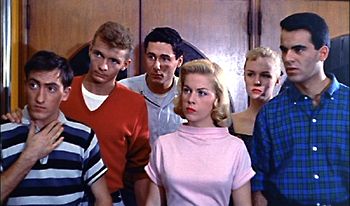
Most impressively, unlike almost every other teenagers-versus-monster movie of the era, The Blob insists upon treating its youthful protagonists with the utmost respect; the brilliantly cast McQueen and Corseaut may be inexperienced, but they are keenly observant—more so than the film's adults—and they take the responsibilities thrust upon them very seriously. Amidst scores of crudely made films that sought to extract money from teenagers' pockets while portraying them as fools, The Blob almost uniquely imbues its teenagers with a gawky gravitas that would not be observed again in American films until, perhaps, George LUCAS's American Graffiti. Just about Yeaworth's only misstep was his use of Ralph Carmichael's jarringly inappropriate, jazzy score which not only failed to enhance the film but was sometimes at cross purposes to it, as in the scene where McQueen and Corseaut contemplate their impending deaths to the accompaniment of soft, romantic music.
Behind the scenes via Hollywood Gothique:

The production story behind the original is almost as interesting as the film itself. It all started when Irvine H. Millgate met Jack H. Harris, a distributor who wanted to become a producer. "He [Millgate] was head of visual aids for the Boy Scouts of America," said Harris. "They had made a feature film, and they asked me to be consultant on the national distribution."

While promoting the film, Harris and Millgate toured the country together. "On our trips, we would talk about the great movie that I was gonna make one day, because that's what I wanted to do," recalled Harris. “Millgate said, ‘What is your formula?’ I said, ‘It's gotta be a monster movie. It's gotta be in color instead of black?and?white. It can't be a cheapy?creepie -- it’s gotta have some substance to it. It's gotta have characters you can believe in. And there's gotta be a unique monster -- never been done before. And the method of killing the monster would have to be something that grandma could have cooked up on her stove.’”

With those specifications in mind, Millgate went to work. Almost a year later, Harris was awakened one morning by a long-distance phone call from an excited Millgate. “He said, ‘I've got it -- I’ve got it -- Oh Lord, I've got it! THE MOLTEN METEOR!' I asked, 'What the hell's that?' He said, 'A mineral form of life that consumes human flesh on contact.' I said, ‘That sounds good, but how do we do it in?’ He said, 'You can't burn it; you can't reduce it with acid; you can't shoot it. There’s only one thing you can do: freeze it -- makes it immobile.' So that was the basic notion."

Millgate developed this notion into a treatment, which Harris took to Valley Forge Films, a production company in suburban Chester Springs, Pennsylvania, headed by Irvin S. ("Shorty") Yeaworth, Jr. Under Yeaworth's direction, Valley Forge Films had made hundreds of low?budget TV shows and numerous 16mm films. Along with producer Lou Kellman (The Burgler), Yeaworth had been trying to co-produce a feature, but they were unable to raise financing for a script they had developed -- “a Bridie Murphy kind of situation,” according to Yeaworth. The real-life case of a woman who became famous for allegedly recalling past lives under hypnosis had led to a brief vogue with reincarnation, but other films had already cashed in (e.g., Roger Corman’s THE UNDEAD in 1957). When Kellman approached his friend, distributor Jack Harris, for help raising money, Harris suggested making THE MOLTEN METEOR instead.

Although initially reluctant, Yeaworth eventually decided that science-fiction might not be a bad genre for a feature debut. “Science-fiction wasn’t where we lived,” he recalled. “We were not buffs, but it was a safe area for a first venture. We knew we weren’t ready for a serious dramatic film.”

A screenplay was developed from Millgate’s treatment. The script went through several drafts at Valley Forge, including uncredited input from the director’s wife, Jean Yeaworth, with a final draft credited to Theodore Simonson and actress Kay Linaker (who had written “Scandal at Peppernut,” an episode of The United States Steel Hour, under her pen name, Kate Phillips, in 1955).

“Ted worked with us on story,” Harris recalled. “With all due respect, I think he supplied more of a plot. I kept throwing in what I needed in the way of thrills. Once he did that, we hired Kate Phillips, who was an established writer, and she put the finishing touches on it.”

Months of pre-production went into preparing the film so that it could be complete on its limited budget. Harris felt that intense advance planning was the key to keeping the budget in check. "To me the most important part is preparation – that’s where it all happens. We had about three-and-a-half months preparation, besides story development. [It was] the best-prepared movie I've ever done; I thought they were all that way. I've found out since that time, they ain't all that way."

It was not until the second day of shooting that Harris learned he had cast a twenty-seven-year-old actor as a nineteen-year-old character. “The director came up to me and said, ‘You see – he’s twenty-seven!’ So I said, ‘Shut up and direct the movie!’ McQueen was a pain in the ass, but – boy – I’ll take that pain any time I can get it. He did a helluva a job. But it was very easy for me: Yeaworth had to work with him; I didn’t. But Yeaworth was happy once he saw the film cut together.”

For the most part, filming was an exercise in achieving results with very little. Luckily, the crew was willing to put in a maximum amount of effort for a minimum amount of money. "We were interested in the progress of our studio; therefore, we were all really participants in the project, even though we're not participants in the profits,” said Spalding.

Shooting was a grueling experience involving many twenty?hour days, often six or seven days a week, in order to cut down on equipment rental expense. Said Spalding, "We already owned the lights and sound stages and bad built all the sets; it was all our equipment except the cameras. None of us had ever shot a full?length feature. I'd been shooting quite a while, all 16mm. I'd never operated a 35mm camera, never used a gear head. Three weeks later, we had the basic film shot; then we started doing the special effects.

Sunday, May 21, 2006

Mommie Dearest (1981)

Pamela's Nite
Nasty review from Scott Weinberg via Apollo:

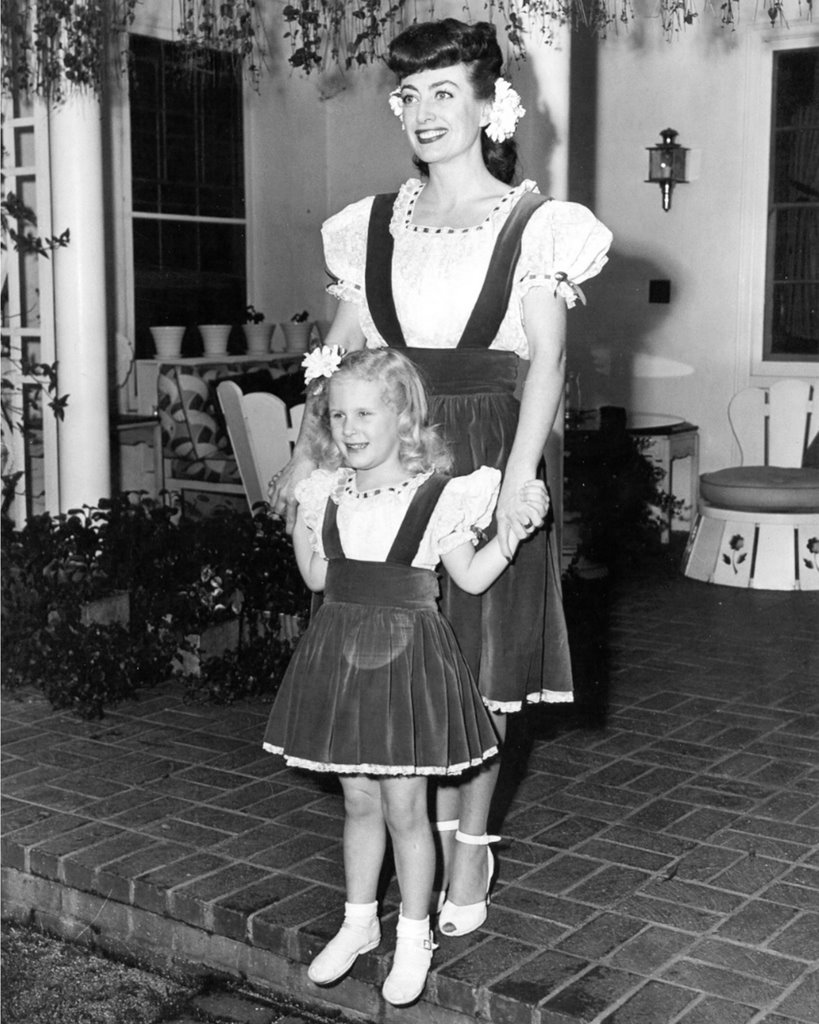
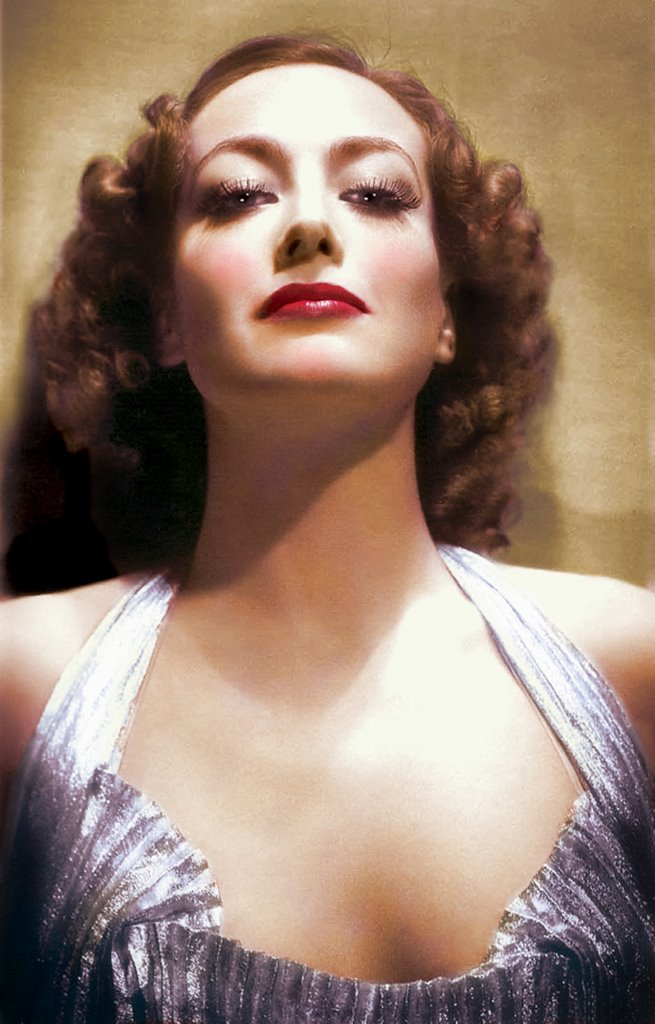
Based loosely upon an already unreliable source (the sour grapes novel written by Christina Crawford mere months after her adopted mother’s death), Mommie Dearest offers a series of barely related sequences, most of them having to do with child abuse, an egomaniacal psychopath of a woman and alcohol. Rarely has the Hollywood machine cannibalized its own kind as sickeningly as this film does. Joan Crawford may have been a sick woman who physically abused her children, but I doubt she was as one-dimensionally evil as portrayed in this unintentional farce.

For fans of cinematic superlatives, Mommie Dearest is worth a look. Faye Dunaway delivers one of the most over-the-top and manic performances ever caught on celluloid, while every other actor onscreen wisely steps back and watches the carnage. The infamous “no more wire hangers!” sequence is a perfect example of what this campy dreck is all about. But there are at least seven or eight other scenes that match the depravity of that well-remembered outburst. Lacking any real story line, the interminable running time is instead littered with sordid tales of Crawford’s cruelty, egomania, ignorance and overall unpleasantness.
Great observation from Hal Erickson, All Movie Guide:

Surprisingly, one emerges from Mommie Dearest with more sympathy for the monstrous but intensely vulnerable Crawford than for her whining daughter (played as an adult by Diana Scarwid, and as a child by Mara Hobel). Our favorite scene: Joan Crawford dazedly replacing her ailing daughter in the cast of a daytime TV soap opera.
Roger Ebert (via Roger Ebert):

In scene after scene, we are invited to watch as Joan Crawford screams at Christina, chops her hair with scissors, beats her with a wire coat hanger and, on an especially bad day, tackles her across an end table, hurls her to the carpet, bangs her head against the floor, and tries to choke her to death. Who wants to watch this?

This material is presented essentially as sensationalism. The movie makes no attempt to draw psychological insights from the life of its Joan CrawfordÑnot even through the shorthand Freudianism much beloved by Hollywood. Mommie is a monster, that's all, and there's some mention of her unhappy childhood. Christina is a brave, smiling, pretty, long-suffering dope who might inspire more sympathy if she were not directed (in both her childhood and adult versions) to be distant and veiled.