Sunday, May 21, 2006

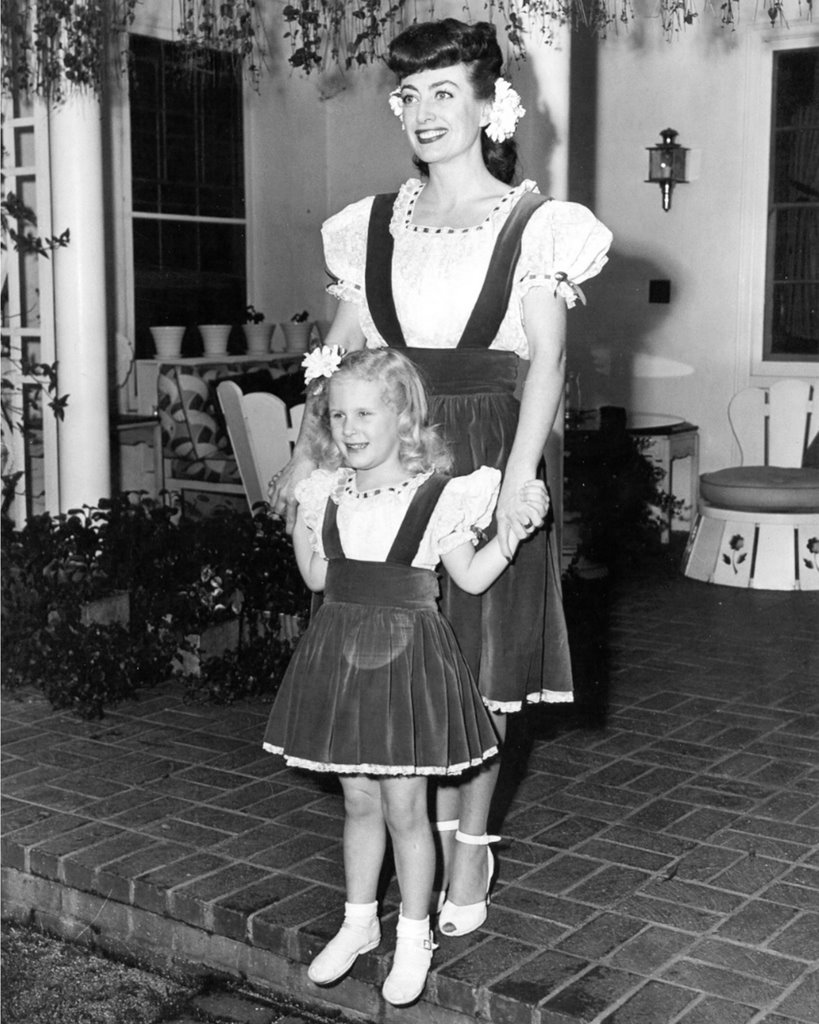
Mommie Dearest (1981)

Pamela's Nite
Nasty review from Scott Weinberg via Apollo:

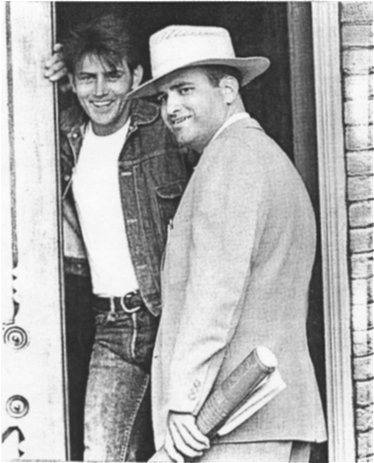
Based loosely upon an already unreliable source (the sour grapes novel written by Christina Crawford mere months after her adopted mother’s death), Mommie Dearest offers a series of barely related sequences, most of them having to do with child abuse, an egomaniacal psychopath of a woman and alcohol. Rarely has the Hollywood machine cannibalized its own kind as sickeningly as this film does. Joan Crawford may have been a sick woman who physically abused her children, but I doubt she was as one-dimensionally evil as portrayed in this unintentional farce.

For fans of cinematic superlatives, Mommie Dearest is worth a look. Faye Dunaway delivers one of the most over-the-top and manic performances ever caught on celluloid, while every other actor onscreen wisely steps back and watches the carnage. The infamous “no more wire hangers!” sequence is a perfect example of what this campy dreck is all about. But there are at least seven or eight other scenes that match the depravity of that well-remembered outburst. Lacking any real story line, the interminable running time is instead littered with sordid tales of Crawford’s cruelty, egomania, ignorance and overall unpleasantness.
Great observation from Hal Erickson, All Movie Guide:

Surprisingly, one emerges from Mommie Dearest with more sympathy for the monstrous but intensely vulnerable Crawford than for her whining daughter (played as an adult by Diana Scarwid, and as a child by Mara Hobel). Our favorite scene: Joan Crawford dazedly replacing her ailing daughter in the cast of a daytime TV soap opera.
Roger Ebert (via Roger Ebert):

In scene after scene, we are invited to watch as Joan Crawford screams at Christina, chops her hair with scissors, beats her with a wire coat hanger and, on an especially bad day, tackles her across an end table, hurls her to the carpet, bangs her head against the floor, and tries to choke her to death. Who wants to watch this?

This material is presented essentially as sensationalism. The movie makes no attempt to draw psychological insights from the life of its Joan CrawfordÑnot even through the shorthand Freudianism much beloved by Hollywood. Mommie is a monster, that's all, and there's some mention of her unhappy childhood. Christina is a brave, smiling, pretty, long-suffering dope who might inspire more sympathy if she were not directed (in both her childhood and adult versions) to be distant and veiled.

Sunday, April 30, 2006

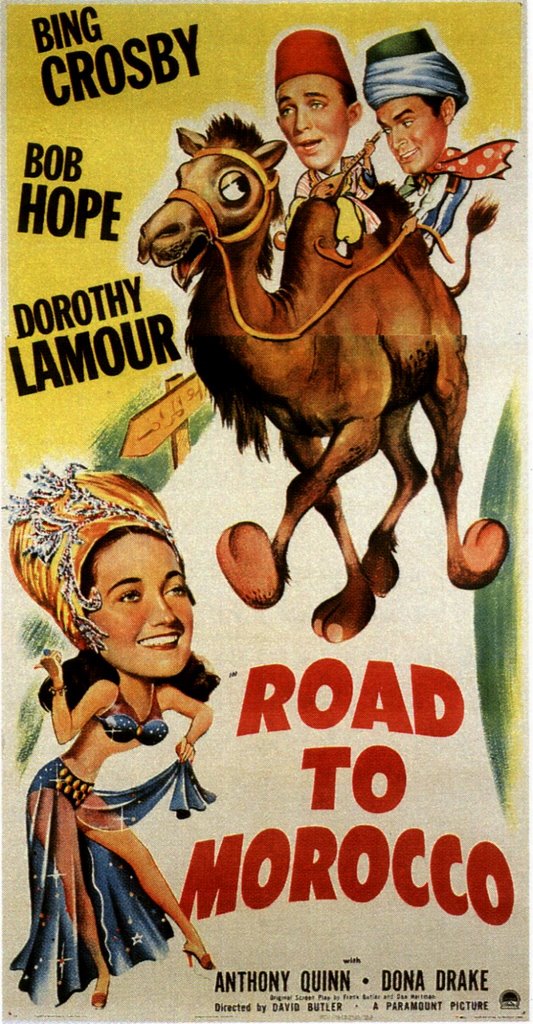
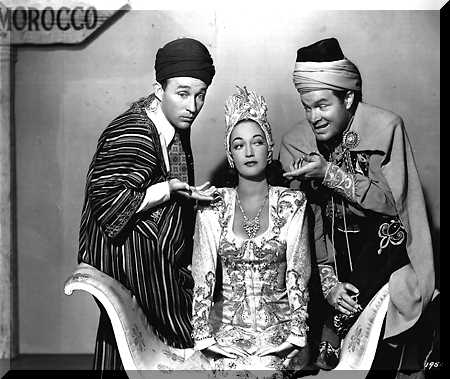
Road to Morocco (1942)

Peter's Nite
"Road to Morocco" lyrics via mcckc:

We're off on the road to Morocco
This camel is tough on the spine (hit me with a band-aid, Dad)
Where they're goin', why we're goin', how can we be sure
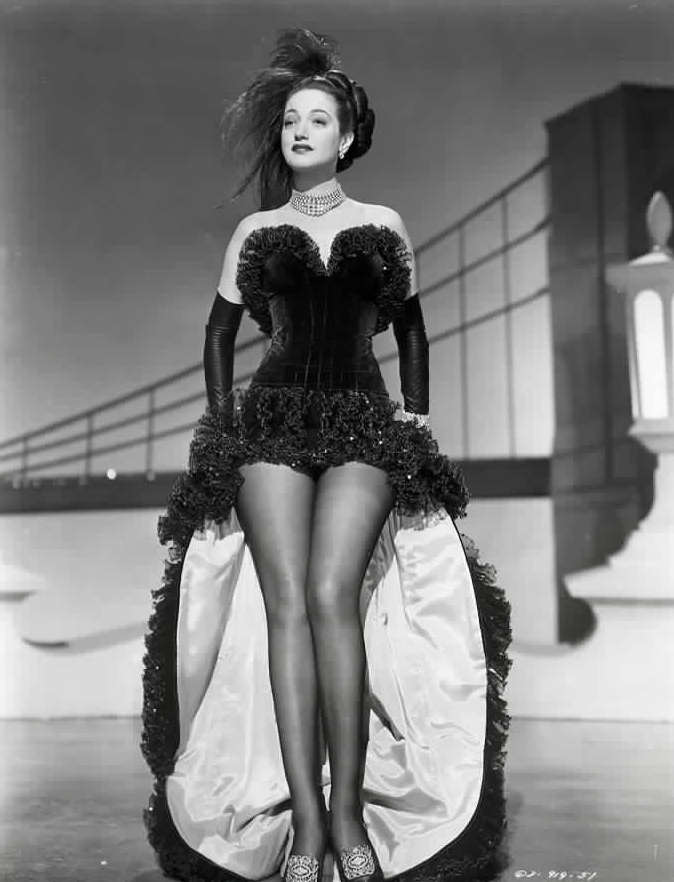
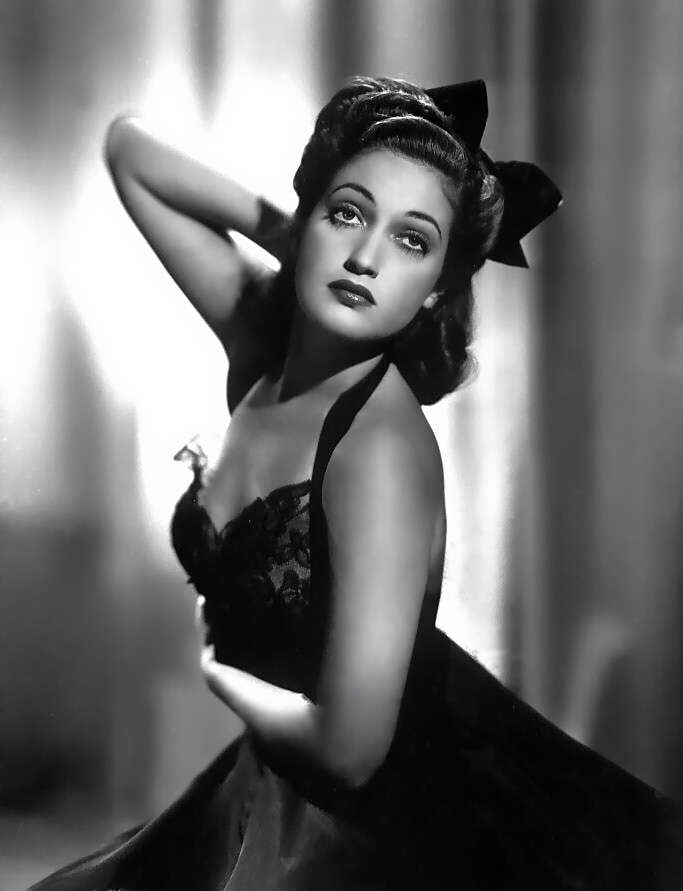
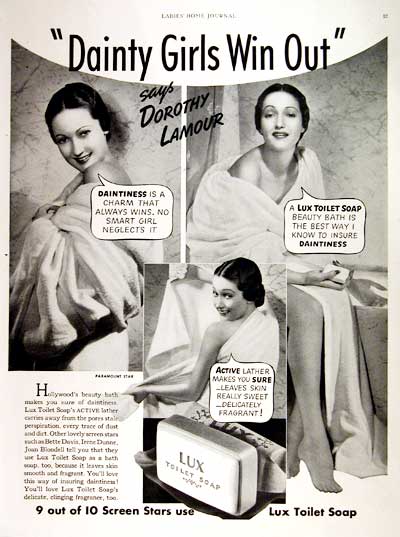
I'll lay you eight to five that we'll meet Dorothy Lamour (yeah, get in line)

Off on the road to Morocco
Hang on till the end of the line (I like your jockey. Quiet)
I hear this country's where they do the dance of the seven veils
We'd tell you more (uh-ah) but we would have the censor on our tails (good boy)

We certainly do get around
Like Webster's Dictionary we're Morocco bound

We certainly do get around
Like a complete set of Shakespeare that you get
in the corner drugstore for a dollar ninety-eight
We're Morocco bound

Or, like a volume of Omar Khayyam that you buy in the
department store at Christmas time for your cousin Julia
We're Morocco bound
(we could be arrested)
From 100 Reasons to Toast Bob Hope via USA TODAY:

1942. "We couldn't get a real camel for (Road to Morocco), so the makeup department took one of Crosby's horses, put two big lumps on its back, long shaggy hair all over it, and made its front legs bend inward at the knees. It looked just like one of Crosby's horses."

1945. "Crosby's making nothing but costume pictures now. Any time you see him in a movie with his hat off and his waistline below 40 inches ... believe me, it's a costume picture."

1945's Road to Utopia. An elderly Hope, hearing Crosby's approaching singing voice for the first time in 35 years, "Who'd be selling fish at this hour?"
Larry King interview with Bob Hope via CNN:
KING: Encino, California for Bob Hope, hello?

CALLER: Good evening. My question for Mr. Hope is what brought about his first meeting with Bing Crosby? And could he tell that first time you meet him that there would be the chemistry that would exist between them for so many years?

HOPE: We played the Capitol Theater in New York, which was a big picture house. And Bing and I were featured. Abe Lyman (ph) was the orchestra. And we did three and four shows a day. And it got kind of boring, me just introducing them. So we started to ad lib. And we built up a couple of routines, like the president and the Pepsi Cola Company meeting the president of Coca-Cola on the street. We'd say hello and then we'd belch in the mike. And then I'd belch again and say bigger bottle with Pepsi.

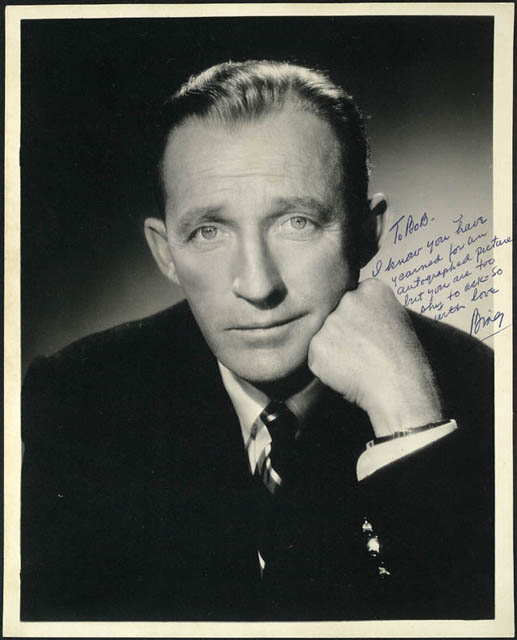
And we worked up this routine. Now when I got out here in '37, Bing invited me down to Delmar. And we did the routine down there. And somebody saw it and went right back to Paramount and said you got to put these guys together. Boy, they were -- they didn't know that we had rehearsed it five years before for a couple of weeks. And we stayed. We had a picture called "Flight to Singapore" and changed it to "Road to Singapore." And that was the start of the thing.

KING: In retrospect, Bob, as you looked at it, what do you think was the magic with the two of you?

HOPE: Well, I don't know.

KING: Why did it work?

HOPE: I don't know, Larry. I think it was the fact that we had a great respect for each other and we both understood how to feed each other. And it was more fun. I've never had that much fun anywhere making a picture. It was just -- and you never knew what was going to happen because we used to rat out at each other and steal a punchline before he was supposed to take it. He'd do the same thing to me.

And it was a shambles all the way. It was fun. And the people knew what we were doing.

KING: You did have, I guess you're aware of this, a wonderful attitude. There was a Bob Hope attitude when he walked on a stage, that was seemingly oblivious to everything. I mean, this was going to be just another easy night. Was that outward? For example inward, are you still nervous when you do a monologue?

HOPE: No, I'm not. I'm only concerned, Larry, that the fear of that I'll forget something. You know, when I go to do a personal appearance. And that's the only thing. And a lot of times I do forget because -- especially because I try to do fresh, new things, you know, like I did a whole routine down in Cap (ph) over the weekend. And I said I don't like what's going in Washington because I hate -- you know, I hate when the foreign policy is funnier than I am. And Congress is pretty upset because they hate it when things get screwed up and they don't have a hand in it.

KING: We go to Tallahassee, Florida, hello.

CALLER: Perhaps no other person has been in a better position to see the progress of the American GI. Is there any difference between the GIs of my era and Vietnam from -- to World War II to the present?

KING: Good question.

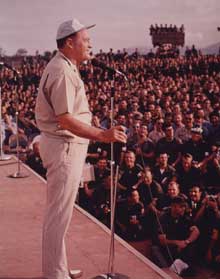
HOPE: I don't think so. Last Monday, I was up near the DMZ with Brooke Shields and this little Gloria gal from the Miami Sound Machine. And we did a show -- we went up there by helicopter and did a show for 3,000 GIs. And they're the same way. They love the gals and they love the jokes.
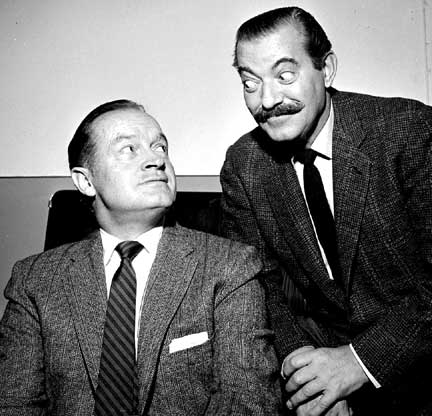
Bob Hope regular Jerry Colonna:

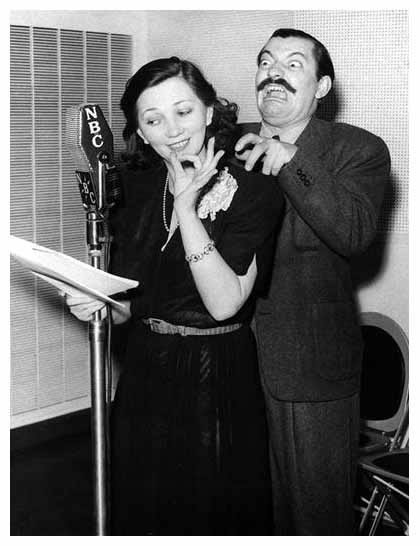
Jerry was born Gerardo Colonna in Boston on September 17, 1904, of Italian immigrant parents. As a little boy he admired his grandfather's enormous moustache ("You could see it from the back!") so much that he often painted one on his upper lip with axle grease. As soon as he could manage it, he grew a "baffi" of his own. Jerry was extremely gifted musically, and he loved jazz, beginning as a drummer then finding his metier in the trombone.

Moving to New York, he became a fixture in orchestras on major radio shows and in the top big bands. At one point he was named one of the five best trombonists in the country.

In the late 30's Jerry's career took an unexpected turn. Comedian Minerva Pious, who played Mrs. Nussbaum on the Fred Allen show, loved Jerry's off-stage antics (he had received so many warnings from CBS for his pranks that he was finally put on perpetual notice. But they never actually fired him -- he was too good a trombonist). Pious decided that Fred Allen, a workaholic, needed a laugh, so she convinced him that Jerry was a brilliant operatic tenor and that Fred should give him an audition. When Jerry gave out with an ear-splitting "You're My Everything," Fred literally fell to the floor laughing and gave him a few guest spots on the show. These led to movie roles, and to the Kraft Music Hall, hosted by Bing Crosby. Bing took Minerva Pious' in-house joke to new lengths by announcing publicly that Giovanni Colonna, one of the greatest living baritones (!) would make his American radio debut on the show. After that broadcast, a number of classical music critics stopped talking to Bing altogether. The following summer, following an appearance at the Del Mar racetrack clubhouse, Jerry was approached by Bob Hope, and radio history was begun.

Jerry's recordings ("I have destroyed many beautiful songs.") are collected today by connoisseurs of madcap comedy. He is probably best known for his hysterical versions of "On The Road To Mandalay" and "Ebb Tide" (where most recordings of the latter began with the sounds of surf and seagulls, Colonna's also includes chickens).

Jerry's hobbies included riding his cowponies, collecting guns (he was a crack shot with a Colt .45) and composing music ("Along The Dixie Hi-Fi-Way," an album of his tunes, was released in 1956).

Jerry left the Bob Hope show as a regular around 1950, although he continued to join Bob for the Christmas shows and occasional TV specials. In the mid-50's he achieved yet another sort of immortality by recording the voice of the March Hare in Disney's "Alice In Wonderland," with Ed Wynn as the Mad Hatter.
"Notes on Road to Morocco" via Moviediva:

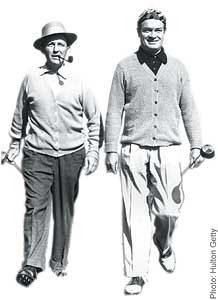
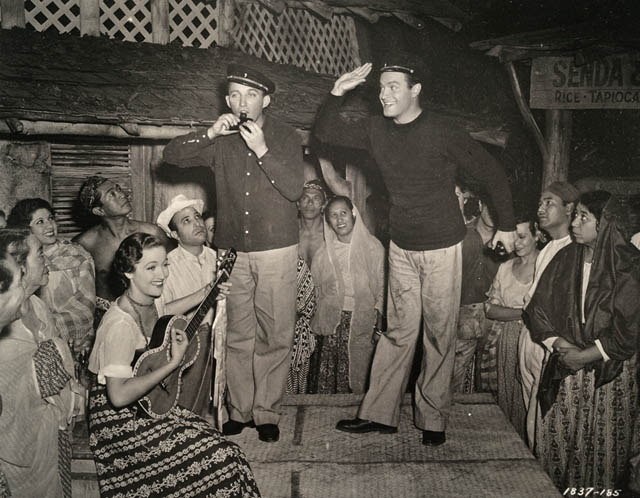
Hope and Crosby enjoyed themselves ad libbing so much, that Dorothy Lamour gave up memorizing her lines, and decided that getting a good’s night sleep so she could keep up with the improvised wordplay was the best preparation possible. Just because the dialogue was not in the script, didn’t mean that someone didn’t write it, since Hope and Crosby both brought in their radio gag writers to punch up the lines. The director conceded, “You know, I really shouldn’t take any money for this job. All I do is say ‘Stop’ and ‘Go.’” They genuinely seemed to enjoy each other’s company and their friendship, on stage and on the golf course, would continue the rest of their lives. The Road to Singapore, as the film was eventually titled was the first of the 7 Road pictures they would make together. The huge success of the "Road" films was instrumental to Bob Hope's status from 1941-1953 as one of the top 10 box office draws (except for one year). The second "Road" film (…to Zanzibar) was yet another script plucked off a dusty shelf, but the third one, The Road to Morocco, was original material, tailored to Hope and Crosby.

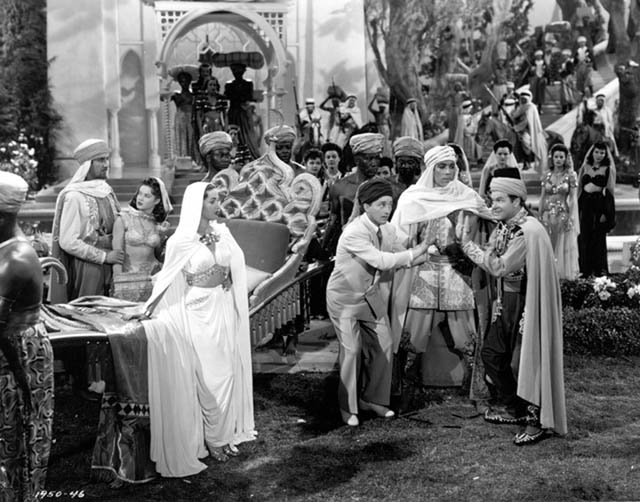
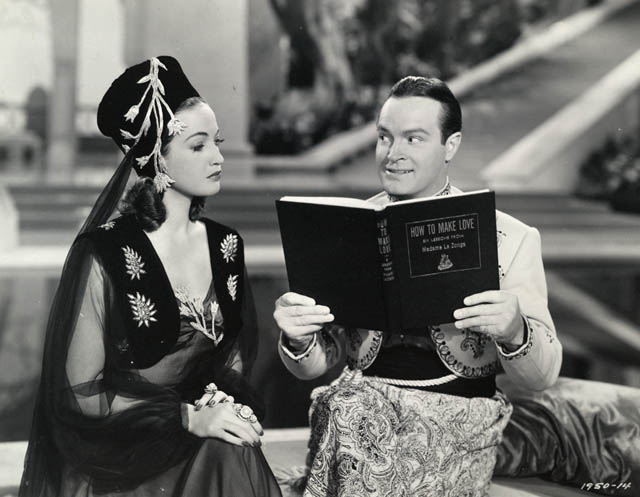
This is considered the best of the "Road" pictures. The formula for success includes topical humor similar to that incorporated into Hope’s radio show. The director of this film, David Butler, was well-suited to the comic task, having grown up at Mack Sennett’s slapstick comedy studio in the silent era, and he knew both how to structure a comic scene and when to let the stars wing-it. Rehearsals lost some of the comic spontaneity, so Butler said, “I’d always let the camera run, and we got some of our funniest stuff after the scene was over. I’d even let the camera roll until they got off the set, or walked out, or whatever happened.” This paid off best in the scene where a cranky camel spits in Bob’s eye, and Bing’s laughter shows his surprise. But, as a former stuntman, Butler also volunteered the rather sedentary Hope and Crosby for a thrill or two they would have preferred to avoid, as when a stampede of horses got out of hand, and the stars narrowly escaped being trampled.

The costumes, as for all Paramount “A” films, were designed by Edith Head, who at this point in her career worked on between 40 and 50 films a year. She enjoyed working on the Road films, and wrote in her autobiography, “I didn’t have to worry about authenticity. If somebody wrote and said, ‘Edith, in Morocco they don’t wear headdresses like that,’ I didn’t give a damn. If Bob Hope wanted to wear it because it was funny, he wore it.” (Head). Hope loved dressing up and Crosby hated it. Lamour, who had started in sarongs (she was sewn into them, so they wouldn’t untie) loved the exotic glamour of films like Road to Morocco. “Bob has a special place in my heart for what he did for my costumes in the Road pictures. It was his enthusiasm that really inspired everyone else to get into the spirit of the Roads. There were chaotic plots and gags and lavish sets and great music, but Bob Hope pulled it all together.” (Head).

The film was promoted by tacking cards to drinking fountains reading, “Thirsty for entertainment? See what happens when Bob Hope chases Bing Crosby and Dorothy Lamour to a desert oasis on the Road to Morocco.” In fact, the best promotion for the film were the stars radio programs, many of which, by this time, Hope was doing from Army training bases across the country.
BBC on the 'Road' Films:

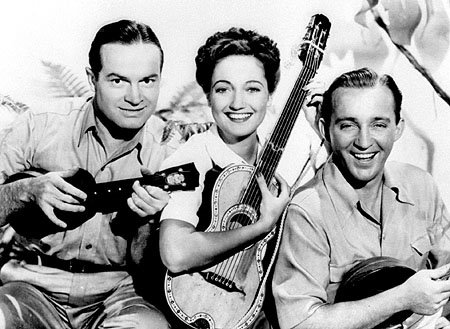
The pairing of Crosby and Hope was inspired, with the two men having an instant chemistry. They were forever ad-libbing, generally at each other's expense, and trying to outdo each other to the point where Lamour wondered why she ever bothered learning the scripts for the films. Lamour herself was the perfect foil for Hope and Crosby - beautiful and exotic and equally at home singing with Crosby or setting up jokes for Hope.

I was the happiest and highest-paid straight-woman in the business.
- Dorothy Lamour

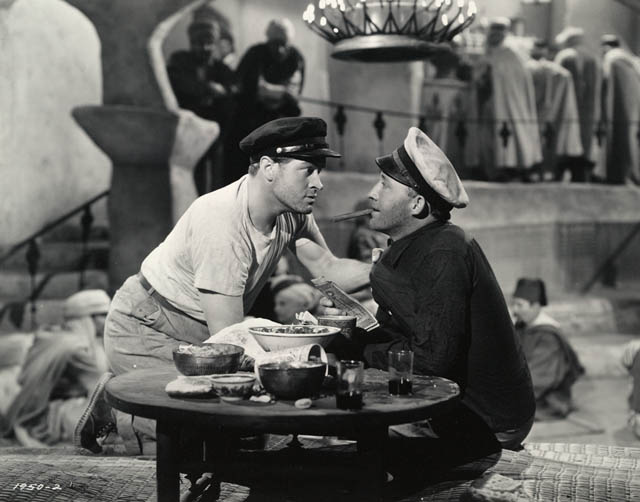
The plots of the six films - insomuch as they had a plot - were very similar. Crosby was a con artist or playboy of some description, with Hope as his unwilling sidekick. The pair's failed attempts at romance or moneymaking would lead to them fleeing America and taking refuge in some exotic location, where they would stumble across Lamour dressed in a sarong1. Hope and Crosby would vie for the affections of Lamour, all the while avoiding whatever trouble they were in to start with, plus whatever extra trouble they got themselves into. Crosby's charm and melodious singing would eventually win the girl, leaving Hope with only wisecracks and one-liners to console him.

Road to Morocco marked the Road... films hitting their stride and it was nominated for two Oscars: Best Screenplay (Frank Butler and Don Hartman) and Best Sound Recording (Loren L Ryder). One of the film's funniest moments, however, was completely unscripted. In a scene with Hope, Crosby and a camel, the camel decided to spit heavily in Hope's face. Fortunately, the cameras were rolling and the director was so amused by the expressions on the actors' faces that he kept the shot, with Crosby complimenting the camel on its impeccable taste.

The film also saw an increase in the self-referential and slightly surreal moments that were a staple of the Road... films. For example, the film features a camel remarking that 'this is the screwiest picture I was ever in'. The film also features Hope as the ghostly Aunt Lucy, who appears to remind Peters of his obligations to his friend.
"What's Sarong with this Picture?" by Ethan de Seife via SensesofCinema:

In 1946, just prior to the production of Paramount's mystery-comedy My Favorite Brunette (Elliott Nugent, 1947), Dorothy Lamour, with the full assistance of the studio's publicity department, staged a memorable stunt. She publicly burned a sarong, the skimpy South Seas garment with which she had been inseparably associated since her first starring role, in Paramount's 1936 tropical romance The Jungle Princess (Wilhelm Thiele) (Head and Calistro, 67). Between The Jungle Princess and My Favorite Brunette, her busiest period as an actress, Lamour had appeared in 34 feature films, in the process establishing herself as Paramount's top female box office attraction. Lamour appeared in a sarong in 11 of those films, meaning that fully two-thirds of her roles during that ten-year span did not call for her to wrap herself in any manner of South Seas attire. But there was something indelible about the connection between Lamour and her trademark garment: audiences seemed to remember her not for the variety of roles she played, but for those roles in which she appeared in a revealing sarong. By publicizing the stunt, the studio was offering a non-sarong-clad Lamour to the public, as well as simultaneously reminding them that Dorothy Lamour and the sarong would be forever united. The very act of burning the sarong could only serve as a reminder that Lamour's sarong pictures were extremely popular. Lamour was always presented in the context of her trademark attire. Despite the stunt, Lamour would don the sarong again at least four more times in her long career.

Lamour's star image was somewhat unusual in that, from her first starring role, the studio found an image that clicked with the public. Her frequent declarations that she was fed up with wearing sarongs indicate that this image clicked all too well. Her track record at the box office showed that the films in which Lamour did not appear in a sarong reaped less money than the ones in which she did.

Sunday, April 23, 2006

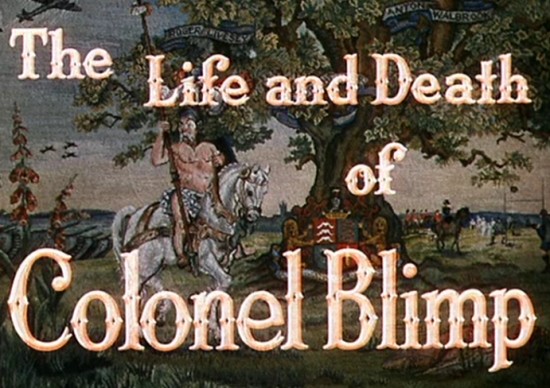
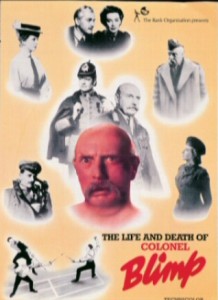
The Life and Death of Colonel Blimp (1943)

Stuart's Nite
Special Guest -- Stuart's Mum!
Screenonline:

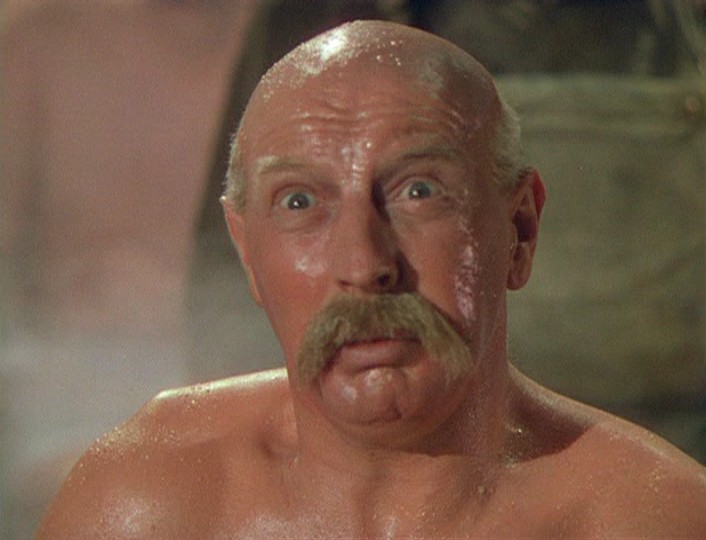
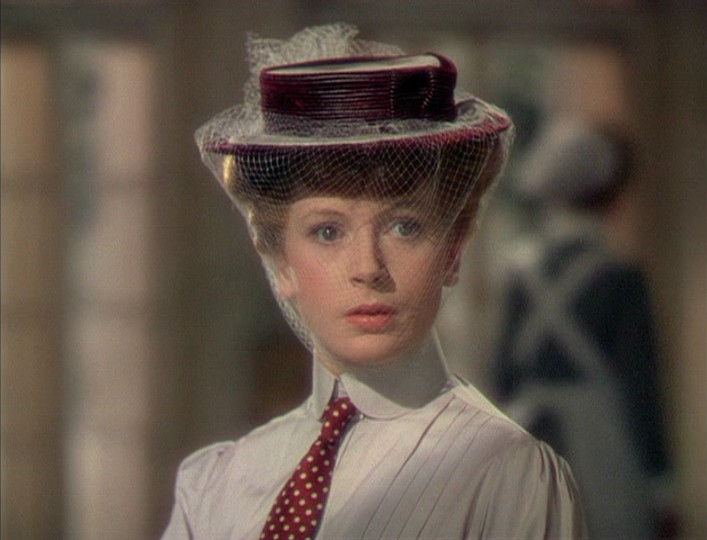
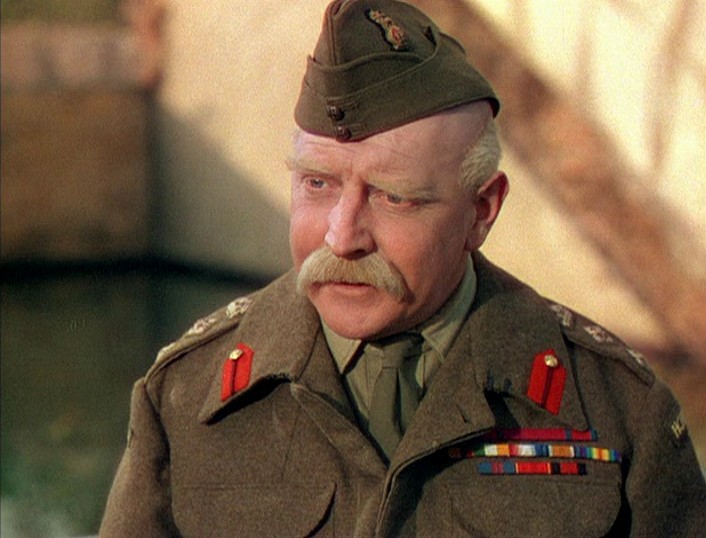
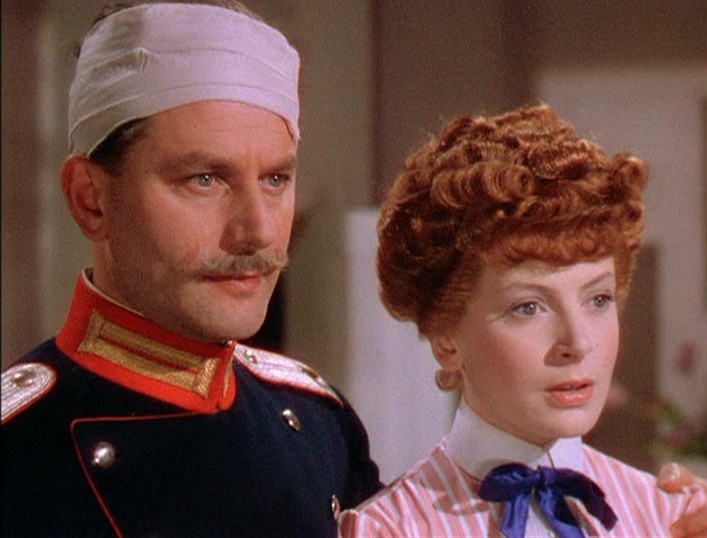
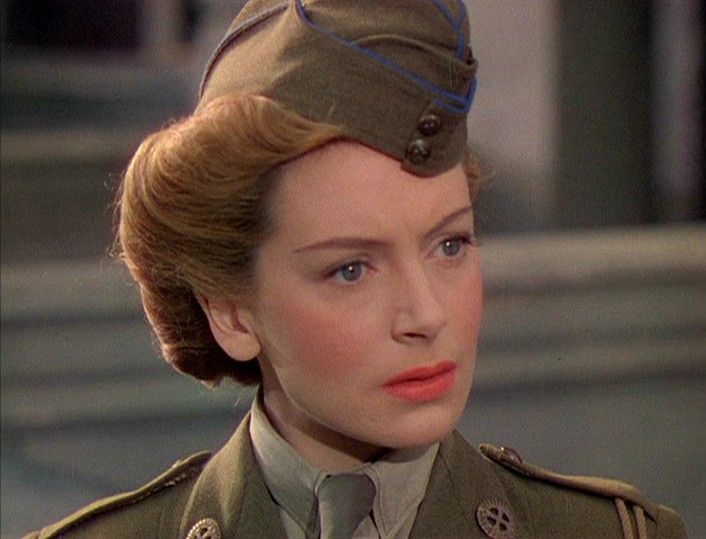
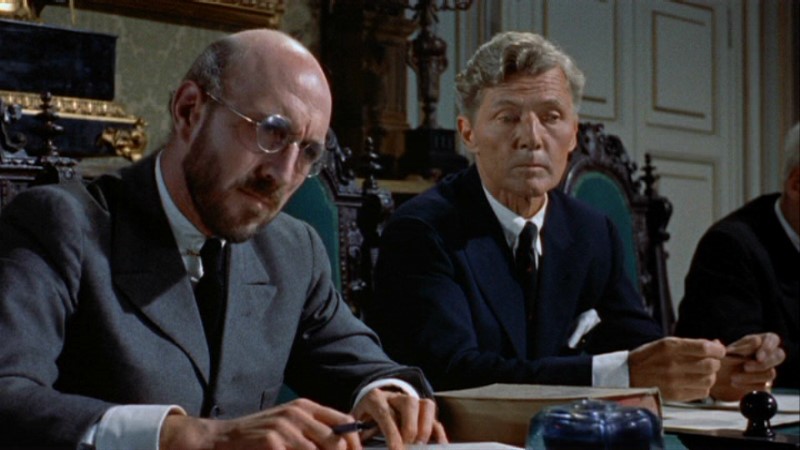
The Life and Death of Colonel Blimp was Powell and Pressburger's second feature for their new Archers production company, following "...One of Our Aircraft is Missing" (1942). The film was their most ambitious collaboration so far, loosely inspired by a popular cartoon series by David Low, lampooning the military establishment as personified by an ageing, buffoonish officer.

Pressburger's script portrays, with a mix of sympathy and exasperation, a well-meaning but hopelessly out-of-date old man, who stubbornly fails to recognise the nature of the enemy and the cost of failure. The film is an implicit criticism of an officer class which insisted on seeing the war as a game, fought according to 'gentlemen's rules'.

The film so incensed Winston Churchill - who saw it as unpatriotic and a threat to morale - that he tried to have it banned and, when he failed, did his best to spoil its success overseas. Nevertheless, Blimp was a great success.
Robin Cross via Channel 4:

In a Britain fighting a ‘total war’, cinema became a key instrument of propaganda. The makers of feature films responded by abandoning the celebration of stiff-upper-lip heroics by toff-ish officer types to refocus on the ‘real’ lives of ordinary soldiers and war workers. This shift of emphasis can be seen in such films as Nine Men (1943), San Demetrio, London (1943) and Millions Like Us (1943) dealing with, respectively, an isolated infantry platoon in North Africa, merchant seamen in the Battle of the Atlantic, and factory workers in Britain’s industrial heartland.
Against the tide

Swimming determinedly against this powerful ‘documentary’ tide was the director-writer team of Michael Powell, a deeply conservative Englishman, and Emeric Pressburger, a Hungarian émigré. The idea for The Life and Death of Colonel Blimp sprang from a scene that they had excised from one of their earlier films, One of Our Aircraft Is Missing (1941), in which the middle-aged rear gunner of a bomber crew reminds a younger airman that he too was hot-headed and idealistic in his youth.

This deleted scene was combined with the eponymous character of ‘Colonel Blimp’, created by the left-wing cartoonist David Low for the London Evening Standard. Low’s Blimp was a portly relic of Britain’s colonial past, bald-headed and blustering at the iniquities of the modern world from the steamy sanctuary of the Turkish bath in the Royal Bathers’ Club.

Powell and Pressburger had originally cast Laurence Olivier in the part of Candy. The actor had wanted to play Blimp as a ‘slashing, cruel and merciless’ figure, a characterisation that would have unbalanced the film.

However, the War Ministry refused to release Olivier from service in the Fleet Air Arm. Pressburger’s screenplay sent entirely the wrong message, it said, focusing ‘attention on an imaginary type of army officer which has become the object of ridicule’, and ignoring the ‘thug element in our German foe’. It warned that the film might encourage defeatism.

Prime Minister Winston Churchill – many of whose own ideas were decidedly Blimpish – became involved in the row. In September 1942, he sent a memo to his minister of information Brendan Bracken asking if the production could be halted: ‘I am not prepared to allow propaganda detrimental to the morale of the army. Who are the people behind it?’
Also see the MovieNite entry on Peeping Tom (1960).

Sunday, April 16, 2006

The Nun's Story (1959)

Nora's nite
Bob Allen on Fred Zinnemann:

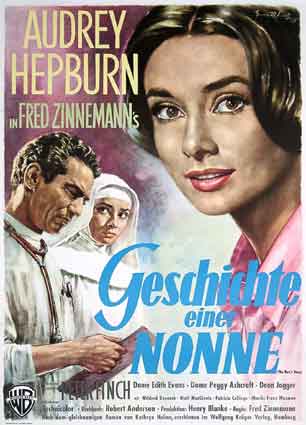
Fred Zinnemann was born in Vienna in 1907. In his late teens while studying law he became interested in movies. Impressed with the films of Eisenstein and von Stroheim he decided to quit law, and to the dismay of his family. went off to Paris to do an 18 month camera course. After the course he moved to Berlin and got work in German studios as a camera assistant.

With the arrival of talking pictures, European production slowed down so the young Zinnemann decided he must chance his luck in the USA to learn about the new technology. He arrived in Hollywood in 1929. Despite the fact that his application to join the cameraman's Local was sponsored by the great Billy Bitzer, he was turned down. That was the end of his camera career.

He got work as an extra on All Quiet On The Western Front which lasted several months. Later, during a job as personal assistant to Berthold Viertel, he met Robert Flaherty, the father of story documentary features. He talked Flaherty into taking him on as an assistant and returned with him to Berlin to set up a new mid-Asian documentary expedition.

It would seem he learnt a great deal from this relationship. In all his films Fred Zinnemann managed to get a believable feeling of reality as if the pictures had been taken of actual events. His years working in MGM's short film department on series such as Crime Doesn't Pay taught him how to tell stories economically and how to shoot without fuss.

He made a total of 21 feature films, five of which yielded 23 Oscars. He himself had three Oscars for best direction - From Here To Eternity, A Man For All Seasons and a short subject in 1938 That Mothers Might Live.

His films were far from stereotyped, ranging from Oklahoma, a musical, to High Noon, perhaps the greatest western; from Here To Eternity, surely the best film about the US Army, to A Man For All Seasons, certainly the best historical drama.

In 1967 he settled in Britain and had lived here ever since with his with Rene, an English girl he met 60 years ago when she worked in Paramount's wardrobe department. Their son Tim is now a Hollywood producer.

Sunday, April 02, 2006

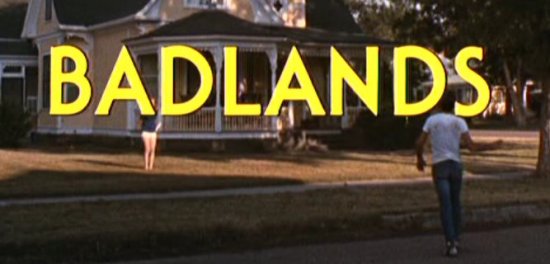
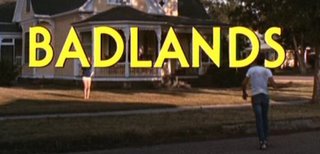
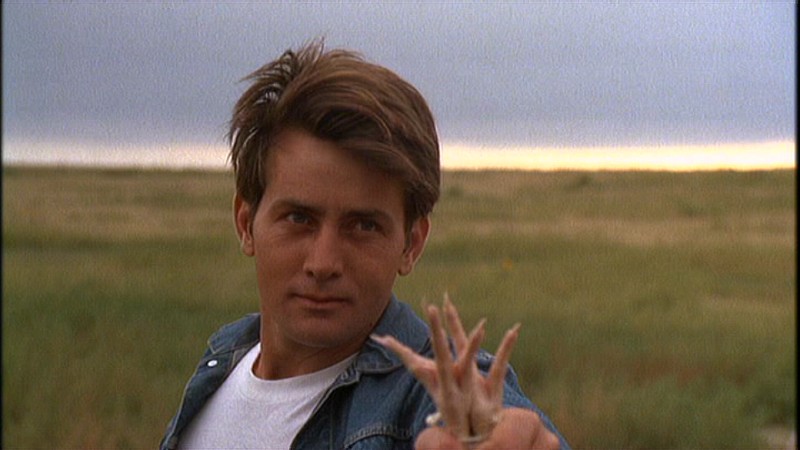
Badlands (1973)

MovieNite 8th Anniversary celebration! Pamela's Nite
Beef bourginon, camembert mashed potatoes, braised red cabbage, lemon butter broccolini and lemon bundt cake
Malick interview from Sight and Sound via Eskimo:

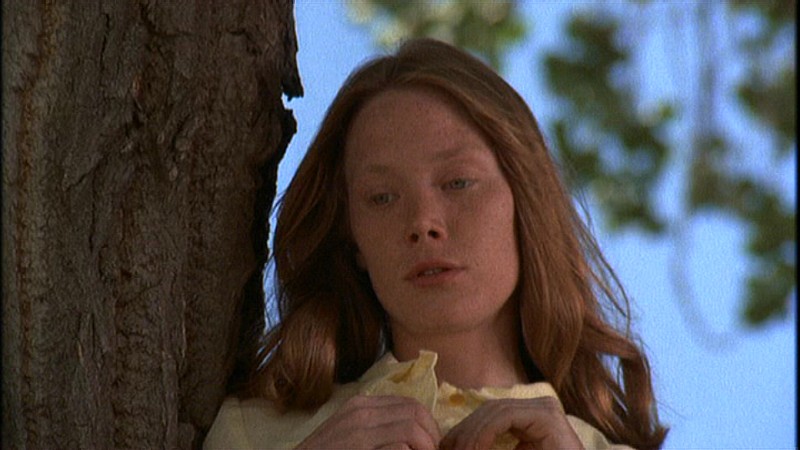
Interviewing Terry Malick,producer-writer-director of Badlands, turned out, like his film, to be full of idiosyncratic surprises. My prepared list of questions went by the wayside as Malick talked with passion, conviction and sometimes anger about his film. Acknowledging that he "couldn't have asked for more" in terms of critical acceptance, he also indicated that the actual filming was painful. Working in the dead heat of the 1972 summer, with a non-union crew and little money ($300,000, excluding some deferments to labs and actors), Malick encountered all sorts of problems, from difficulties over finance to the destruction of all the cameras during a fire sequence. Eventually, upon completion, Warners bought Badlands for just under a million dollars. It might turn in a decent profit for them.
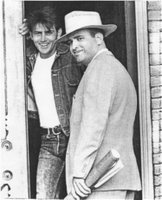
The son of an oil company executive, Malick grew up in Texas and Oklahoma. He went to Harvard and later to Magdalen College, Oxford, as a Rhodes Scholar. Philosophy was his course of study, but he never completed his thesis--in fact, his topic wasn't even acceptable to his Senior Tutor, Gilbert Ryle. Summer jobs took him from the wheat harvests in America and Canada, to work in oilfields and riving a cement mixer in a railyard, to journalistic endeavours for Life, Newsweek and the New Yorker. He was sent to Bolivia to observe the trial of Regis Debray; Che Guevara was killed the day after his arrival. In 1968, he was appointed a lecturer in philosophy for one year at MIT.

"I was not a good teacher; I didn't have the sort of edge one should have on the students, so I decided to do something else. I'd always liked movies in a kind of naive way. They seemed no less improbable a career than anything else. I came to Los Angeles in the fall of 1969 to study at the AFI; I made a short called Lanton Mills. I found the AFI very helpful; it's a marvellous place. My wife was going to law school and I was working for a time as a rewrite man-two days on Drive, He Said, five weeks on the predecessor to Dirty Harry at a time when Brando was going to do it with Irving Kershner directing. Then we all got fired by Warners; the project went to Clint Eastwood. I rewrote Pocket Money and Deadhead Miles. I got this work because of a phenomenal agent, Mike Medavoy.
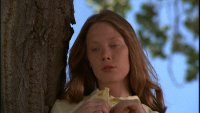
"At the end of my second year here, I began work on Badlands. I wrote and, at the same time, developed a kind of sales kit with slides and video tape of actors, all with a view to presenting investors with something that would look ready to shoot. To my surprise, they didn't pay too much attention to it; they invested on faith. I raised about half the money and Edward Pressman (the executive producer) the other half. We started in July of 1972.

"The critics talked about influences on the picture and in most cases referred to films I had never seen. My influences were books like The Hardy Boys, Swiss Family Robinson, Tom Sawyer, Huck Finn--all involving an innocent in a drama over his or her head. I didn't actually think about those books before I did the script, but it's obvious to me now. Nancy Drew, the children's story child detective--I did think about her."

"There is some humour in the picture, I believe. Not jokes. It lies in Holly's mis-estimation of her audience, of what they will be interested in or ready to believe. (She seems at time to think of her narration as like what you get in audio-visual courses in high school.) When they're crossing the badlands, instead of telling us what's going on between Kit and herself, or anything of what we'd like and have to know, she describes what they ate and what it tasted like, as though we might be planning a similar trip and appreciate her experience, this way."

"Kit doesn't see himself as anything sad or pitiable, but as a subject of incredible interest, to himself and to future generations. Like Holly, like a child, he can only really believe in what's going on inside him. Death, other people's feelings, the consequences of his actions-they're all sort of abstract for him. He thinks of himself as a successor to James Dean-a Rebel without a Cause-when in reality he's more like an Eisenhower conservative. 'Consider the minority opinion,' he says into the rich man's tape recorder, 'but try to get along with the majority opinion once it's accepted.' He doesn't really believe any of this, but he envies the people who do, who can. He wants to be like them, like the rich man he locks in the closet, the only man he doesn't kill, the only man he sympathises with, and the one least in need of sympathy. It's not infrequently the people at the bottom who most vigorously defend the very rules that put and keep them there."

"And there's something about growing up in the Midwest. There's no check on you. People imagine it's the kind of place where your behaviour is under constant observation, where you really have to toe the line. They got that idea from Sinclair Lewis. But people can really get ignored there and fall into bad soil. Kit did, and he grew up like a big poisonous weed."
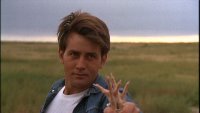
"I don't think he's a character peculiar to his time. I tried to keep the 1950s to a bare minimum. Nostalgia is a powerful feeling; it can drown out anything. I wanted the picture to set up like a fairy tale, outside time, like Treasure Island. I hoped this owuld, among other htings, take a little of the sharpness out of the violence but still keep its dreamy quality. Children's books are full of violence. Long John Silver slits the throats of the faithful crew. Kit and Holly even think of themselves as living in a fairy tale. Holly says, "Sometimes I wished I could fall asleep and be taken off to some magical land, but this never happened." But she enough believes there is such a place that she must confess to you she never got there."
Via Sense of Cinema:
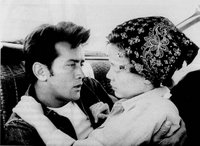
Malick's first film Badlands (1973) is ostensibly a semi-factual account of a mass-murderer and his girlfriend, set in the 1950s. What's immediately unusual about the film is its lack of interest in trying to explain the causes of its protagonists' violent behaviors, and furthermore, its lack of moral judgment of these individuals or the culture that produced them. Instead the film's focus is concentrated on their experience of alienation from the world that they inhabit and its values. As Heidegger might put it, the intelligibility of the world and the values people share are, at bottom, not based on justifications, nor are they arbitrary. It is a given fact, if you will, that they are based neither on unshakable foundations nor on arbitrary consensus.
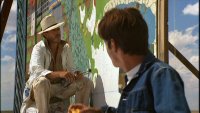
Malick's lack of interest in the causes of the characters' behaviors should not be understood as itself a moral judgment, as if their actions are in some nebulous way justified. This film is not a polemic, like Kiéslowski's A Short Film about Killing (1988). Rather, Malick's point seems to be that mere condemnation, or trying to determine the causes of their actions, essentially evades the fact that our world and values sometimes are unable to deal with certain human possibilities.
Via Crime Library:

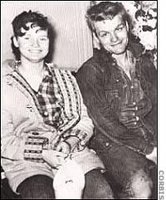
In 1958, nineteen-year-old Charles Starkweather was desperate. Desperate to marry his jailbait girlfriend. Desperate to make some money for himself so he wouldn't be broke every day of his life. Desperate to get out of the Nebraska town where everyone had figured him for a loser.

He and Caril Fugate embarked on a murder spree that horrified the country. This was the country that had elected Eisenhower and Nixon for a second term in 1956 and where the FBI's J. Edgar Hoover was firmly entrenched as the national policeman. This was also a country that was undergoing unsettling cultural changes. Frightening and offensive symbols of rebellion emerged and thrived: Elvis Presley, James Dean and the whole rock 'n roll culture focused on a new generation that challenged the status quo of the sterile 1950's.

Sunday, March 26, 2006

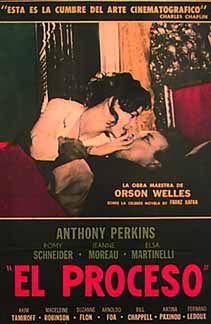
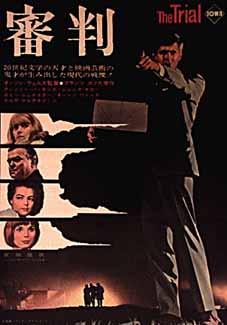
The Trial (1962)

Peter's Nite
Salad, Pizza, Chocolate Tote
Films and Filming, 1962: "The Trial of Orson Welles" by Enrique Martinez via Wellesnet:

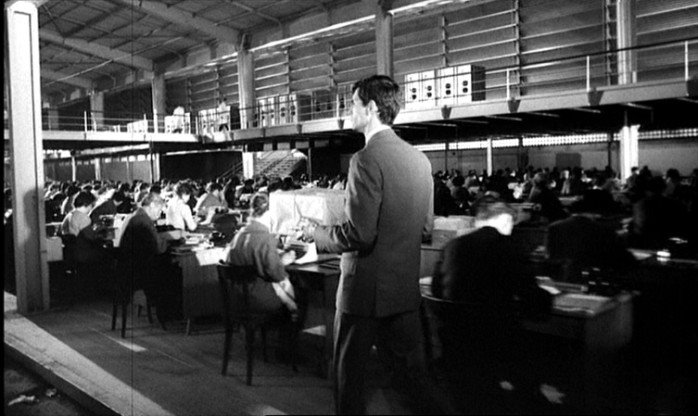
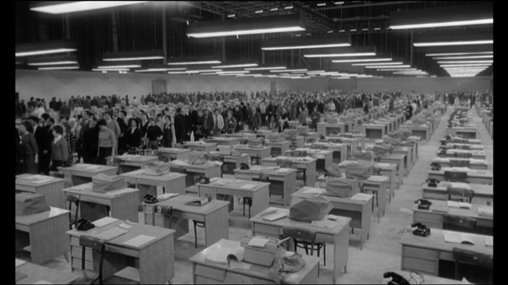
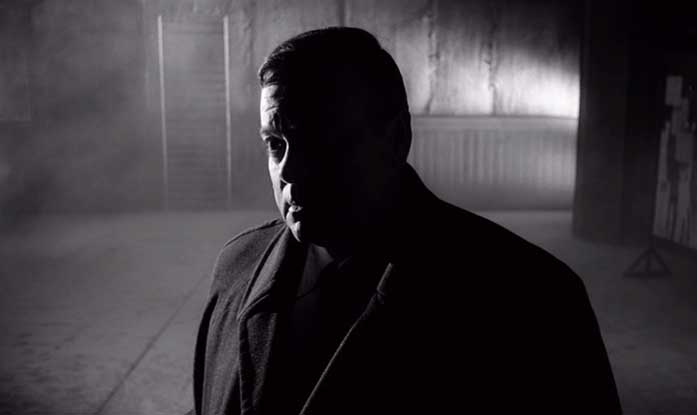
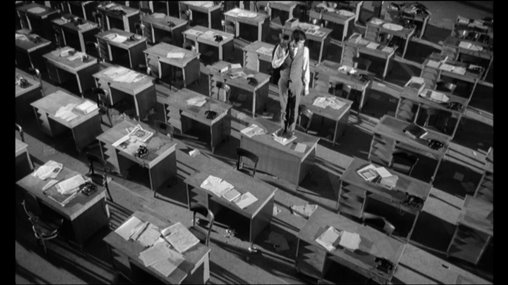
The old d'Orsay station, fallen into decay with the passing of time, with its enormous and dirty vault, its modern-style lamps, its twisted staircases, and its vastness truly represents the all-powerful endemic laws which sow the seeds of terror and death amongst the men who live within its shade without knowing the sun-light and infinite horizons which extend beyond the enomrous and filthy walls which surround them. All this of course is part of Welles' special baroque manner in which symbolism abounds without, however, at any point touching on that of Fellini, for example. Everything is twisted, exuberant, cosmic - the enomrous bed of the lawyer with its dragons and tapestry, the mirrors, the archives, the office files, the lamp shades that drop dust.

And what about Orson Welles, the director? The impression that he makes in person correspsonds exactly to the legend that has grown up around him. Big, strong and stout, deep voiced and with his enormous cigar, walking along in the midst of technicians, cables and half-assembled sets, he gives the impression of a lion shut in behind the bars of his cage.

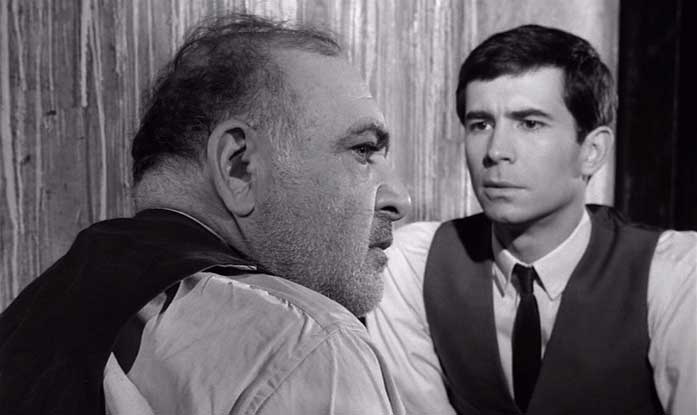
He makes the actors rehearse a good deal. He takes them into a corner away from everyone else for an hour. Orson talks to them, repeats him aims, tells them what he expects of them even down to the tone of voice. It is not a question of seeing whether the actors have learnt the script by heart. It is a question of introducing them to the atmosphere of the scene, the character of the role and its reality. Sometimes an hour is not long enough and Welles rehearses for four, six or even ten hours. (I do not know whether it is usual with him but while I was there shooting was held up for two days because Welles was rehearsing with Romy Schneider and Tony Perkins for a whole day, from noon till seven in the evening.) The actor plays a very important part in Welles' system of direction and on this account the attention that he dedicates to his players is very great.

Once he is satisfied with an actor's work, Welles goes on to rehearse the camera movements and speed. Examining the set up he modifies what has been planned, changing the direction and intensity of the lights. Once all this has been arranged to his satisfaction, he rehearses two or three times the placing of the actors and then rapidly prepares to shoot. His voice can be heard for miles around. 'Motor-action' (the word action is pronounced in a very special way-half American, half French). Rarely does Welles take a scene more than two or three times. Generally the first take is alright. He repeats it in case of an accident during the developing of the film. At times, of course, there is an exception. On one occasion he had to repeat a very simple scene 13 times. Not because the camera movement was difficult or because the actor's script was tricky. No. Simply because Orson Welles was in good spirits. Every time that Perkins began to speak his lines, Welles made faces and funny gestures to make him laugh. And, inevitably, Perkins laughed. And Welles' guffaws made the arc lights above the set dance.

Certainly these high spirits did not prevent him from being disagreeable with everybody not connected to the film. For example, myself. Each time he caught sight of me he ordered the studio manager to throw me out. This of course could not be done as I had special authorization from the producer to be there. However I was at least made to retreat and hide behind some unused part of the set. Generally Welles only spoke to his direction crew and actors and with his daughter who from time to time came to see him at work.

In spite of giving himself the airs of genius, and in spite of his enormous cigars and his ox-like strength, Orson Welles seemed to me to reveal a side of himself that full of timidity, excessively sensitive and even fearful. The simple presence of a stranger made him nervous. If an actor put forward his point of view, Welles became pensive. In fact I am not at all surprised that he has wanted to work on a film adaptation of The Trial. I believe that Kafka and Welles have many points of contact. They both feel terrified of our modern civilization whose vicious tentacles are taking mankind in their grip. And this impression is confirmed by people who know Welles and have heard him talk at length.
Kevin Hagopian:

Welles had come to know the cul-de-sac world of Joseph K quite well by 1962, when the film, after three years of debilitating deal-making, was finally shooting on the streets of Zagreb, Yugoslavia.

After his producers ran short of money, The Trial became another of Welles' "touring productions," a Flying Dutchman of a film whose actors traveled around the world with Welles while he sought financing and locations. After Zagreb, Welles alighted in Paris, where he fumed about the ambitious, studio-shot film The Trial was to have been; now, it was forced, like Joseph K himself, out into the streets. Still awake as dawn broke one morning, Welles noticed a huge, abandoned train station, the Gare D'Orsay. Journalist William Chappell wrote of Welles' inspired inspiration:

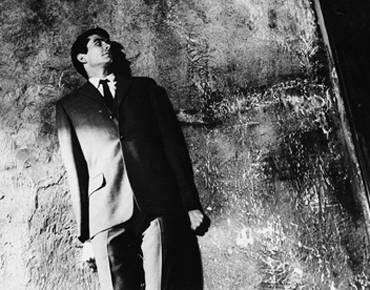
By 7:30 he had explored the lunatic edifice, vast as a cathedral: the great vulgar corpse of a building in a shroud of dust and damp, surrounded and held together by a maze of ruined rooms, stairways and corridors. He had discovered Kafka's world, with the genuine texture of pity and terror on its dark and scabrous walls, real claustrophobia in its mournful rooms; and also intricacies of shape and perspective on a scale that would have taken months and cost fortunes to build.

For a man who had once, in more whimsical days, said, "A motion picture studio is the biggest train set a boy ever had," Welles now reenvisioned the shattered old station as the studio his backers had failed to find for him. He found small, cubicle-sized spaces in the station, suitable for intimate moments in Joseph K.'s life, and had these redesigned as bedrooms and offices. In other scenes, the remains of the station's Art Nouveau decor exudes a strange air of the festive gone rancid. His cinematographer, Edmond Richard, used reflected light to capture a dry, flat tone in Joseph's world.

It's customary to imagine Kafka's world as sleek and efficient, its terror arising from its sheer functionality. By shooting in the ancient train station, Welles created another view of the bureaucracy entirely. Here, the regime is a once-glorious structure, gilded and proud, designed to express the grandeur of its motives. Over the years, though, the dreams that were once to be served by the grand engineering symbolized by the train station have grown dusty, even forgotten. The glass is broken, the furniture battered. Mice have chewed the draperies. Now, it is only the machinery that still works, kept well-lubricated as the ornamentation grows rusty and decrepit.
Laughably Obtuse Bosley Crowther NY Times review from 1963:

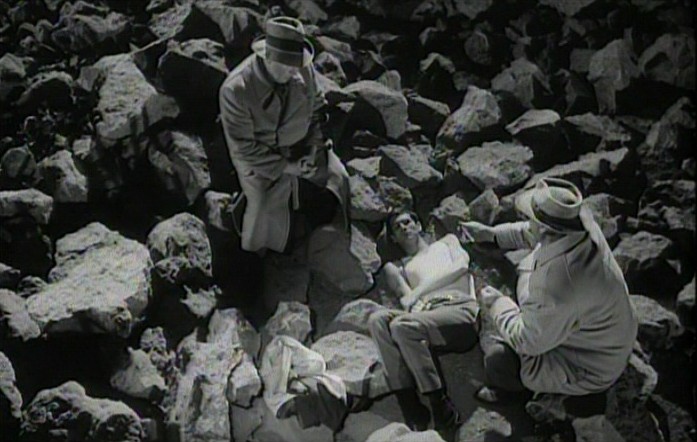
Whatever Franz Kafka was laboriously attempting to say about the tyranny of modern social systems in his novel, "The Trial" is still thoroughly fuzzy and hard to fathom in the film Orson Welles has finally made from the 40-year-old novel. "The Trial" opened at the Guild and the new R.K.O. 23d Street Theatre yesterday.

Evidently it is something quite horrisic about the brutal, relentless way in which the law as a social institution reaches out and enmeshes men in its complex and calculating clutches until it crushes them to death.
Huw Wheldon 1962 BBC interview with Welles via Wellesnet:

WHELDON: You shot a lot of the film in Paris, at an abandoned railway station, the Gare d'Orsay.

WELLES: Yes, there's a very strange story about that. We shot for two weeks in Paris with the plan of going immediately to Yugoslavia where our sets would be ready. On Saturday evening at 6 o'clock, the news came that the sets not only weren't ready, but the construction on them hadn't even begun. Now, there were no sets, nor were there any studios available to build sets in Paris. It was Saturday and on Monday we we're to be shooting in Zagreb! We had to cancel everything, and apparently to close down the picture. I was living at the Hotel Meurice on the Tuilleries, pacing up and down in my bedroom, looking out of the window. Now I'm not such a fool as to not take the moon very seriously, and I saw the moon from my window, very large, what we call in America a harvest moon. Then, miraculously there were two of them. Two moons, like a sign from heaven! On each of the moons there were numbers and I realized that they were the clock faces of the Gare d'Orsay. I remembered that the Gare d'Orsay was empty, so at 5 in the morning I went downstairs, got in a cab, crossed the city and entered this empty railway station where I discovered the world of Kafka. The offices of the advocate, the law court offices, the corridors-- a kind of Jules Verne modernism that seems to me quite in the taste of Kafka. There it all was, and by 8 in the morning I was able to announce that we could shoot for seven weeks there. If you look at many of the scenes in the movie that were shot there, you will notice that not only is it a very beautiful location, but it is full of sorrow, the kind of sorrow that only accumulates in a railway station where people wait. I know this sounds terribly mystical, but really a railway station is a haunted place. And the story is all about people waiting, waiting, waiting for their papers to be filled. It is full of the hopelessness of the struggle against bureaucracy. Waiting for a paper to be filled is like waiting for a train, and it's also a place of refugees. People were sent to Nazi prisons from there, Algerians were gathered there, so it's a place of great sorrow. Of course, my film has a lot of sorrow too, so the location infused a lot of realism into the film.
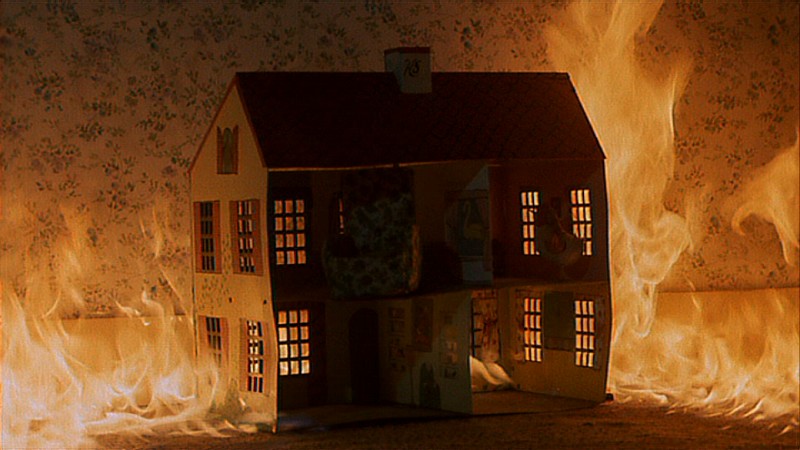
WHELDON: Did using the Gare d'Orsay change your conception of the film?

WELLES: Yes, I had planned a completely different film that was based on the absence of sets. The production, as I had sketched it, comprised sets that gradually disappeared. The number of realistic elements were to become fewer and fewer and the public would become aware of it, to the point where the scene would be reduced to free space as if everything had dissolved. The gigantic nature of the sets I used is, in part, due to the fact that we used this vast abandoned railway station. It was an immense set.
WHELDON: How do you feel about THE TRIAL? Have you pulled it off?

WELLES: You know, this morning when I arrived on the train, I ran into Peter Ustinov and his new film, BILLY BUDD has just opened. I said to him, "how do you feel about your film, do you like it?" He said, "I don't like it, I'm proud of it!" I wish that I had his assurance and his reason for assurance, for I'm sure that is the right spirit in which to reply. I feel an immense gratitude for the opportunity to make it, and I can tell you that during the making of it, not with the cutting, because that's a terrible chore, but with the actual shooting of it, that was the happiest period of my entire life. So say what you like, but THE TRIAL is the best film I have ever made.