Monday, July 11, 2005

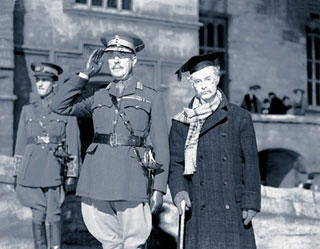
The Madness of King George (1994)

Nora's Nite
Hamburgers, Ice Cream, Cookies
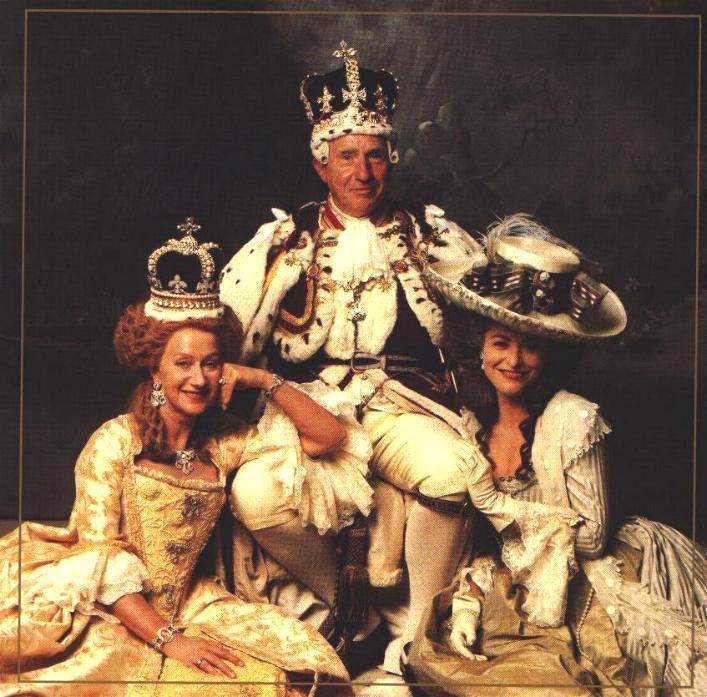
Sir Nigel Hawthorn, 1929-2001

From an obituary:
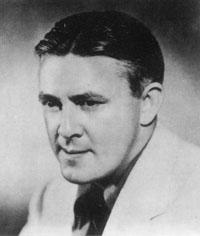
"IN 1990, I SAT IN BROADWAY'S Brooks Atkinson Theatre and watched a 61-year-old British actor whom I had never before seen perform the hell out of the lead role of C.S. Lewis (author of the Narnia books) in William Nicholson's Shadowlands. A confirmed British bachelor, Lewis finally found true love with a younger American divorcee, only to have her die before her time. Toward the end, Hawthorne had a monologue that transformed seamlessly into a pained declaration of raw grief. It was a masterful display of profound sadness and controlled rage. Later, the openly-but-quietly gay Hawthorne shared that it had been fueled by his own prolonged nightly vigil at the deathbed of a dear friend dying from AIDS.

Despite a Tony Award for the role, Richard Attenborough cast the more bankable Anthony Hopkins in his 1993 film version. Though I kept waiting to compare the two men in the climactic speech, it never came. A casualty of the screen trans­lation. All te better for now it belongs to Hawthorne and to those who were lucky enough to bear witness.

Nigel Hawthorne was a steadily working actor for 40 years' before Shadowlands. He had a significant British stage resume and achieved popular success starring in the hit British comedy series, Yes, Minister, and its follow-up, Yes, Prime Minister, both of which played to PBS audiences in the States. But it wasn't until Alan Bennett insisted that Hawthorne recreate his stage triumph in the title role of the 1995 film adaptation of his play, The Madness of King George that Hawthorne truly became known on the interna­tional scene. In the U.S., his royally insane portrayal brought him a Best Actor Oscar nomination, the first for an openly gay actor." LINK
George III
"In 1810, George became dangerously ill, the malady possibly having been triggered by the death of the King's youngest and favourite daughter, the Princess Amelia, from erysipelas or porphyria. By 1811, George III had become permanently insane and locked away at Windsor Castle until his death. Sometimes speaking many hours without pause, he claimed to talk to angels and once greeted an oak tree as King Frederick William III of Prussia. His doctors gave him James's Powder (calomel and tartar emetic) and bled him regularly. They also advised him to bathe in the sea (thus encouraging public seaside vacations).

Parliament then passed the Regency Act 1811, to which the Royal Assent was granted by the Lords Commissioners (who were appointed under the same irregular procedure as was adopted in 1788). The Prince of Wales acted as Regent for the remainder of George III's life.

Spencer Perceval was assassinated in 1812 (he was the only British Prime Minister to have ever suffered such a fate) and was replaced by Robert Banks Jenkinson, 2nd Earl of Liverpool. Lord Liverpool oversaw British victory in the Napoleonic Wars. The subsequent Congress of Vienna led to significant territorial gains for Hanover, which was upgraded from an electorate to a kingdom.

Meanwhile, George III's health deteriorated. Over the Christmas of 1819, George suffered a further bout of madness and spoke nonsense for fifty-eight hours, then sank into a coma. On 29 January 1820, George died blind, deaf, and insane at Windsor Castle. By the time of his death, George III had lived for over eighty years and reigned for almost sixty years—in each case, more than any other English or British monarch until that point. Neither record has been surpassed by any monarch since, with the exception of Victoria. George III was buried on 16 February in St. George's Chapel, Windsor.

George was followed by his eldest son (who became George IV). Next came another of George III's sons, who became William IV. William IV, too, died without children, leaving the throne to his niece, Victoria, the last monarch of the House of Hanover." Via Wikipedia
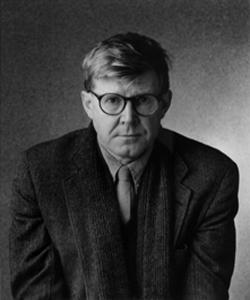
Alan Bennett
"Alan Bennett has been a household name in British theatre ever since he starred and co-authored the satirical review Beyond the Fringe with Dudley Moore, Peter Cooke and Jonathan Miller in 1960 at the Edinburgh Festival. Later the same show played to packed houses in London's West End and in New York. Although Bennett started by writing and acting for the stage, he very soon turned his attention to writing plays for television.

Bennett's career, though less spectacular than those of his Fringe companions, has displayed greater diversity and more solid achievement. To many he is now regarded as perhaps the premier English dramatist of his generation. This is all the more surprising given the low-key themes and understated expression of the "ordinary people" who populate his dramatic world. Like the poetry of Philip Larkin, another Northerner whose writings he admires, his writing frequently focuses on the everyday and the mundane: sea-side holidays, lower-middle class pretensions, obsessions with class, cleanliness, propriety and sexual repression." LINK
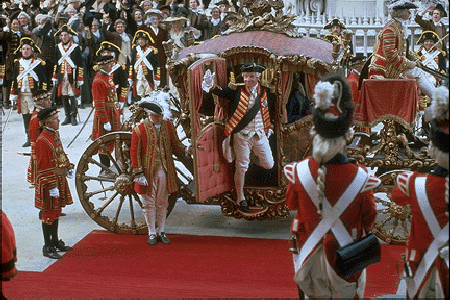
"The Madness of King George spreads its story on a broad canvas: the court of a troubled King who is seized by what seems to be dementia. As George III (Hawthorne) loses control, the foppish Prince of Wales (Rupert Everett) plots to seize the throne, while Prime Minister William Pitt (Julian Wadham) fights to retain his power. But at its heart King George is an intimate family drama. It can be seen as satirical parable - "The film is really as much about the royal family today as it is about the 18th century," says Bennett - or as domestic tragedy, a kind of Mr. and Mrs. King Lear. Father is slipping away; what are Mother (Mirren) and the children to do?

George could also be a failed Alan Bennett. "My films are about embarrassment," he says. "George III, for one, is nervous and shy, like many royals. His bluntness and heartiness proceed from social unease. But his role is to present himself as King. When madness sets in, he drops this facade; he isn't embarrassed anymore. Embarrassment is a continuing theme in my work. I can't say I'm George III, but I certainly understand him!" Alan Bennett Interview
Friday, July 01, 2005

MovieNite Celebrates Canada Day!

"Canada Day (French: Fête du Canada) is Canada's national holiday. It is celebrated on July 1.

It celebrates the creation of the Dominion of Canada through the British North America Act 1867, which came into effect on July 1, 1867, uniting three British territories — the Province of Canada (southern Ontario and southern Quebec), Nova Scotia, and New Brunswick — into a federation.

The holiday itself was formally established in 1879 and was originally called Dominion Day, making reference to the Canadian-originated term 'dominion' to describe the political union, at a time when the Fathers of Confederation were hesitant to use a name such as the Kingdom of Canada. The name was changed to Canada Day on October 27, 1982."

Via Wikipedia
LINK

Monday, June 27, 2005

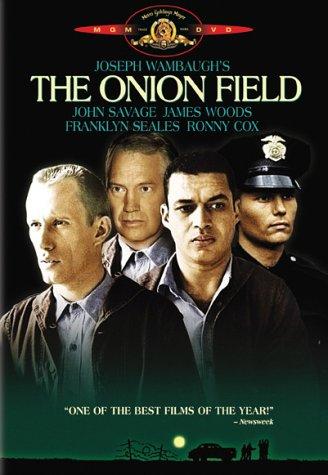
The Onion Field (1979)

Pamela's Nite
Elaborate Salad, Fresh Bread, Strawberry Cheesecake


Joseph Wambaugh Interview
"BRC: You've written four other nonfiction works and eleven works of fiction. Do you enjoy writing one more than the other?

JW: I enjoy doing the research of nonfiction; that gives me some pleasure being a detective again and doing investigation. When all is said and done, though, I'm not sure. When I look back I think maybe the novels contain more of my DNA, I carried them like a mother carries a child. I delivered them. The nonfiction story belongs to other people and doesn't carry much of my DNA. They're like foster children.

Except for THE ONION FIELD. That one got pretty close to me because I was a cop when it happened. I saw some of the indifference that my police department showed to the surviving officer. I was just a young cop when he was fired from the department as a thief and a crook. I found out he was shoplifting and I started asking questions back then. People described his shoplifting. I wasn't a writer then --- or maybe I was a writer but didn't know it --- but I said, wait a minute, this sorta sounds like guilt crying out for punishment. Something is going on here. I felt like a part of that one. It felt more like a novel to me than nonfiction.

BRC: Without question, THE ONION FIELD has become a literary classic. Was that book the pivotal moment when you knew you had to make a choice between writing and police work?
JW: I wrote two fiction novels before I wrote THE ONION FIELD, but I was still a cop. When I wrote THE ONION FIELD, I realized that my first two novels were just practice. THE ONION FIELD made me a real writer. And then I knew it was over, I couldn't be a cop anymore."
Update
June 13, 2005 'The Onion Field' Killer Busted for Heroin
Jimmy Lee Smith, who served 19 years in prison for the kidnapping of two Los Angeles police officers and the murder of one of them in "The Onion Field" case of 1963, may be headed back to prison for possession of heroin while on parole.
LINK

Friday, June 24, 2005

Studios target older, richer DVD buyers

What happens when the theatrical model moves away from the the DVD model -- what happens when the movies that score in the theater, bomb on DVD -- will this change the mix of studio movies? They've been making movies for 14 year olds for so long, could this change the culture? Probably not.
Studios target older, richer DVD buyers - Yahoo! News: "...two of his studio's biggest overperformers for the year, 'Ray' and 'Friday Night Lights,' generated staggering DVD sales numbers in large part because of high demand from older consumers. 'Ray' earned nearly $150 million from DVD sales and rentals, twice its box office, while 'Friday Night Lights' took in $100 million against a theatrical gross of just $60 million.

'Look at how this works when you hit them with the right product,' Kornblau said. 'You're seeing it over and over again -- the biggest overperformers are titles that hit the older demographic.'"

Wednesday, June 08, 2005

Testament of Dr. Mabuse, The (1933)

Stuart's Nite
Pizza, Substitute Ice Cream

'You have no existence except as my tool. The individual has no being except insofar as he is part of a machine. The individual is nothing; the machine is everything.'
— Dr. Mabuse, The Crimes of Dr. Mabuse
Fritz Lang Interview: How did you come to leave Germany at the height of your career and seek refuge outside the country?

I had made two Mabuse films and the theatre had asked me if I could make another one because they made so much money. So I made one which was called The Last Will of Dr Mabuse (1932).

I have to admit that up to two or three years before the Nazis came I was very apolitical; I was not very much interested and then I became very much interested. I think the London Times wrote about the fact that I used this film as a political weapon against the Nazis - I put Nazi slogans into the mouth of the criminal.

I remember very clearly one day, I was in the office and some SA men came in and talked very haughtily that they would confiscate the picture. I said if you think they could confiscate a picture of Fritz Lang in Germany then do it, and they did. I was ordered to go and see Goebbels, and they were not very sympathetic to me, but I had to go, maybe to get the picture freed, so I went.

I will never forget it - Goebbels was a very clever man, he was indescribably charming when I entered the room, he never spoke at the beginning of the picture. He told me a lot of things, among other things that the 'Fuhrer' had seen Metropolis (1926)and another film that I had made - Die Niebelungen (1924) - and the 'Fuhrer' had said 'this is the man who will give us THE Nazi film.' I was perspiring very much at this moment, I could see a clock through the window and the hands were moving, and at the moment I heard that I was expected to make the Nazi movie I was wet all over and my only thought was 'how do I get out of here!'. I had my money in the bank and I was immediately thinking 'how do I get it out?' But Goebbels talked and talked and finally it was too late for me to get my money out! I left and told him that I was very honoured and whatever you can say. I then went home and decided the same evening that I would leave Berlin that I loved very much.
The Permanent Magic of Fritz Lang: Fritz Lang was born in Vienna in 1890 and died in California in 1976. His life took in service in the First World War, spectacular fame in Germany in the 1920s, escape from the Nazis, and an often difficult period of reinvention in Hollywood. Famous for his autocracy and brutal treatment of actors, he was even dogged with the rumour that he had murdered his first wife. Others, of course, delighted in his company. Either way by the time of his death he was a legend.

His career coincided almost exactly with Alfred Hitchcock's, and the comparison between the two directors is often made. Both thrived in silent film, but easily adjusted to sound. Both moved from Europe to America and recreated their genius in a new culture. Yet while Hitchcock is instantly recognisable and his films are easily seen, Lang's work and reputation are much more obscure. Though no critic would question Lang's stature there's no consensus about which of his films are masterpieces. And substantial scholarly work on Lang is astonishingly scarce. David Thomson, in his Biographical Dictionary of Film, even says that 'Lang's adult stories are too concentrated for today's standards'. But this is too much of a simplification.

Lang was an extraordinarily varied and resourceful director. He was able as much as any other director to turn his hand to virtually all genres. In the 20s he made large-scale, expansive films, which often tested the limits of the silent cinema. Big-budget, epic, aimed at the mass audience, with the best special effects available at the time, Lang's world in the pre-sound era was peopled by spies, dragons, legendary heroes, dictators, master criminals and futuristic demagogues.

Tuesday, June 07, 2005

Bigger doesn't mean safer

SUV occupants more likely to be killed:

"In a two-vehicle crash with a smaller car, the occupants of the SUV are more likely to be killed than are the people in the car, according to the IIHS report, which is based on a study of U.S. highway traffic fatalities during years 2002 and 2003 involving vehicles made from 1999 through 2002."

Tuesday, May 31, 2005

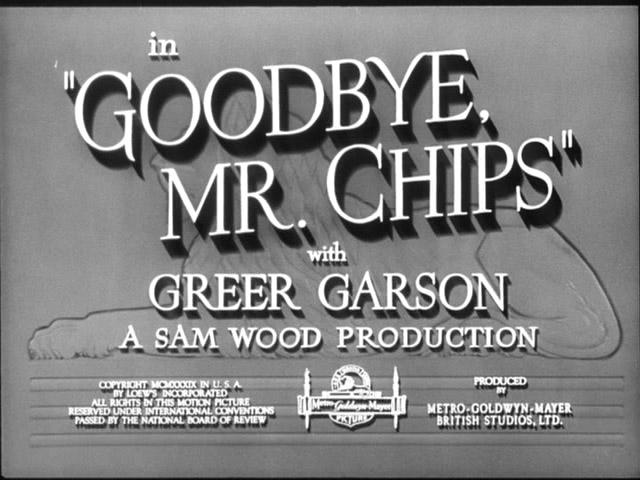
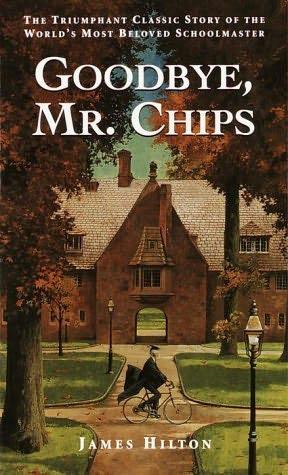
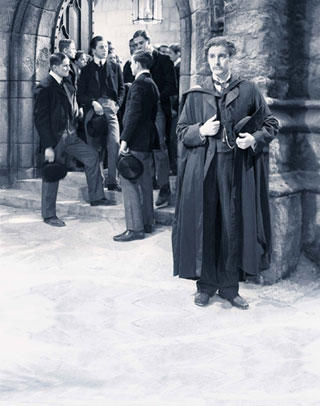
Goodbye, Mr. Chips (1939)

Nora's Nite
Pasta with tomatos & pine nuts, Ice cream, Apple Tortes
"James Hilton later said it took only four days to write Goodbye, Mr. Chips.

He had promised a short story to a British magazine -- but hadn't a notion what to write about. So he went off on a bicycle tour and the idea for a tale about a schoolmaster came to him as he wheeled through Epping Forest.

After four days at the typewriter Hilton had over seventeen thousand words, far too much for a short story, but his editors knew they had something special and published it anyhow as a special supplement in their magazine. Has any writer ever had a more profitable four days work?" LINK

Author James Hilton
"While best known for creating Mr. Chips, the quintessential English schoolteacher, James Hilton was less a Lancashire lad than a Hollywood insider. After early success as a novelist, he made his mark during the golden age of the movies, penning scripts for Frank Capra and Greer Garson and collaborating with Frances Marion, the most successful female screenwriter of her day.

In 1935, after the success of Goodbye Mr. Chips, Hilton was invited to Hollywood to work as a screenwriter. Before leaving, he married his live-in girlfriend, Alice Brown, a secretary at the BBC. As Hilton was by now becoming a public figure, they traveled to Eastbourne to avoid any scandal over their previous illicit living arrangement. The American press awaited their arrival in New York, where husband and wife gave interviews before continuing on to Los Angeles, where again they were given a tremendous reception. The glittering Hollywood lifestyle would prove disastrous for Hilton's marriage, which ended in divorce in 1937. Only seven days later he married Galina Kopineck, a young starlet (who he would also divorce eight years later).

While Hollywood undid Hilton's personal life, his career thrived there. He won the Best Screenplay Oscar for Mrs. Miniver (1942); actress Greer Garson also earned a Best Actress Oscar in the title role. Directed by William Wyler, the film depicts a middle-class English family's life during first months of World War II. Hilton also wrote screenplays for Camille (1936), Foreign Correspondent (1940), Forever and a Day (1943), The Story of Dr. Wassell (1943), The Tuttles of Tahiti (1942) and We Are Not Alone (1939). Other screenwriters adapted his novels Knight Without Armour (1937), Lost Horizon (1937), Rage in Heaven (1941), and Random Harvest (1942). Robert Donat won a Best Actor Oscar for the title role in Goodbye Mr. Chips (1939), but Hilton could not entirely take credit for the success of this film; Eric Maschwitz, C. Sherriff, and Claudine West had adapted his novel for the screen." LINK
Director Sam Wood
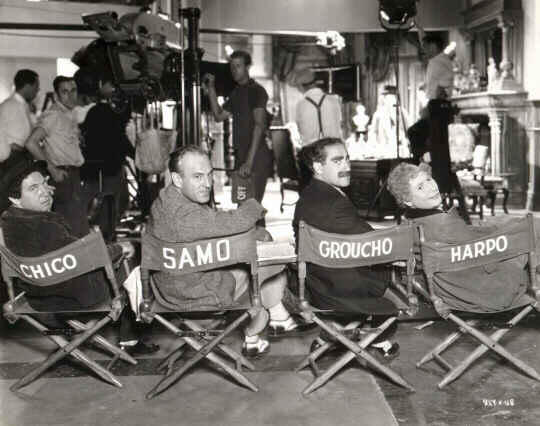
"When American director Sam Wood first reported to Cecil B. De Mille as an assistant in 1915, Wood had already dabbled in real estate and acted on-stage under the name of Chad Applegate. A solo director by 1919, Wood worked throughout the '20s directing some of Paramount's biggest stars, among them Gloria Swanson and Wallace Reid. He began his long association with MGM in 1927, working with personalities as varied as Marion Davies, Clark Gable, Marie Dressler, and Jimmy Durante. He guided the Marx Brothers through their two most profitable films, A Night at the Opera (1935) and A Day at the Races (1937), and turned out one of the most accomplished sentimental dramas ever made in Hollywood, Goodbye, Mr. Chips (1939).

Hopping from studio to studio in the '40s, Wood directed Ginger Rogers through her Oscar-winning performance in Kitty Foyle (1940), successfully transferred Thornton Wilder's highly theatrical Our Town (1940) to the screen (even the studio-imposed happy ending worked), and assembled the quintessential baseball biopic, The Pride of the Yankees (1942).

The list of Wood's successes would seem to assure him a niche in the ranks of all-time best Hollywood directors, yet his reputation has tarnished since his death in 1949. Most detractors insist that Wood was a hack, citing his habit of shooting each scene an average of 20 times, his only verbal direction in each instance being "Go out there and sell 'em a load of clams."

In truth, this technique was invaluable in wearing down such mannered performers as Walter Brennan, Dan Duryea, Frank Morgan, and Wallace Beery, until they were tired enough to behave like human beings instead of play-actors. The 20-take habit also enabled the more limited actors to re-think their interpretations until they'd found nuances that they would never have considered on the first take: Ronald Reagan, who was certainly no Olivier, was never better than in Wood's Kings Row (1942).

Taking into consideration all the complaints about Sam Wood, the biggest bone of contention seems to be his reactionary politics. Wood was active in a number of right-wing organizations, and in 1947 he virulently condemned Hollywood's "left" before the House Un-American Activities Committee. Those whose politics are diametrically opposite to Wood's dwell incessantly upon this aspect of his life, embellishing the facts by painting him as a bigot and (in the words of Groucho Marx) a "fascist." But just as it is fitting and proper to separate the performances of a Jane Fonda, Shirley MacLaine, or Paul Newman from their political agendas, so too would it be fair to extend the same courtesy to Wood. No matter what sort of man Sam Wood was personally, his string of Hollywood hits should be his true legacy." LINK

Tuesday, May 17, 2005

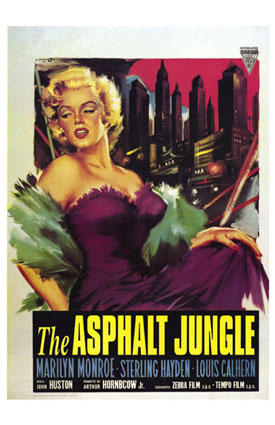
The Asphalt Jungle (1950)

Peter's Nite
Salad, Pizza, Ice Cream
"John Huston was the son of famed actor Walter Huston, born August 5, 1906, in Missouri. While he tried his hand at some acting and writing early on, mostly through his father's contacts, he didn't really begin to devote himself to films until 1938, when he began writing or contributing to scripts for various films. In 1941, he convinced Warner Bros. to let him direct a third version of Dashiell Hammett's detective story, and made the most of the opportunity. After WWII, he won his first and only pair of Oscars, for directing and writing The Treasure of the Sierra Madre (1949), also starring Humphrey Bogart. The collaboration between Huston and Bogart was legendary; in fact, of the five films generally considered Huston's best, only The Man Who Would Be King (1975) doesn't include Humphrey Bogart in its cast."
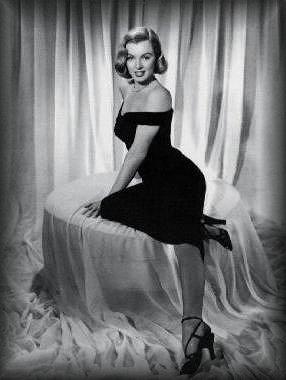
Mobile Marilyn
"Now you can accessorize your mobile phone with all of the glamour, glitz and fun that is Marilyn. Be the first to enjoy this extensive collection of phone gems created from digitally re-mastered versions of your favorite Marilyn Monroe films including Gentlemen Prefer Blondes, How To Marry A Millionaire, Bus Stop, The Seven Year Itch and many more. Great movie scene moments, best loved lines, authentic poster art and new expressions of her famous wit can now flatter your phone as wallpapers, ringtones and video clips. You can even send a custom Marilyn picture or audio message to your friends and her fans."

Sunday, May 08, 2005

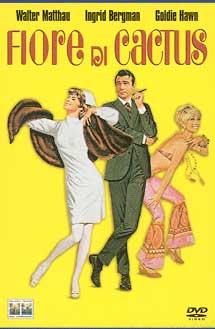
Cactus Flower (1969)

Pamela's Nite
Pork Chops, Baked Tomatoes, Apple Crisp, Ice Cream

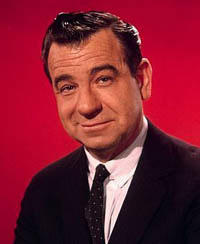
Abe Burrows: "Writer Abe Burrows penned many scripts for radio shows and for Broadway. Among his better known plays are How to Succeed in Business Without Really Trying and Cactus Flower. He also wrote the screenplay for Solid Gold Cadillac in 1956."

More on Burrows: "After studying to be a doctor and an accountant, Abe Burrows had a career in sales before becoming a successful radio script writer and writer/performer of musical parody numbers. His first Broadway libretto was Guys and Dolls, co-written with Jo Swerling, with a score by Frank Loesser. Among the musicals for which he provided librettos are Make A Wish, Can-Can and Silk Stockings (both with scores by Cole Porter), Say, Darling, and How to Succeed in Business Without Really Trying (which he also directed; score by Frank Loesser). His non-musical plays include Cactus Flower (wrote and directed) and Forty Carats (directed)."
Jim Burrows, Abe's son, is a massively successful television director: "I get the work ethic from my father," he says, alluding to Abe Burrows, the late Broadway writer-director known for How to Succeed in Business without Really Trying and Guys and Dolls. For more than half a century, directing has been part of the Burrows DNA. For Jim Burrows--or Jimmy, as most friends and co-workers call him--that deeply embedded code has helped turn shows such as Taxi, Cheers, Friends, Frasier, Caroline in the City, and Will & Grace into mega-hits and earned him nine Emmy Awards. Former NBC Entertainment President Warren Littlefield once said certain programs became known as "Jimmy Shows." He joked that network executives would eagerly mark pilots he was handling with the letters "JS."

"As my wife will tell you, I'm no good hanging around the house," Burrows says. "I could go play golf, I could go to the track, I could go to Vegas. But I choose to come here, where I have a good time."

By "here," Burrows means the Los Angeles studio where Will & Grace is about to close its third successful season. The sun-drenched San Fernando Valley setting seems a long way from overcast Oberlin, but the tight circles and sharp intellect of his Hollywood milieu--not to mention the political tinges of Will--often recall his college experience. During an hour-long interview, it didn't take much prodding to get the memories to tumble out--starting with the seed planted by his famous father.

"I would often meet all of my father's actor friends and the literati and the cognoscenti," Burrows says. "He was an intellectual who spoke with a mug-like voice--'der, duh'--but he was very smart. He asked me what school I wanted to go to, and I said Cornell, Brown, maybe NYU. He did some investigation and found Oberlin.

"I said, 'What's that school?' He said it was a small liberal-arts school in the Midwest, co-educational. He was smart enough to know that I grew up in the city and I should maybe go away to college."
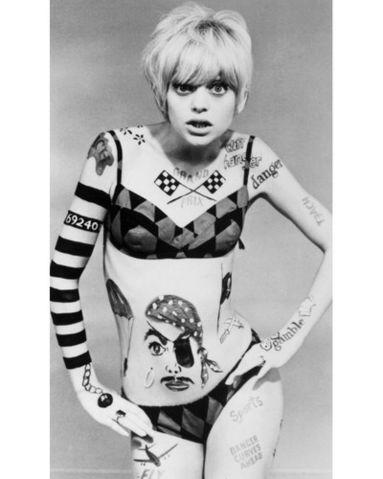
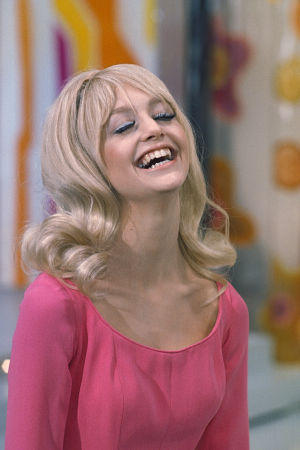
New York Times Review: "And it comes as a pleasing jolt to find the youngster, Goldie Hawn, at the apex of the triangle, not only beautifully holding her own with the two veteran stars but also enhancing the content and flavor of the movie.
This is the movie debut of the young actress, plucked from the "Laugh-In" television show. The role has been wisely and considerably fattened from the original play. And it is mainly the emerging sweetness and perception of this girl's character, as an inquisitive Greenwich Village kook, that gives the picture its persuasive luster and substance."

Sunday, May 01, 2005

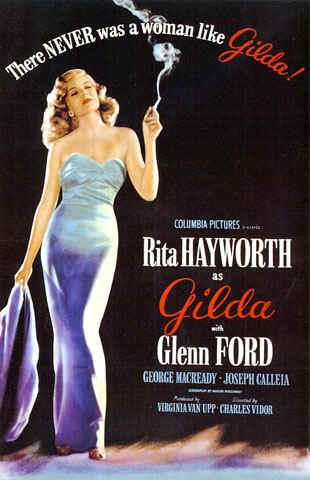
Gilda (1946)

Nora's Nite
Homemade Pasta Sauce with Sun-Fired tomatoes, Creme boule
I can never get a zipper to close. Maybe that stands for something, what do you think? - Gilda (Rita Hayworth)
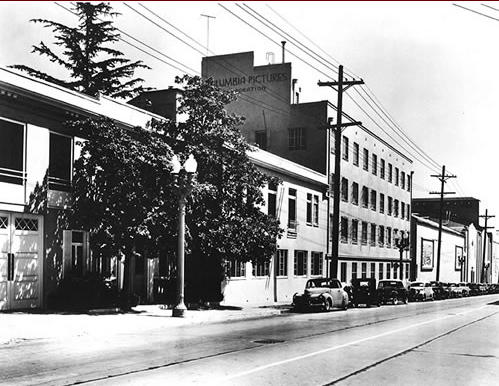
Harry Cohn (July 23, 1891–February 27, 1958) was the founder of Columbia Pictures.It is said, in the industry, that while Harry Cohn ruled Columbia Pictures, the studio never ended a production year in the red. He was the subject of the famous quote from Red Skelton, who remarked of his well-attended funeral: "Give the people what they want, and they'll come out."
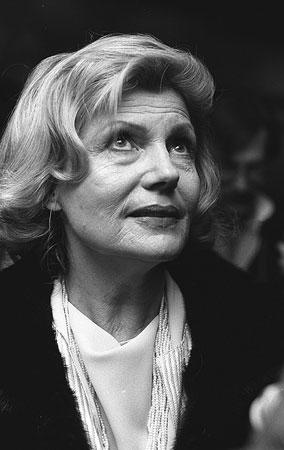
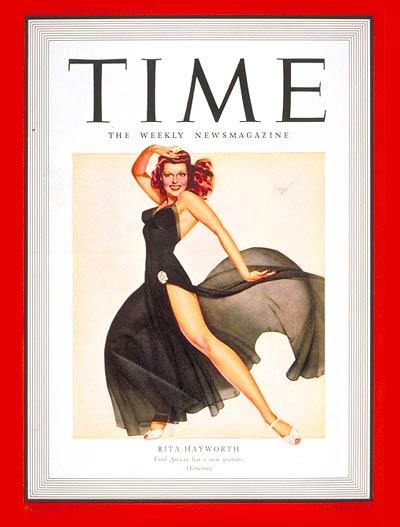
RITA HAYWORTH:
Margarita Carmen Cansino was born in Brooklyn, New York on October 17, 1918 into a family of dancers. Her father, Eduardo was a dancer as was his father before him. He immigrated from Spain in 1913. Rita's mother met Eduardo in 1916 and were married the following year.

Rita, herself, was trained as a dancer in order to follow in her family's footsteps. She joined her family on stage when she was 8 when her family was filmed in a movie called LA FIESTA in 1926. It was her first film appearance, albeit uncredited, but by no means was it to be her last.

Rita was seen dancing by a Fox executive and was impressed enough to offer her a contract. Rita's 'second' debut was in the film CRAZY DIABLO in 1934 at the age of 16. She continued to play small bit parts in several films under the name of Rita Cansino until she played the second female lead in ONLY ANGELS HAVE WINGS in 1939 when she played Judy McPherson.

By this time she was at Columbia where she was getting top billing but it was Warner Brothers film THE STRAWBERRY BLONDE in 1941 that seemed to set her apart from the rest of what she had previously done. This was the film that exuded the warmth and seductive vitality that was to make her famous. Her natural, raw beauty was showcased later that year in BLOOD AND SAND filmed in Technicolor.

She was probably the second most popular actress after Betty Grable. In YOU'LL NEVER GET RICH with Fred Astaire, in 1941, was probably the film that moviegoers felt close to Rita. Her dancing, for which she had trained all her life, was astounding.

After the hit GILDA in 1946, her career was on the skids. Although she was still making movies, they never approached her earlier work. The drought began between THE LADY FROM SHANGHAI in 1948 and CHAMPAGNE SAFARI in 1952. Then after 1953's SALOME she was not seen again until PAL JOEY in 1957.

Part of the reasons for the downward spiral was television, but also Rita had been replaced by the new star at Columbia, Kim Novak.

After a few, rather forgettable films in the 1960's her career was essentially over. Her final film was THE WRATH OF GOD in 1972. Her career was really never the same after GILDA. Her dancing had made the film and had made her. Perhaps Gene Ringold said it best when he remarked, "Rita Hayworth is not an actress of great depth. She was a dancer, a glamorous personality and a sex symbol. These qualities are such that they can carry her no further professionally". Perhaps he was right but Hayworth fans would vehemently disagree with him. Rita, herself, said, "Every man I have known has fallen in love with Gilda and wakened with me".

By 1980, Rita was, wracked with Alzheimer's Disease. It ravaged her so, that she finally died on May 14, 1987 in New York City. She was 68.

Sunday, April 10, 2005

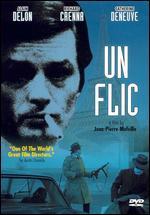
Un flic (1972)

Stuart's Nite
Pizza, Fantastic Ice Cream
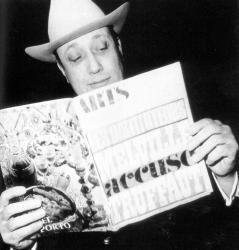
Jean-Pierre Melville: "One of the most brilliant film-makers in post-war French and world cinema, Jean-Pierre Melville now enjoys renewed popularity. His Bob le flambeur (with its street-wise Montmartre and Pigalle settings, its cool jazz score and its good-humoured tale of gangster clans) not only inspired the New Wave, but has attained unassailable cult status. Other iconic gangster films such as Le Doulos, Le Samourai and Le Cercle rouge are now hailed as masterpieces by latter-day legends John Woo and Quentin Tarantino. Meanwhile, with Le Silence de la mer and L'Armée des ombres, Melville also contributed two of the greatest films about the Resistance during World War II."
Irish Film Institute: Born Jean-Pierre Grumbach to a prosperous Jewish family from Alsace, Jean-Pierre Melville (1917-1973) spent his youth in Paris watching Hollywood movies. An enduring passion for America led him to adopt Herman Melville's name and a signature outfit of Ray-bans and Stetson, and to forge unique Franco-American hybrids in his distinguished career as a director.

Melville's other formative experience was the Resistance, which led him to participate in the Liberation campaigns in North Africa, Italy and France. Indeed, his first feature was an adaptation of the Resistance classic Le Silence de la mer. This he did with no training and against fierce opposition from both author Vercors and the French film industry. The film's success launched Melville's career and he ensured his continued independence by, unusually, building his own studio in Paris. This rebellious stance was one reason he was dubbed a 'father' of the New Wave. But the young Turks of the New Wave also admired Le Silence de la mer and Melville's next film, an adaptation of Cocteau's Les Enfants terribles (1950), for his innovative direction. In 1956, his atmospheric thriller Bob le flambeur finally provided a model for reworking the Hollywood gangster film-as recognised by Godard, who cast Melville as 'Parvulesco' in Ë bout de souffle/Breathless (1960).

In the 1960s Melville's work evolved towards bigger budgets, more controlled studio work and an increasingly minimalist style.

Monday, March 28, 2005

Bombs and Boomerangs

...the filmmakers initially developed their project with Paul Newman in mind. He would portray a handsome, cultivated bon vivant, once a paratrooper in Indochina, now a magazine reporter assigned to cover France’s latest imperial adventure in the Casbah. We can purely speculate on the rest—how our hero’s journalistic sangfroid might have crumbled before the worst Gaullist outrages, his vanity and complacency challenged by self-scrutiny, doubt, and progressive awareness of guilt....

...Psychology was a red herring. The Algerians had, after all, waged a political campaign in response to a collective experience of injustice. The revised film would chronicle nothing less than the battle of an entire nation for selfhood...
LINK

The Battle of Algiers and Its Lessons

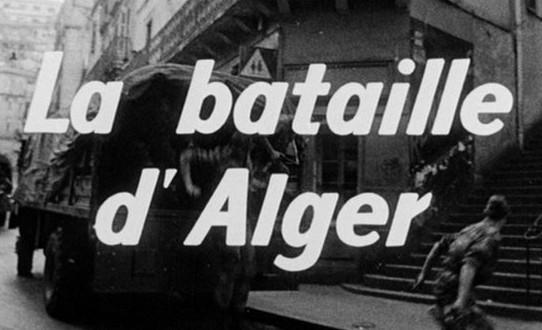
The film has the grainy look of a documentary, but as the opening trailer proudly proclaims, not a foot of newsreel was actually used.
LINK

The Pentagon's Film Festival - A Battle of Algiers Primer

From its first release, the film was extremely controversial: When the film was finally shown in France, theaters were bombed. In Italy, viewers were attacked.

Many sequences are meticulously accurate, such as the famous one referred to by the Pentagon in its flier, in which Algerian women put on Western clothes and makeup and then plant bombs at civilian French targets. Unsurprisingly, many characters are composites, and numerous details are fudged, made up, or altered. Among them is Ali's powerful last line in the film, directed at the French: "I do not negotiate with them." The line is actually appropriated from a speech by then-Interior Minister Francois Mitterand, who had directed it at the insurgents. LINK

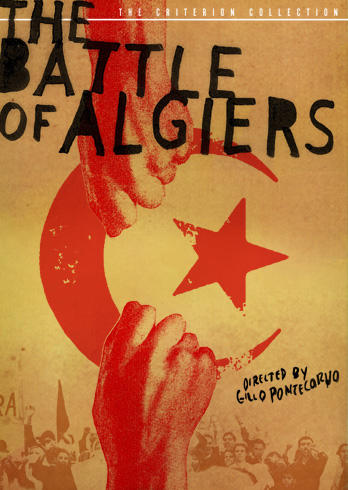
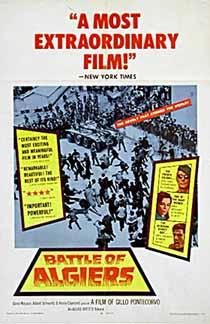
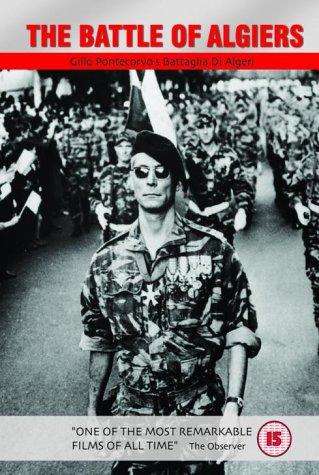
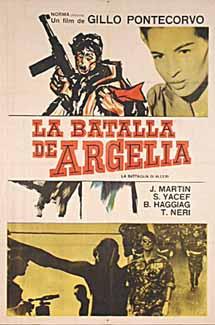
Battaglia di Algeri, La (1965)

Peter's Nite
Salad, Pizza, Warm (ish) Apple Pie
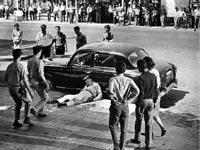
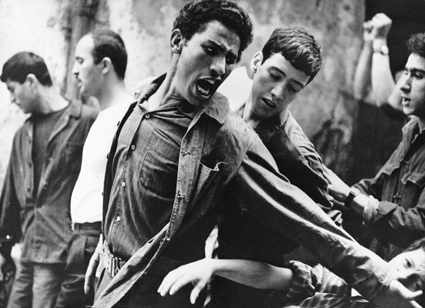
The Guardian: Few fictional films look more like documentary than Gillo Pontecorvo's The Battle of Algiers, and very few indeed which have this kind of socio-political structure and recount old, half-forgotten conflicts have achieved such lasting fame.

We know, of course, that Algeria was eventually liberated from the French, but Pontecorvo relegates that to an epilogue. He concentrates instead on the years between 1954 and 1957 when the freedom fighters regrouped and expanded into the casbah, only to face a systematic attempt by French paratroopers to wipe them out. His highly dramatic film is about the organisation of a guerrilla movement and the methods used to decimate it by the colonial power.

Its stance is as fair as any such film could be, despite the fact that Pontecorvo was a member of the Italian communist party at the time and thus was implicitly on the side of the independence movement. There is, though, no caricature and no glamorisation of either side - just a feeling of palpable horror evoked by urgent images and Ennio Morricone's dramatic but never melodramatic score. Pontecorvo sees the colonialists as victims of their own system, and the rebels as taking on some of the excesses used against them.

In one scene, a group of ordinary people, French and Algerian, are enjoying coffee and conversation near the casbah when a rebel bomb explodes among them. The shock of this sequence is even worse than the scenes of the French using torture.

The film is preceded by a message from the film-maker stating that "not one foot" of newsreel footage was used, but Marcello Gatti's grainy, black-and-white camera work in the actual locations of the struggle, and the pioneering use of a hand-held camera for the crowd scenes, makes it seem as if events are being recorded as they occur. The mixture of amateurs and professionals in the cast works admirably too.
Bombs and Boomerangs - Peter Matthews: "....the filmmakers initially developed their project with Paul Newman in mind.

He would portray a handsome, cultivated bon vivant, once a paratrooper in Indochina, now a magazine reporter assigned to cover France’s latest imperial adventure in the Casbah. We can purely speculate on the rest—how our hero’s journalistic sangfroid might have crumbled before the worst Gaullist outrages, his vanity and complacency challenged by self-scrutiny, doubt, and progressive awareness of guilt. Then he would, perhaps, experience the birth of consciousness and a final, ardent dedication to the rebel cause. Whether Pontecorvo and Solinas held these or other cards up their sleeves, the resulting movie would almost certainly have been a compromise. You can understand the logic.

A “difficult” subject demands the warranty of a box-office name to pacify backers and entice a wide audience, who will hopefully learn a thing or two. But the fact remains that Parà (the title of Solinas’ original treatment) is a story about Paul Newman’s inner turmoil and only secondarily relates the far more ponderable misery of the Algerian people. That was the trenchant critique posed by Salah Baazi, a representative of the exiled Front de Libération Nationale (FLN), when he arrived in Italy to discuss the script. FLN military chief Saadi Yacef had envisaged his own revolutionary epic and with Baazi, was now shopping around for a suitable director. The collaborators had sidelined the independence movement in dramatizing its impact on a single European (to be played by an American). Baazi submitted an alternative script written by Yacef, which Pontecorvo rejected in turn as “sickeningly propagandistic.” Clearly a new approach was needed that would avoid the reciprocal snares of well-meaning foreign patronage and indigenous saber-rattling—bring the anger and grim resolve of the combatants viscerally close, but preserve a critical distance. In short, a creative synergy between First and Third Worlds."
Kevin Beary: Like many other Italian communists who left the party in disgust at the Soviet invasion of Hungary, however, Pontecorvo did not abandon his communist convictions. Which brings us to Battle of Algiers. Algerian independence was declared and recognized in 1962, and Pontecorvo and his collaborator Franco Solinas, Bignardi writes, were "fascinated by the events and their ideological implications, convinced that the anti-colonial struggle was an urgent and important subject, almost a symbol and model for the political struggle against ‘an invincible capitalism in Italy,’" as Solinas put it in an interview.

In 1964, a representative of military head of the FLN leader Jacef Saadi (who in the film plays the part of the FLN commander Kader) arrived in Italy looking for a leftist director to make a film about the struggle for Algerian independence and decided on Pontecorvo. In 1965, the government of Algeria gave the director "not only all the necessary permits to shoot the film in Algiers, but put at his disposal – though not completely without charge – the Algerian army for the crowd scenes."

Monday, March 21, 2005

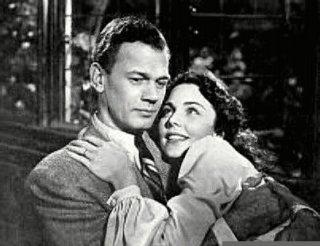
Portrait of Jennie (1948)

Nora's Nite
Buffalo Hamburgers, Birthday Cake
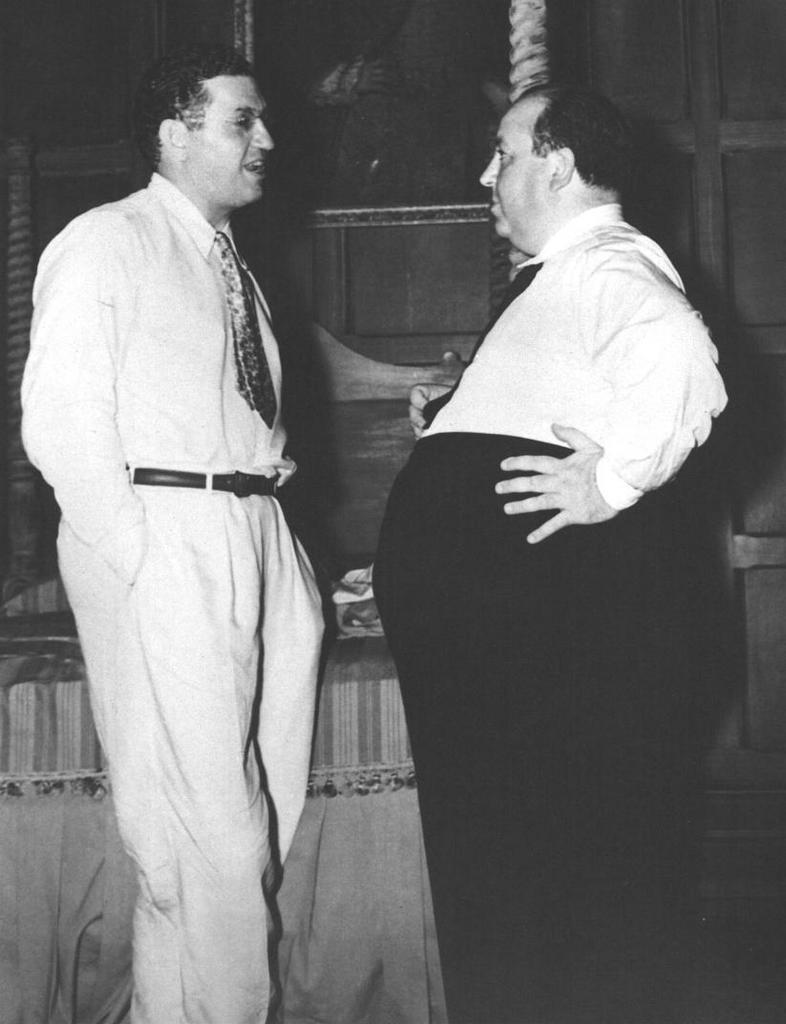
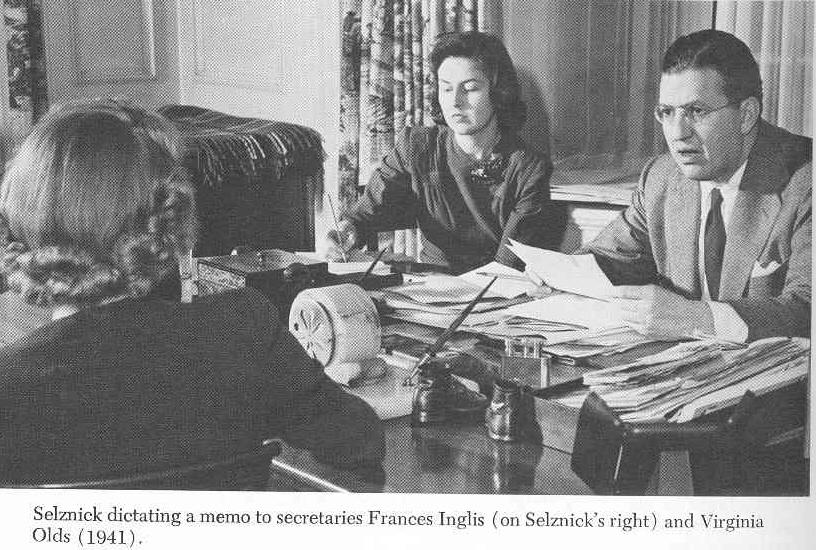
(This was the last Hollywood film for Selznick -- a mere 9 years after Gone With The Wind, before age 50 -- and he was basically finished, burned out.)

American Masters: David O. Selznick:
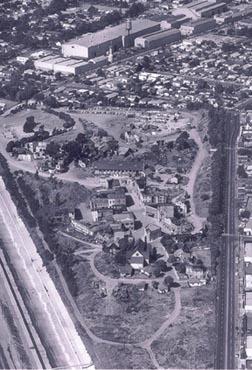
"On December 10, 1938, David O. Selznick burned down Atlanta. On the back of his Culver City studio, Selznick had begun filming what would be his and Hollywood’s greatest triumph, GONE WITH THE WIND. Selznick was just thirty-six years old and already a legend. He had run a major studio before the age of thirty and created his own studio by the time he was thirty-three. With a harsh and controlling demeanor, he dominated every film he made. In a town of Mayers, Zanucks, and Goldwyns, David Selznick was king. But one of his most lasting contributions would have nothing to do with his grand, southern epic. Instead, it would be bringing to America a rotund, quiet director who was the shining star of British cinema. In the summer of 1939, David Selznick brought Alfred Hitchcock to Hollywood."

Hollywood Renegade:
"David O. Selznick was the son of industry pioneer Lewis J. Selznick, and the beneficiary of a childhood immersion in independent film production. The Selznick patriarch L. J. Selznick had been a formidable independent producer in the early days of Hollywood. He crossed paths with Carl Laemmle at Universal, and then ushered in a new age of Wall Street investment at the World Film company. In 1915 L. J. Selznick left World to become an independent, taking with him World's biggest star Clara Kimball Young. Later Selznick partnered with Adolph Zukor, only to return to independent production as the head of Selznick Pictures. David, born in 1902 was training in film production from an early age, while his older brother Myron was being groomed to someday run the Selznick Corporation. But before David came of age, his father suffered a devastating turn of events that brought the Selznick organization to ruins during the silent era."

Iconic Producer of the Golden Age:
"After Gone With the Wind, Selznick spent the rest of his career trying to top that landmark achievement. The closest he came was with Duel in the Sun (1946). With a huge budget, the film is renowned for its steller cast, its sweeping cinematography and for causing all sorts of moral upheaval because of the then risque script written by Selznick. And though it was a troublesome shoot with a number of directors, the film would turn out to be a major success. The film was the second highest grossing film of 1947 and turned out to be the first movie that Martin Scorcese would see, inspiring the director's brilliant career.

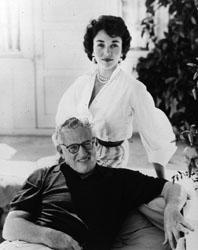
Selznick spent most of the 1950s obsessing about nurturing the career of his wife Jennifer Jones. His last big budget production, A Farewell to Arms (1957) which starred Jones and Rock Hudson, was ill received. But in 1954, he ventured successfully into television producing a two hour extravaganza called Light's Diamond Jubilee, which, in true Selznick fashion, made TV history by being telecast simultaneously on all networks.


In addition to being a talented producer, Selznick had a keen instinct for new talent and will be remembered for introducing American movie audiences to Fred Astaire, Katharine Hepburn, Gregory Peck, Joan Fontaine and Jennifer Jones. He also brought many foreign actors to Hollywood, such as Ingrid Bergman, Vivien Leigh, Louis Jourdan, Alida Valli and Hildegard Knef as well as director Alfred Hitchcock.

Selznick married Irene Gladys Mayer, daughter of MGM mogul, Louis B. Mayer in 1930. They divorced in 1948. They had two sons, Daniel Selznick and Jeffrey Selznick.

Selznick married actress Jennifer Jones in 1949. They had one daughter, Mary Jennifer Selznick, who committed suicide in 1975."

Tuesday, March 08, 2005

Current list of movies we've seen

Can you believe it?
1. $
2. 1,000 Clowns
3. 12 Angry Men
4. 400 Blows, The
5. Accused, The
6. African Queen, The
7. After the Thin Man
8. Alfie
9. All Quiet on the Western Front (1931)
10. All That Jazz (1979)
11. All The King's Men
12. All the President's Men
13. American Graffiti
14. An American in Paris
15. And Justice For All
16. Animal House (1978)
17. Ask Any Girl
18. Atomic Cafe, The (1982)
19. Awful Truth, The (1937)
20. Bad Day at Black Rock
21. Ball of Fire
22. Bang the Drum Slowly
23. Bedazzled
24. Being There
25. Big Easy, The (1987)
26. Big Sleep, The
27. Black Narcissus (1947)
28. Black Stallion, The (1979)
29. Black Sunday (1977)
30. Blazing Saddles
31. Bonnie and Clyde
32. Born Free (1966)
33. Breaker Morant
34. Breakfast Club, The (1985)
35. Breaking Away
36. Brief Encounter
37. Bullitt
38. Cabaret
39. Caddyshack (1980)
40. Caine Mutiny, The
41. California Split (1974)
42. Candidate, The
43. Capturing the Friedmans (2003)
44. Carnal Knowledge (1971)
45. Carry On Doctor
46. Catch 22
47. Charade
48. Chariots of Fire
49. China Syndrome, The (1979)
50. Choristes, Les (2004)
51. Christmas in July
52. Ciociara, La
53. Citizen Kane
54. Coal Miner's Daughter
55. Color of Money, The
56. Cool Hand Luke
57. Day of the Jackal
58. Day the Earth Stood Still, The (1951)
59. Days of Heaven
60. Defiant Ones, The
61. Deliverance
62. Desk Set
63. Diabolique
64. Diary of a Chambermaid
65. Dinner at Eight (1933)
66. Diva
67. Dog Day Afternoon
68. Donnie Darko
69. Double Indemnity
70. Downhill Racer
71. Dream Life of Angels, The
72. Du rififi chez les hommes (Rafifi)
73. Duellists, The (1977)
74. Easy Rider
75. Enter the Dragon
76. Escape from New York
77. Fahrenheit 9/11 (2004)
78. Ferris Bueller's Day Off (1986)
79. First Blood
80. Five Easy Pieces
81. Footlight Parade (1933)
82. Foxy Brown
83. From Here to Eternity
84. Funny Face
85. Gallipoli
86. Garden of the Finzi-Continis , The
87. Gaslight
88. Gentlemen Prefer Blondes
89. Get Carter
90. Goodbye Girl, The
91. Grand Illusion
92. Great Expectations
93. Great Gatsby, The
94. Great McGinty, The
95. Gregory's Girl (1981)
96. Guess Who's Coming to Dinner
97. Gunga Din (1939)
98. Hard Day's Night, A (1964)
99. Hell in the Pacific
100. High Noon
101. Hot Rock, The (1972)
102. How to Marry a Millionarie
103. Hustler, The
104. I Know Where I'm Going
105. I'm All Right Jack (1959)
106. In the Heat of the Night
107. Incredible Mr. Limpet, The (1964)
108. Inherit the Wind (1960)
109. Ipcress File, The
110. Jules and Jim
111. King and I, The
112. King Solomon’s Mines
113. Kiss Me Kate (1953)
114. Kitty Foyle
115. Klute
116. Ladri di Biciclette (The Bicycle Thief)
117. Ladykillers, The
118. Last Detail, The
119. Last Picture Show, The
120. Laura (1944)
121. Lavender Hill Mob, The
122. Legend
123. Lenny
124. Life of Brian
125. Little Foxes, The
126. Long Goodbye, The (1973)
127. Longest Yard, The (1974)
128. Lost Horizon (1937)
129. Lost Weekend, The (1945)
130. Love Story
131. M
132. Man and a Woman, A (Un homme et une femme)
133. Marathon Man
134. Mary Poppins
135. Mata Hari (Greta Garbo version)
136. Meet Me in St. Louis (1944)
137. Mildred Pierce (1945)
138. Miracle at Morgan's Creek
139. Monster, The
140. Monty Python and the Holy Grail
141. Mr. Deeds Goes to Town
142. Mr. Smith Goes to Washington (1939)
143. Mrs. Miniver (1942)
144. Music Lovers, The
145. My Man Godfrey
146. Network
147. Now, Voyager
148. Nuit américaine, La (1973)
149. Odd Couple, The
150. Odessa File, The
151. OhayÙ (Good Morning!) (1959)
152. Old Yeller (1957)
153. Omen, The
154. One Flew Over the Cuckoo's Nest
155. Open Your Eyes
156. Paper Chase, The
157. Passport fo Pimlico
158. Paths of Glory
159. Pierrot le Fou
160. Pillow Talk
161. Place in the Sun, A
162. Planet of the Apes
163. Play Misty for Me
164. Point Blank
165. Ponette
166. Poseidon Adventure, The
167. Pretty in Pink (1986)
168. Prime of Miss Jean Brodie, The (1969)
169. Prince of Egypt
170. Prisoner of Zenda, The
171. Private Life of Sherlock Holmes, The (1970)
172. Professionals, The
173. Purple Noon
174. Rebecca
175. Ridicule
176. Risky Business (1983)
177. Roaring Twenties, The (1939)
178. Rocky
179. Roger & Me (1989)
180. Rollerball (1975)
181. Roman Holiday
182. Rosemary's Baby
183. Rutles, The
184. Salvador
185. Say Anything...
186. Scarface (1983)
187. School for Scoundrels
188. Serpico
189. Seven Days in May
190. Shaft
191. Shampoo
192. She Wore a Yellow Ribbon
193. Shining, The (1980)
194. Shop Around the Corner, The
195. Silent Partner
196. Sin of Madelon Claudet, The
197. Singing In The Rain
198. Slapshot
199. Some Like It Hot
200. Spetters (1980)
201. Spy Who Came In from the Cold, The (1965)
202. Streetcar Named Desire, A
203. Stuntman, The
204. Sweet Smell of Success
205. Swiss Family Robinson
206. Taxi Driver
207. Tequila Sunrise (1988)
208. Theater of Blood
209. Thin Man, The (1934)
210. Third Man, The
211. Thomas Crown Affair, The
212. Three Faces of Eve
213. Time Out (Emploi du temps)
214. T-Men
215. To Catch A Thief
216. To Live and Die in LA
217. Tom Jones (1963)
218. Tootsie
219. Top Hat
220. Topper (1937)
221. Train, The
222. Treasure of the Sierra Madre
223. True Grit
224. Turning Point, The (1977)
225. Twentieth Century, The
226. Ugetsu
227. Umbrellas of Cherbourg
228. Urban Cowboy (1980)
229. Viva Las Vegas (1964)
230. Wait Until Dark (1967)
231. Way We Were, The (1973)
232. West Side Story (1961)
233. Whatever Happened to Baby Jane?
234. Woman of the Year (1942)
235. Women on the Verge of a Nervous Breakdown
236. Xanadu (?!?!)
237. Year of Living Dangerously, The
238. Z (1969)

Sunday, March 06, 2005

Choristes, Les (2004)

Stuart's Nite
Waiver: Release date exception
Really Excellent Super Cheezy Pizza, Chocolate Cake


LINK

Friday, February 25, 2005

Seven Mistakes Superheroines Make

1. Do fight demons. Don't fight only inner demons.
2. Do play well with others. Don't shun human society.
3. Do exhibit self-control. Don't exhibit mental disorders.
4. Do wear trendy clothes. Don't wear fetish clothes.
5. Do embrace girl power. Don't cling to man hatred.
6. Do help hapless men. Don't try to kill your boyfriend.
7. Do toss off witty remarks. Don't look perpetually sullen.

"Successful heroines defy everyday restraints: They cheat gravity, physically overpower men, and reflect bullets with silver bracelets. The last thing women want to see is Supergirl whining about her boss, suffering through a mid-life career crisis, and being served divorce papers by Superman."
LINK